My favorite miso soup recipe, just like the way my mother makes it! This recipe is light, comforting, and full of savory umami flavor — and only requires 4 ingredients and 15 minutes to make!
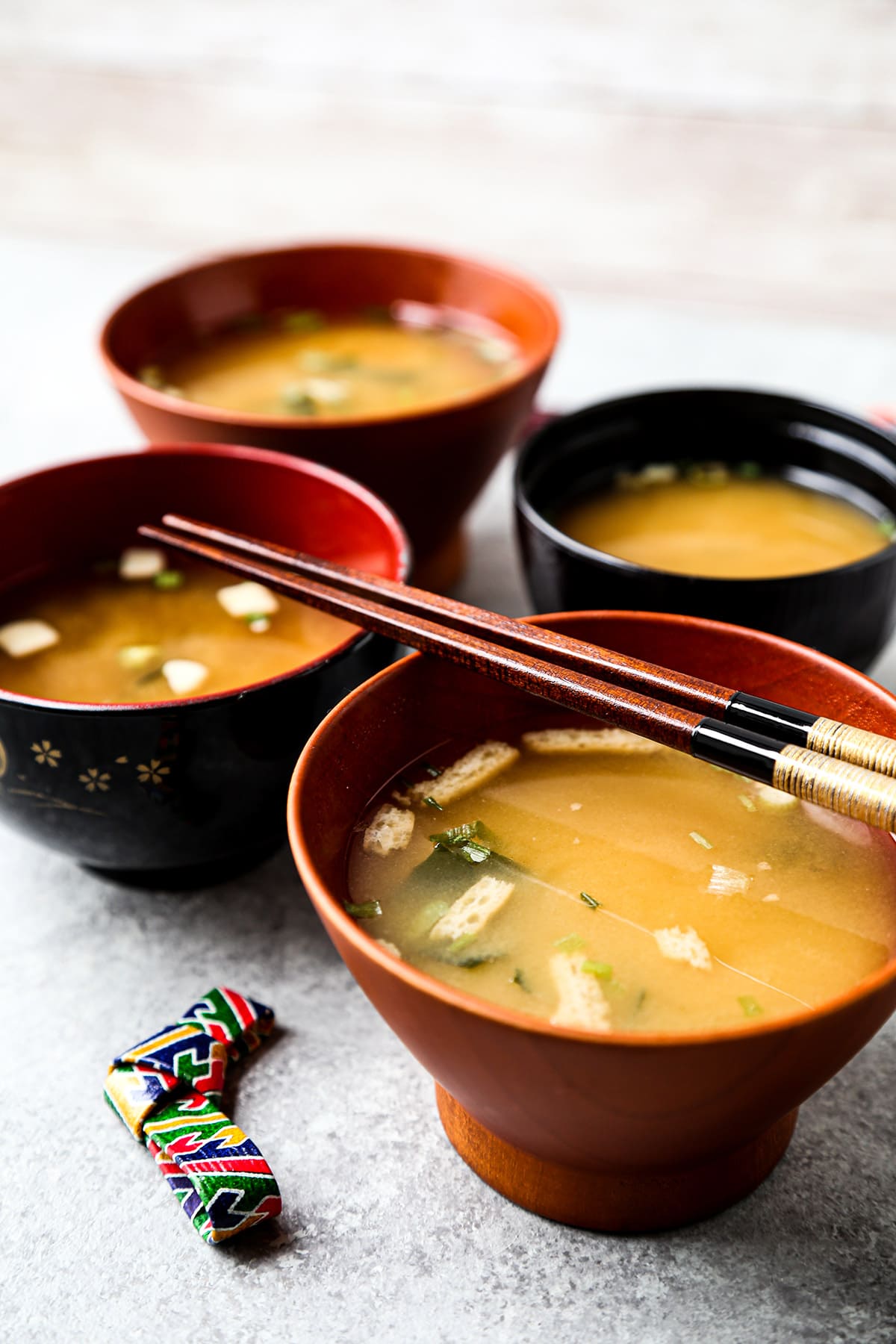
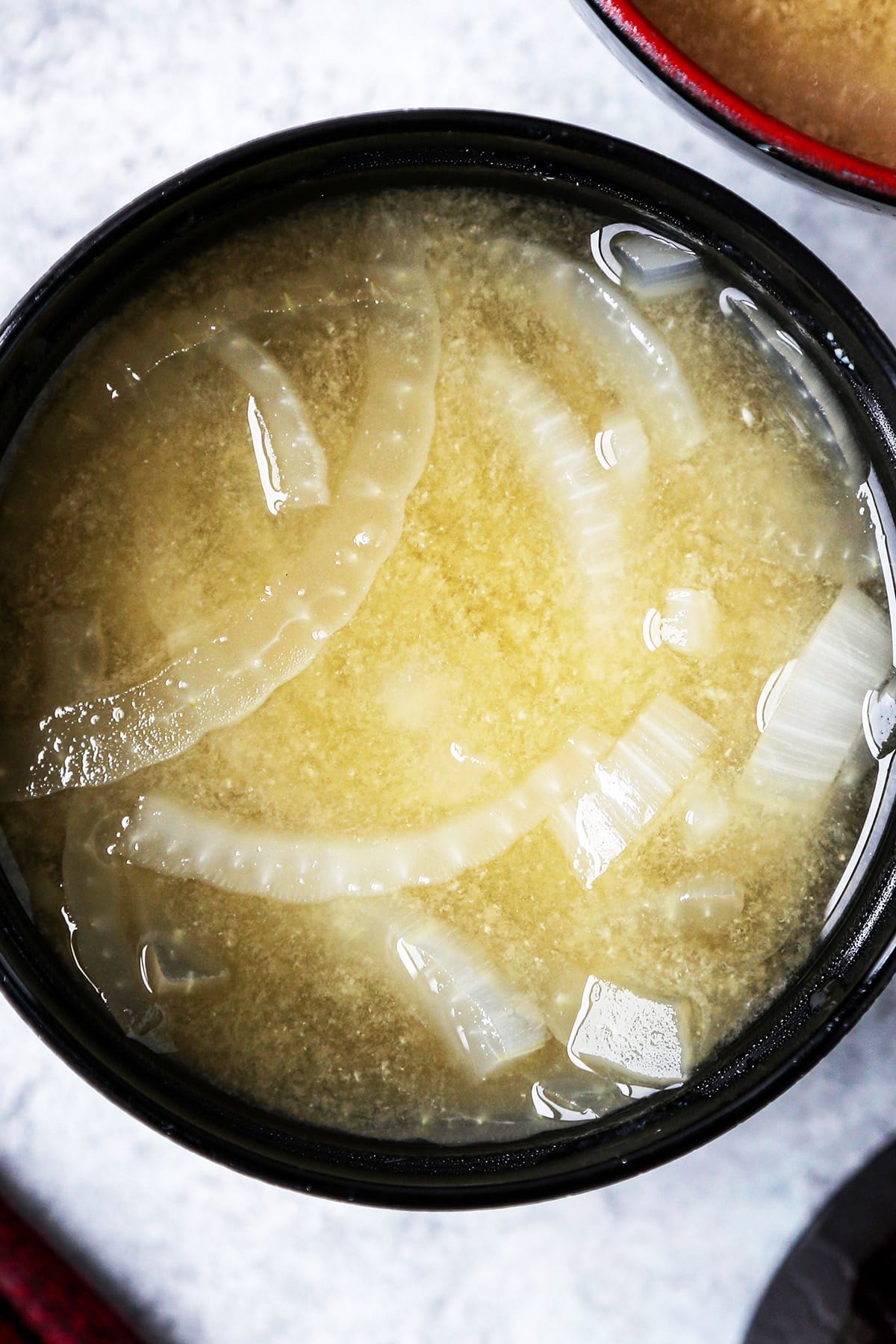
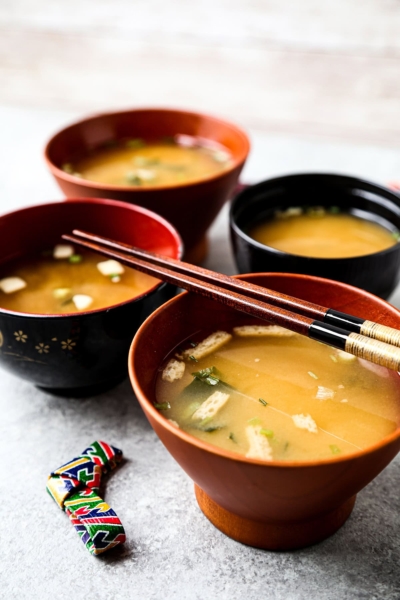
Miso soup is a nutty and savory soup made of dashi broth and miso paste, often served as part of a traditional Japanese meal. Next to sushi, it’s what most people refer to whenever they say they crave Japanese food. While the classic miso soup consists of wakame and tofu, my mother only uses chopped onions as the filler ingredient. The soup takes on a sweet fragrance, making the broth very delicate, yet still deep in flavor. The onions are boiled until tender and literally melt in your mouth, it’s absolutely delicious!
This easy miso soup recipe only needs 4 ingredients and comes together in minutes. Whether you are looking for a traditional Japanese side dish or a cozy bowl of soup to enjoy on its own, this miso soup will not disappoint. For those new to Japanese cooking or who don’t have access to specialty ingredients, keep reading as I will walk you through simple substitutions and tips to make delicious miso soups.
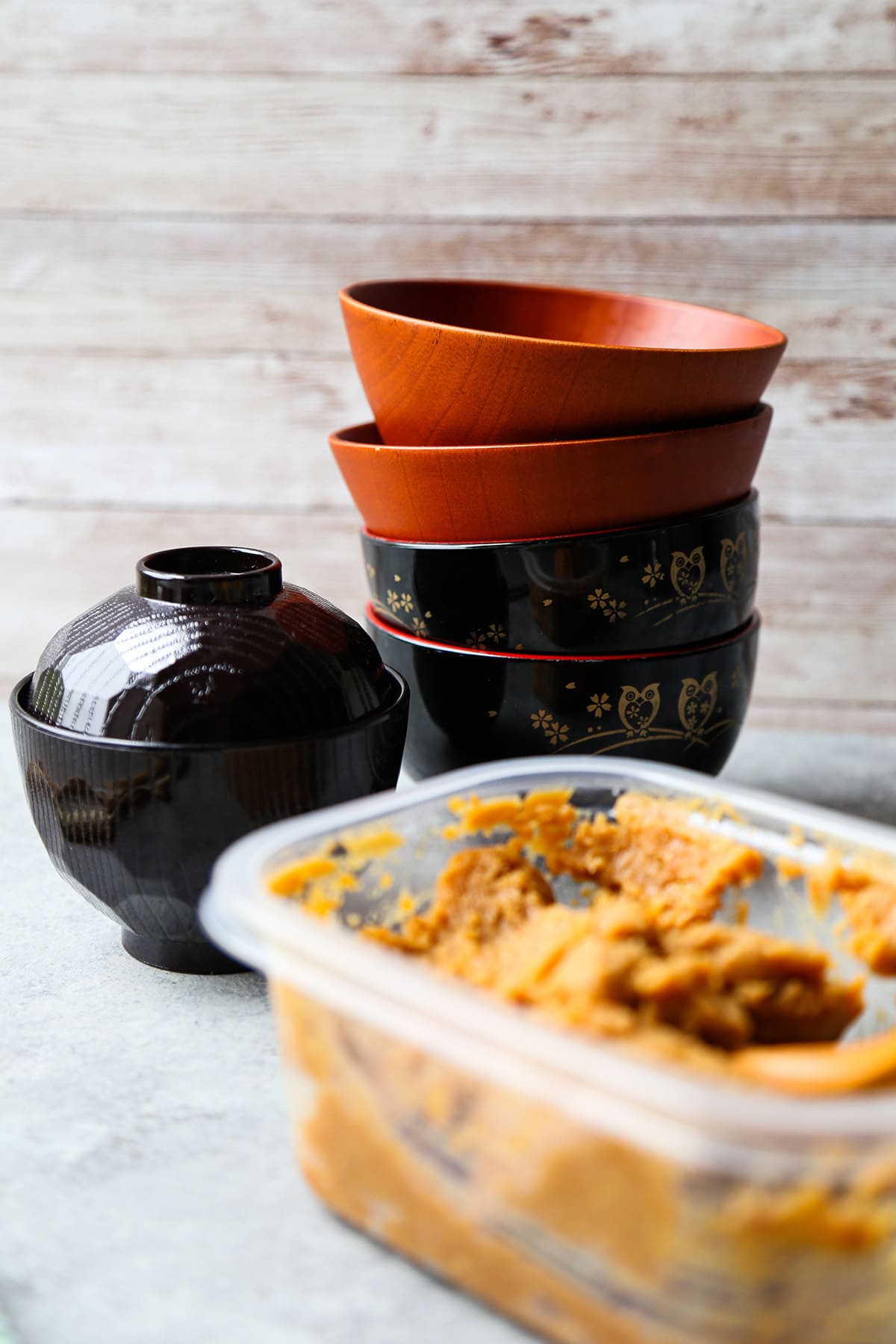
What Is Miso Soup?
Miso soup (味噌汁) is a traditional Japanese soup made from dashi stock and miso paste. Various ingredients are added to the soup such as seaweed, tofu, green onions, natto, vegetables, fish, pork, and much more. In Japan, miso soup is eaten as part of a meal, often accompanied by a side of rice and pickles.
Beyond soups, miso is used throughout Japanese cooking in sauces, marinades, and glazes, including the salad dressings featured in this Japanese salad dressings guide.
First Time Making Miso Soup? Here Are The Basics
If you are new to miso soup, here are a few things to know:
- It’s very easy to prepare. Miso soup can be made with just dashi broth, miso paste, and green onions. The only cooking technique required is boiling. It couldn’t get any easier than that!
- Miso paste should never boil and should always be added last. This is to prevent the paste from losing flavor and nutrients.
- Various ingredients can be used. Most of us are familiar with the classic combination of tofu and wakame seaweed, but did you know that across Japan, there are endless recipe variations of miso soup? From my mother’s recipe with onions, there is also miso soup with potatoes, miso soup with maitake mushrooms, miso soup with eggplant, daikon, clams, even natto! The options are endless.
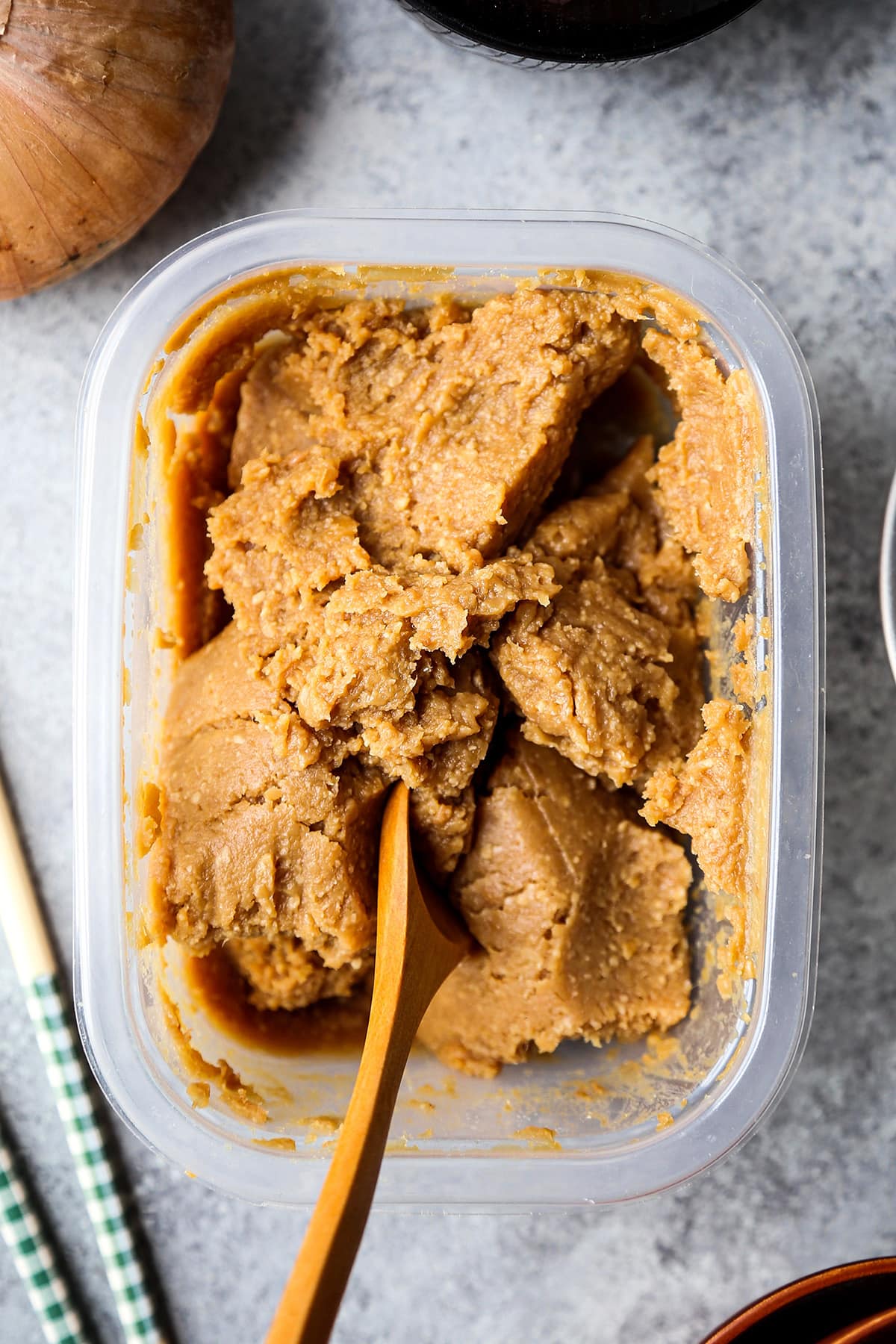
Best Miso Paste For Miso Soup
For a full breakdown of miso types and how to use them beyond soup, see my Miso Paste Guide.
Types of Miso Explained
- White Miso (白味噌, shiro miso): Mild, nutty, and a little sweet. Because of its lower salt content it’s best for delicate soups, salad dressings, and other delicate dishes.
- Mixed Miso (合わせ味噌, awase miso): A blend of white and red miso paste, saltier than white miso and less aggressive than red miso. It’s the most versatile type of miso and can be used for just about any Japanese dishes requiring miso.
- Red Miso (赤味噌, aka miso): Has a stronger, saltier, and more pungent/fermented taste. Is a deep brown/red and pairs best with hearty dishes that need a bolder and stronger taste (often used for winter dishes).
You can use all three types of miso paste – red, awase, and white miso paste – to make miso soup. But for this particular recipe I recommend using white miso paste because of its light and delicate taste. Awase miso paste is the second best option but is saltier and more aggressive overall.
If you are interested in cooking more with miso paste, try my recipes for miso dressing, nasu dengaku (broiled eggplant with miso glaze), spicy miso ramen, miso salmon, or miso roasted daikon.
Miso Soup Ingredients
- Onion: Don’t be afraid to use plenty of onions as they add sweetness and depth of flavor. Plus, once boiled onions become so tender they almost melt in your mouth, which is a big bonus!
- Dashi powder: Dashi powder is made from a mixture of ground seaweed and bonito flakes and is at the core of Japanese cooking. It gives soups and dishes a light briny and smoky taste without being overwhelming.
- Water: 4 cups of water to mix with the dashi powder.
- Miso paste: Miso is a fermented soybean paste that is traditionally used in Japanese cooking to add depth of flavor to soups, stews, sauces, desserts, and much more. Its taste is very unique – pungent, salty, and full of umami and nuttiness. For this miso soup you will need white miso paste. If you don’t have any but happen to have awase miso paste in your pantry, it can also work.
- Ichimi togarashi (optional): Ichimi togarashi are ground red chili peppers used to impart a little heat to the soup. This ingredient is optional.
How To Make Miso Soup
Scroll down to the recipe card for the full recipe.
- Bring the soup to a boil. Add 4 cups of water, onions and dashi powder to a pot and bring to a boil.
- Let it simmer. Lower the heat, cover and cook for about 10 minutes, until the onions are tender.
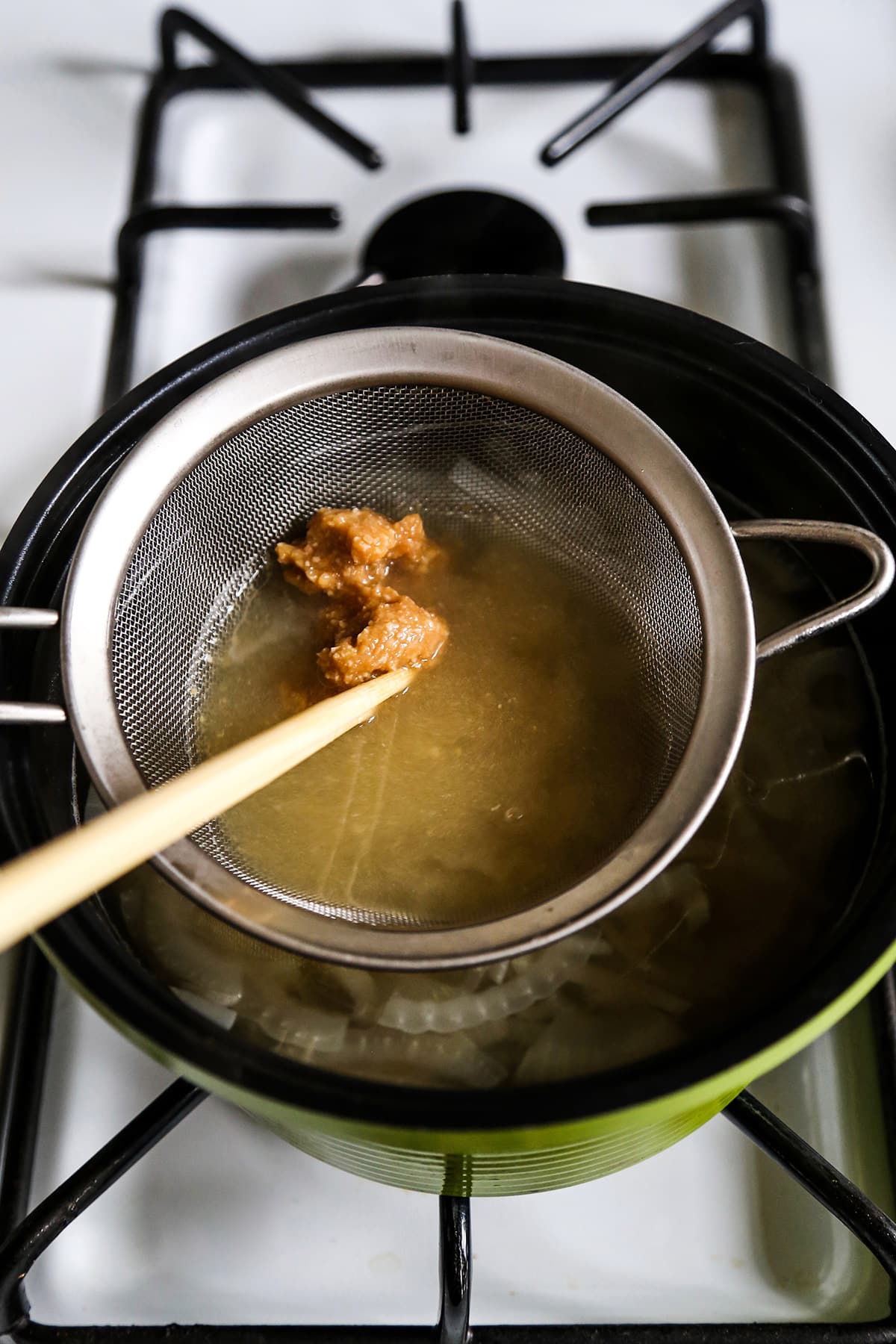
- Add the miso paste. Place the miso paste in a colander and lower it into the pot until enough water covers the miso paste.Using chopsticks, swirl the paste until it completely dissolves into the soup.
- Serve. Turn the heat off and serve in small bowls with ichimi on the side.
Substitutions
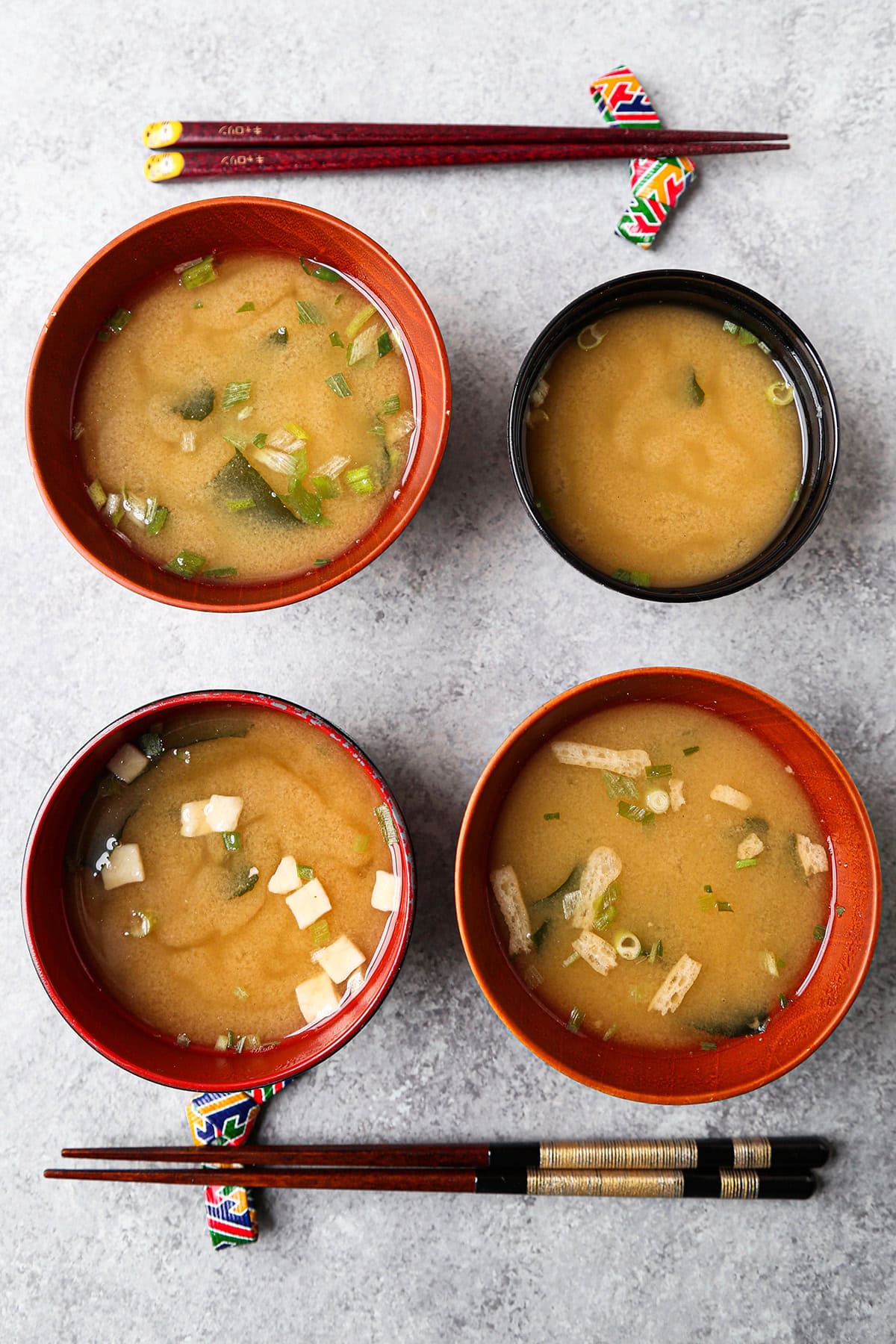
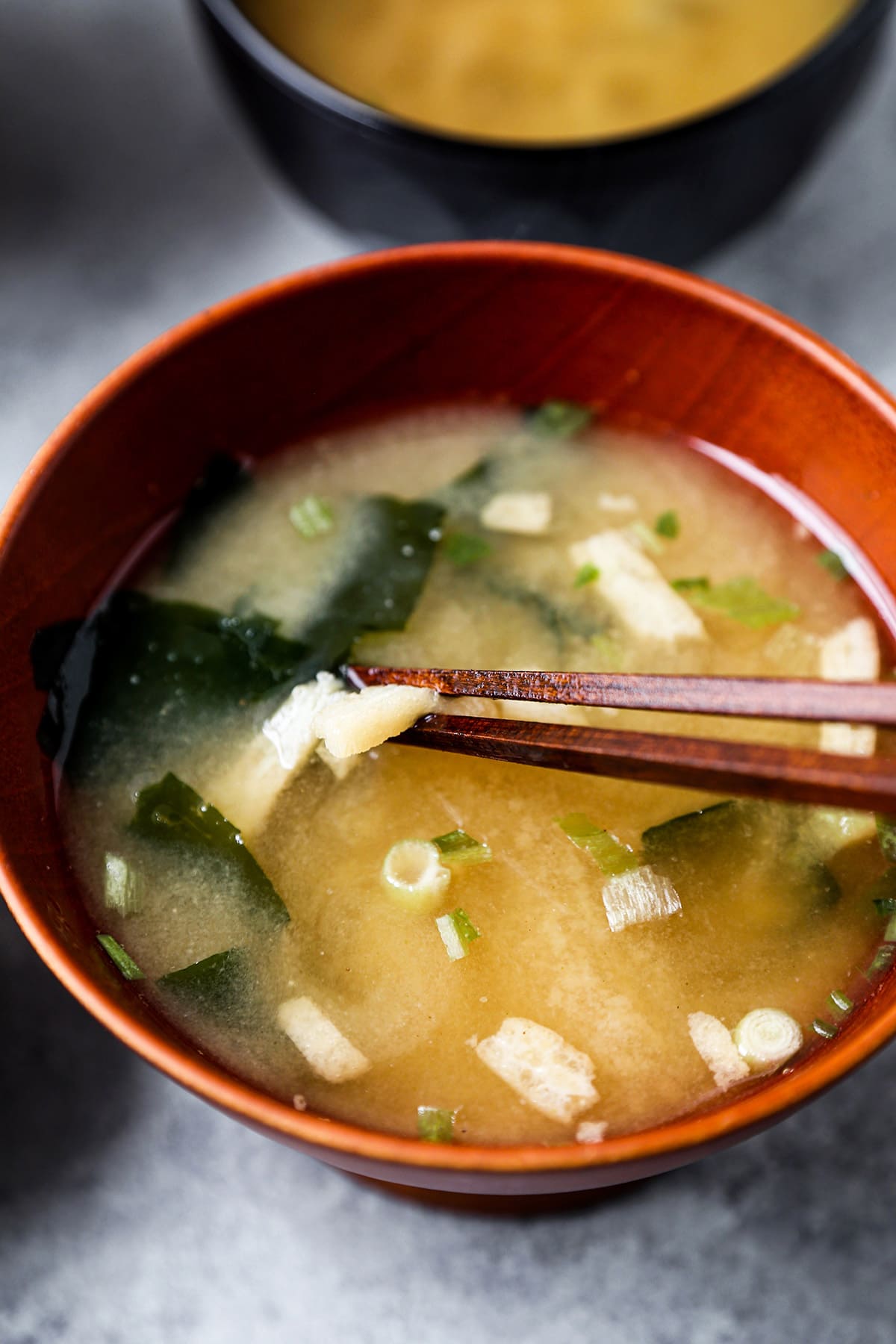
- Traditional. For the traditional soup with tofu and seaweed, bring the water and dashi to a boil, add the tofu and cook for 2 minutes. Follow the same steps for dissolving the miso paste, and finish by adding the seaweed (wakame).
- Vegan. Use kombu dashi instead or regular dashi which is made with bonito flakes (katsuobushi). Also, make sure that the miso paste you are buying doesn’t contain any dashi and is 100% miso paste only.
- More Flavorful. Adding a drizzle of toasted sesame oil will infuse the broth with a lovely nutty taste. I also sometimes like to add ground sesame seeds for the same effect.
- More Filling. Add a couple of pieces of mochi to the soup when it’s boiling and cook them until they have softened. I love eating miso soup this way as I am obsessed with the chewy texture of rice cakes.
Recipe Tips
Drink it hot but not too hot. Miso soup is best enjoy when it’s hot but not boiling hot. That’s because the flavors of the soup are delicate and more pronounced when the temperature isn’t too elevated.
Common mistakes to avoid:
- Boiling miso soup after adding the miso paste. This can destroy the delicate taste and aroma of the miso paste, giving the soup a more aggressive taste.
- Adding the miso paste directly to the pot. Dissolving the miso paste by using a sieve prevents clumping.
- Using too much miso paste. The perfect miso soup is mild and savory. Adding too much miso paste can make it too salty. It’s better to start with less and add more as you go.
- Adding too many ingredients. There should be more soup than ingredients. Miso soup is meant to be simple and cleansing. Adding too many ingredients destroys the balance and overall taste of the soup.
Serving Suggestions
My favorite way to serve miso soup is in the morning as part of a Japanese breakfast, with rice and a piece of salted salmon (shiozake). I also enjoy having it as mid afternoon snack with a pickled plum or tuna mayo onigiri.
In Japan, miso soup is typically served as a side dish rather than a main course, so feel free to enjoy this delicious dish however you like!
Some dishes to pair with miso soup: Japanese curry rice, Japanese fried rice, omurice, spicy tuna roll, chicken katsu, tamago kake gohan, yaki udon.
Miso Soup
This delicate and savory miso soup only needs 4 ingredients and comes together in minutes.
- Prep Time: 5 minutes
- Cook Time: 10 minutes
- Total Time: 15 minutes
- Yield: 4 1x
- Category: Soup
- Method: Stove top
- Cuisine: Japanese
- Diet: Low Calorie
Ingredients
- 1 large onion, thinly sliced
- 4 cups water
- 1 tablespoon powdered dashi
- 3–4 tablespoons preferably white miso paste or awase miso paste
- Ichimi togarashi (optional)
Instructions
- Make the broth. Put the sliced onions, water and powdered dashi in a pot and bring to a boil. Lower the heat, cover and cook for 10-12 minutes, until the onions are tender.
- Add the miso paste. Place the miso paste in a small strainer and lower the strainer into the pot, until the liquid covers the miso paste. Stir the miso paste with chopsticks until it has fully dissolved.
- Serve. Turn the heat off and serve.
- Add a little heat (optional). Sprinkle a little ichimi togarashi for heat.
Notes
This miso soup will keep for 3 days, refrigerated in an airtight container.
Nutrition
- Serving Size: 4
- Calories: 42
- Sugar: 1.7g
- Sodium: 23.4mg
- Fat: 0.8g
- Saturated Fat: 0
- Unsaturated Fat: 0
- Trans Fat: 0
- Carbohydrates: 7.1g
- Fiber: 1.4g
- Protein: 2.1g
- Cholesterol: 0.3mg
Frequently Asked Question
Miso soup is often considered a healthy part of a balanced diet because it’s relatively low in calories and is lighter than cream based soups. It’s commonly eaten daily in Japan as part of a regular meal. Miso soup does contain sodium since miso paste is fermented with salt. However, it’s traditionally served in small bowls and paired with other foods, rather than as a large standalone dish.
Yes you can. The easiest way to achieve the exact same taste without actually buying dashi powder is to purchase miso paste that already contains dashi. If you simply prefer not to use dashi at all, you can use powdered vegetable stock or seaweed. The soup will taste a little different but still be delicious.
For up to 3 days, stored in an airtight storage container.
Yes you can but it has to be on low heat. To reheat miso soup, put the miso soup in a pot and simmer on low heat. Do not boil miso soup as it’s bad for the miso paste and will affect its taste and delicate aroma.
It depends of the miso paste used. It’s important to read the label if you suffer from gluten allergies since some miso pastes can contain fermented grains like wheat and barley. Look for one that is 100% gluten-free.
Yes you can freeze it too! Let the miso soup cool to room temperature first. Next, divide the soup into individual serving size so it’s easier to thaw and reheat. Use airtight storage containers or freezer bags. Freeze for up to 3 months.
Did you like this recipe? Are there changes you made that you would like to share? Share your tips and recommendations in the comments section below!










Questions and Reviews
Yum. I served this with some tempura prawns (shrimp) and some steamed Asian greens. So good.
This was really good. Probably the best flavor profile I’ve ever had in miso soup.
Thank you so much Lauren 🙂
My wife and I never realized how easy me so soup was to make will be making it using your recipe as soon as possible thank you so much
Hi Curtis, I hope you enjoy it as much as I do!
Hi, the video shows some green stuff added in at the end but there’s no mention of that in the recipe. What is it?
Hi Jeremy! The green ingredient is dehydrated green onions. You can use freshly chopped ones too. They are optional 🙂
The onions take this traditional recipe to the next level. I set my mandolin slicer on the thinnest setting and the onions practically melt into the soup, adding an awesome layer of flavor. I also add a bit of seaweed and some soft tofu. I love all of the textures. White miso is the best choice for a bit of sweetness.
I’ve made several Miso versions based on your Mom’s recipe all simply awesome! I ordered suggested items as I wanted authentic as I could living in Connecticut offered challenges. Looking forward to the next curry recipe. How fun this is!!!
Thank you so much Dennis! I will let my mom know how much you enjoy her recipe 🙂
The perfect thing to eat when you wake up with a hangover at 3 am.
Thanks again for this recipe. I used the miso to make yaki onigiri chazuke the other night. I still used the onions, but removed them once they’d steeped for a smooth soup. I’m addicted!
Made this this morning and it was delicious. As a side note, if you want to bump up the health benefits of any miso soup make sure to find unpasteurized miso. Most miso in the market and on Amazon is pasteurized which kills off all the wonderful probiotics from the fermentation process. My favorite is South River Miso. It is certified organic and unpasteurized. I only used 1 Tbsp rather than the 3-4 as this brand of miso can really bring the “funk” due to continuous fermentation. My favorite variety is the 3 year barley which is a dark miso. I also use Yamasan brand dashi.
I’ve made this delicious soup at least 7 times already. It’s super easy to make and it tastes great. Sometimes, I used red onions. Sometimes yellow, sweet onions. No matter which kind, the soup always comes out great. There’s an organic miso I find in the local stores which looks kind of dark so it’s probably red miso. The dashi is a package, different from what I see in the photos on this webpage but I find it quite easily in Japanese stores. I stick to the recipe because it’s simple and always tastes fantastic. It’s never in the refrigerator for more than 2 days because it simply disappears! I add green onions at the end sometimes and once even cracked an egg in. I always add the ichimi because I love it and it’s easy to find on Amazon. Everything seems to work as it’s a great recipe that I make over and over again.
Thank you so much, Bruce! 🙂
Absolutely the best miso soup that I have ever tasted and I am thrilled that I can make it whenever the urge strikes! Used 5 cups of water with no loss of taste and togarashi is a must. Thank you 🙂
Thank you so much Myrna! 🙂
This really is the best recipe, once you have the ingredients it’s pretty easy. The whole family thinks it tastes better than the miso soup from our favorite sushi resaurant 🙂
So easy to make, and so, so yummy! Thank you
An umami bomb and so simply delicious. I did add some sesame oil, togarashi, low sodium soy sauce. Wakami, bok choy greens,scallions ,shaved carrots and dashi