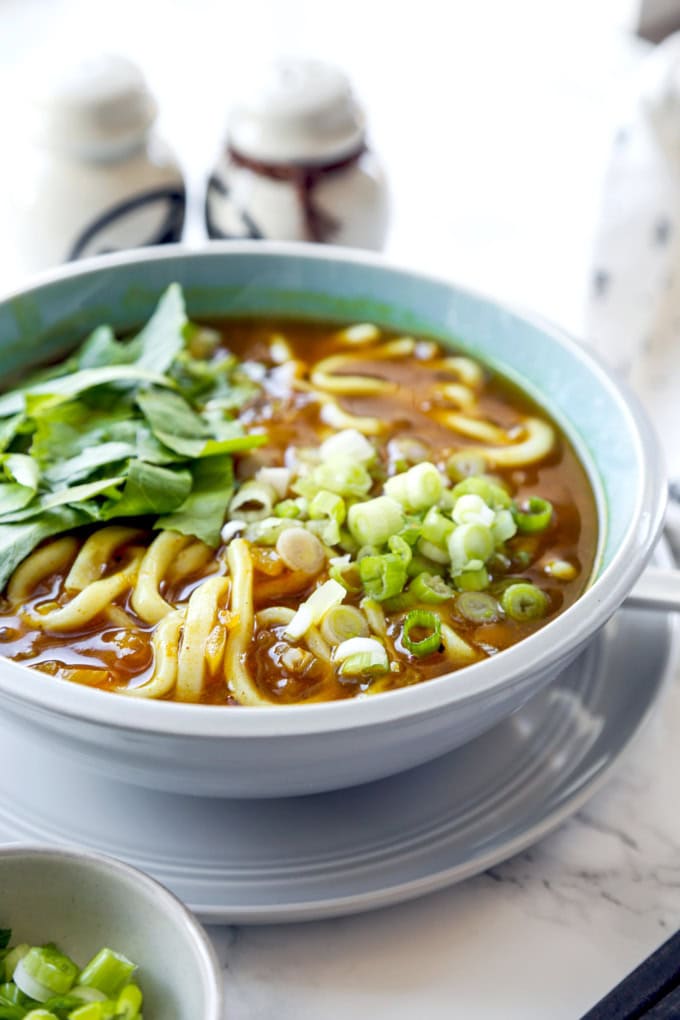
Few dishes hit the comfort-food sweet spot quite like curry udon. Thick, chewy udon noodles are served in a savory curry broth that’s warm, fragrant, and deeply satisfying. It’s the kind of meal that feels cozy and filling, yet simple enough to make after a busy day.

Curry udon is a popular Japanese noodle soup that combines two staples of Japanese home cooking: udon noodle soup and curry. Instead of serving Japanese curry over rice, the curry flavor is blended into a dashi-based broth to create a rich soup that coats the noodles beautifully.
What I love about this recipe is how quickly it comes together. With a handful of pantry staples like curry powder, soy sauce, mirin and dashi, you can have a steaming bowl of curry udon ready in about 20 minutes. It’s hearty, flavorful, and incredibly comforting.
If you enjoy Japanese noodle dishes, this is one recipe that’s definitely worth adding to your rotation.
Table of Contents
What is Curry Udon?
Curry udon (カレーうどん) is a noodle dish that combines the umami depth of dashi with the warming spices of Japanese curry, creating a rich broth that pairs perfectly with thick udon noodles.
The dish is popular with home cooks in Japan as a clever way to use leftover Japanese curry. My mom does this all the time. Instead of reheating the curry and serving it over rice again, she thins it out with homemade dashi and adds udon noodles to create a comforting soup.
Curry udon is widely served at noodle shops and casual restaurants across Japan. The broth is savory, slightly sweet, and aromatic, with just enough thickness to cling to the noodles. While every version is a little different, most curry udon broths are built on a base of dashi, soy sauce, and curry. While you can use Japanese curry roux, I prefer making mine from scratch with curry powder.
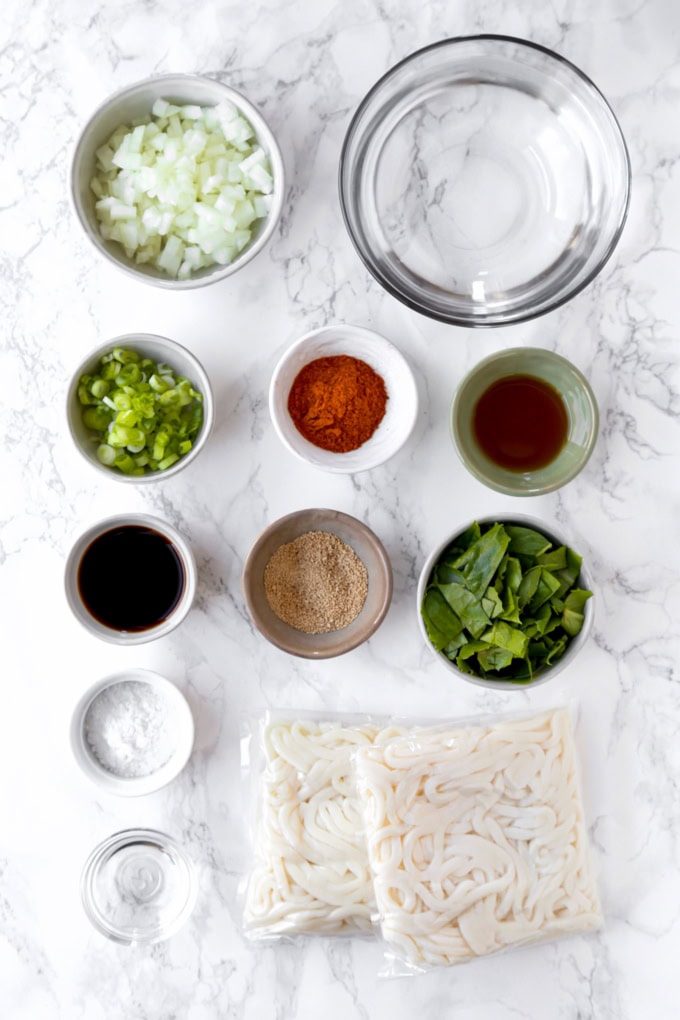
Ingredients for Curry Udon
The ingredient list for this recipe is short and straightforward, but each component plays an important role in building flavor and texture.
- Udon Noodles: Thick and chewy, udon noodles are the star of the dish. Fresh or frozen noodles work best because they have the right pillowy, chewy texture. (use about 3.5 ounces per serving).
- Curry Powder: This brings warmth and adds depth to the broth. It introduces the familiar curry flavor without overpowering the delicate dashi base.
- Dashi: This is the backbone of many Japanese soups. Dashi adds a gentle savory flavor that gives the broth its signature umami.
- Onion: I add chopped and sauteed onion for sweetness and depth.
- Soy sauce: Japanese shoyu deepens the flavor and adds a salty balance to the curry broth.
- Mirin: Using mirin contributes a touch of sweetness that rounds out and tempers the saltiness of the savory ingredients.
- Sesame oil: The sesame oil adds an earthy, nutty flavor that is found in many Japanese dishes. Use toasted sesame oil if you can.
- Potato starch: I mix potato starch with a bit water as a thickener. This gets stirred into the sauce once it starts to bubble.
- Baby spinach: Optional, but yummy (and pretty).
- Scallions: As with most Japanese noodle soups, scallions are used for refreshing sharpness and a bit of crunchy texture.
New to Japanese food and confused about what ingredients you should buy? Check out my list of 14 Essential Japanese Ingredients.
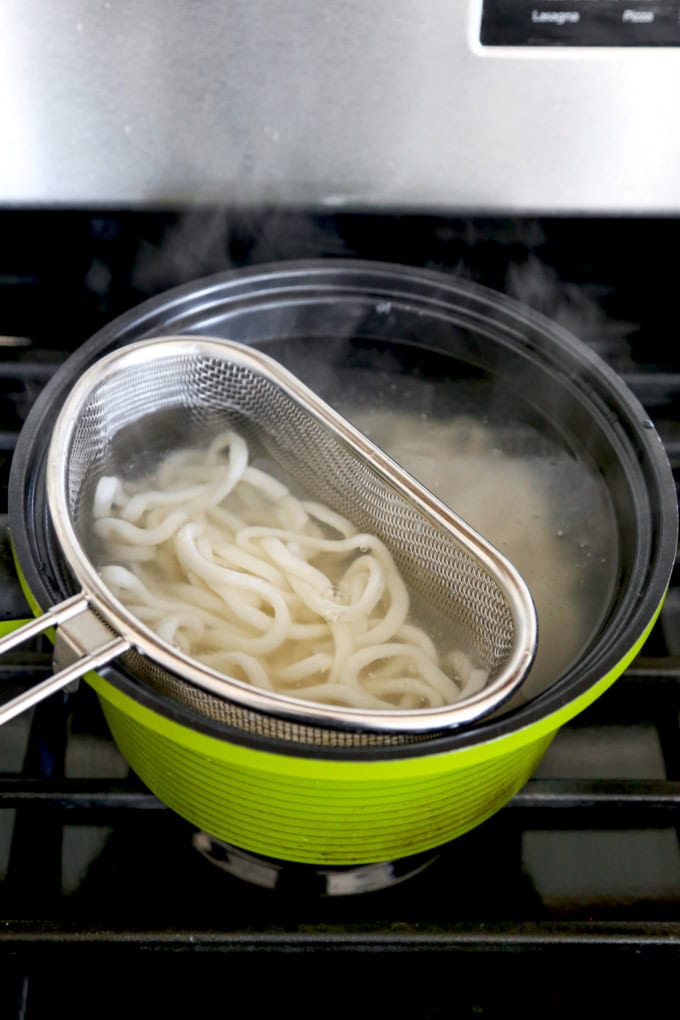
How to Make Curry Udon
- Boil the udon noodles according to the package instructions and drain.
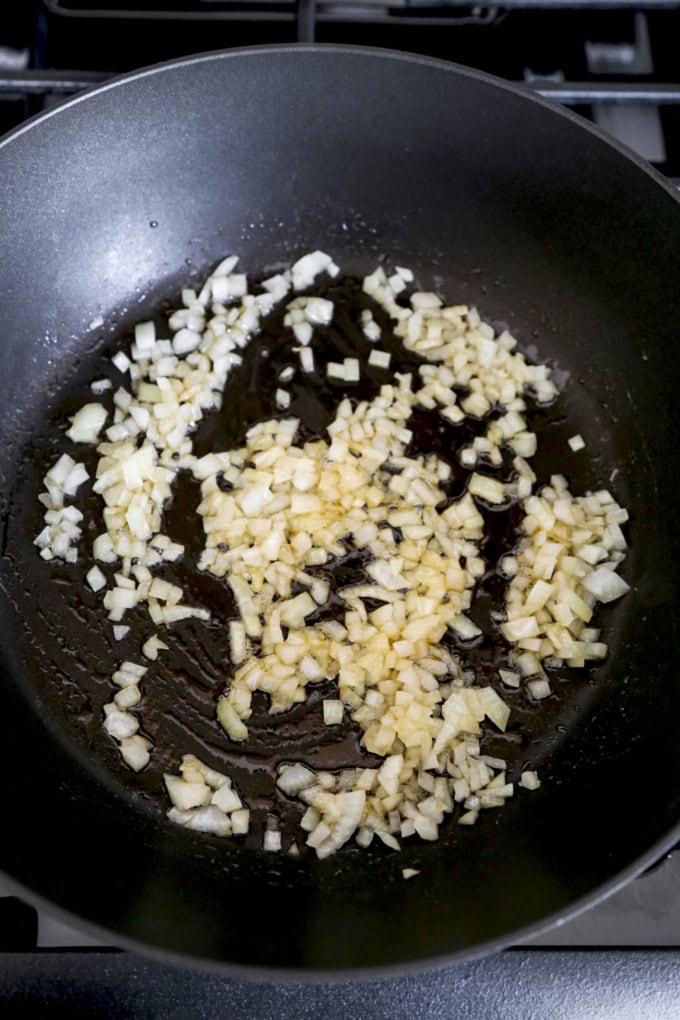
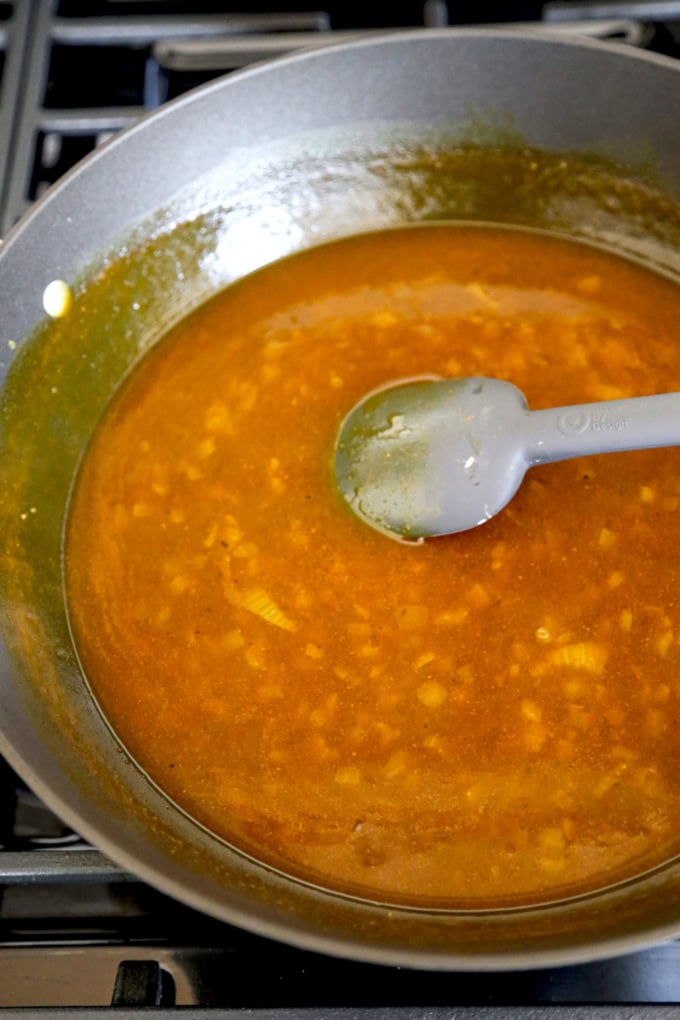
- Make the curry soup. Saute the onions and add the curry powder. Next, add the mirin, soy sauce, dashi powder and cornstarch/water mixture and stir until bubbling and thick.
- Portion and serve. Portion the udon and ladle the curry soup on top. Garnish with baby spinach and scallions.
Dashi Substitute
For a vegan version, use kombu dashi which is made with powdered kombu (kelp) – instead of traditional dashi made with katsuobushi (dried bonito flakes).
Low sodium chicken broth is a decent stand in for dashi in a pinch. I even used chicken bouillon once and it was fine.
Helpful Tips For The Best Curry Udon
Use fresh or frozen udon if possible
These noodles have the best chewy texture and cook very quickly. Dried udon works better in stir fried noodles.
Don’t overcook the noodles
Udon noodles soften quickly in hot broth, so it’s best to serve them soon after cooking.
Adjust the curry flavor to taste
Curry powders can vary in strength. If you prefer a stronger curry flavor, you can always add a little extra.
Control the thickness of the broth
Curry udon broth is usually slightly thick so it coats the noodles. If you prefer a thinner soup, simply add a little extra water or dashi.
Use the toppings you like best
A ramen egg, toasted nori (seaweed) and shiitake mushrooms are all personal favorites, but the topping options are endless.
What to Serve with Curry Udon
Curry udon is so comforting and warming. While I try to balance hearty foods out with lighter sides like pickled vegetables (tsukemono) or a crunchy Japanese cabbage salad, I’m just as likely to go all-in on Japanese comfort food and serve this soup with tempura or gyoza.
And at curry shops all over Japan, curry udon lunch sets are commonly served with a small side of Japanese fried rice on the side as part of their teishoku.
Make Ahead Option
If you would like to make the curry soup in advance and save it for later, hold off on using the potato starch until just before serving. The potato starch gives the soup its thicker texture, but it unfortunately doesn’t hold for very long.
Instead, make the curry soup without the potato starch and refrigerate until you are ready to eat it. Mix 1 1/2 tablespoon of potato starch with 2 tablespoons of water and slowly stir it into the soup as it warms up and thickens.
The noodles should always be boiled immediately prior to serving so they don’t get mushy.

Did you like this recipe? Are there changes you made that you would like to share? Share your tips and recommendations in the comments section below!
PrintCurry Udon – Japanese Noodle Soup with Curry Broth

Spiced with curry powder and packed with umami, curry udon is the perfect meal to have when you want Japanese comfort food with minimal effort in the kitchen
- Prep Time: 10 minutes
- Cook Time: 15 minutes
- Total Time: 25 minutes
- Yield: 2 1x
- Category: Noodles
- Method: Stove Top
- Cuisine: Japanese
Ingredients
- 2 packages fresh udon noodles (about 7.5 ounces each)
- 2 tablespoons sesame oil
- 1/2 small onion, finely sliced
- 1 1/2 tablespoon curry powder (use a little less if you prefer a mild curry taste)
- 1 1/2 tablespoon potato starch or cornstarch mixed with 800ml water
- 2 tablespoons mirin
- 2 tablespoons soy sauce
- 3 teaspoons dashi powder (for vegan: use kombu dashi)
- 1/4 cup baby spinach, chopped
- 2 scallions, finely chopped
Instructions
- Prepare the udon noodles. Boil the udon noodles and drain them. Divide them among two bowls and set aside.
- Sauté the aromatics. In a deep skillet or medium size pot over medium heat, add the sesame oil and onion slices. Cook for 3-4 minutes, until onions are translucent.
- Add the curry powder and stir.
- Make the broth. Add the water and potato starch mix, mirin, soy sauce, and dashi powder, and stir. Keep stirring until the soup starts to bubble and thicken, and turn the heat off.
- Portion, garnish and serve. Add the soup to the udon noodles and top with spinach and scallions. Serve.
Nutrition
- Serving Size: 1 bowl
- Calories: 510
- Sugar: 5.3g
- Sodium: 1665.5mg
- Fat: 15g
- Saturated Fat: 2g
- Unsaturated Fat: 5.8g
- Trans Fat: 0g
- Carbohydrates: 84.5g
- Fiber: 3.4g
- Protein: 3g
- Cholesterol: 0mg
Most versions of curry udon are mild rather than spicy. The curry flavor is warming and aromatic, but not usually hot.
Yes. Simply use kombu dashi instead of traditional dashi.
Absolutely. Thinly sliced beef, chicken, shrimp (or even tofu) are all popular additions.
The broth can be prepared ahead, but the noodles are best cooked right before serving so they keep their texture.











Hi! So it’s possible to make Japanese curry with Indian currypowder?! I still have not done so, waiting for a chance to buy S&B curry powder.
Until now I have managed with Golden Curry packages (the ónly food I prepare from a package).
I’m excited to give this a try!!
Hi Lara! Yes, you can make it with curry roux or old style, with curry powder. The taste is a little different, it’s more watered down and more salty than “demi-glace sweet”, but still really delicious! 🙂