These Japanese pickled vegetables are crisp, savory, and packed with the rich, umami flavor of white miso. Serve them with rice or alongside a Japanese meal for a refreshing, crunchy side.
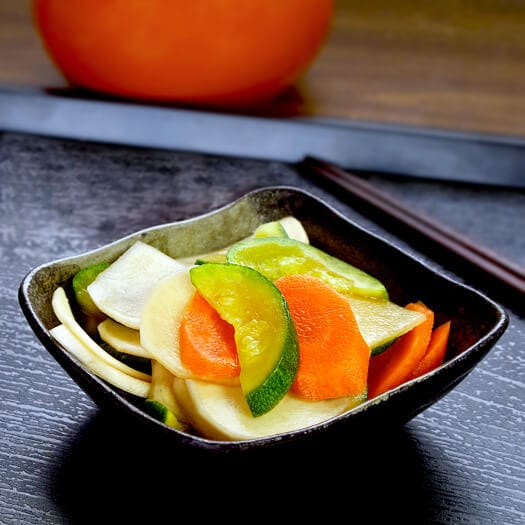
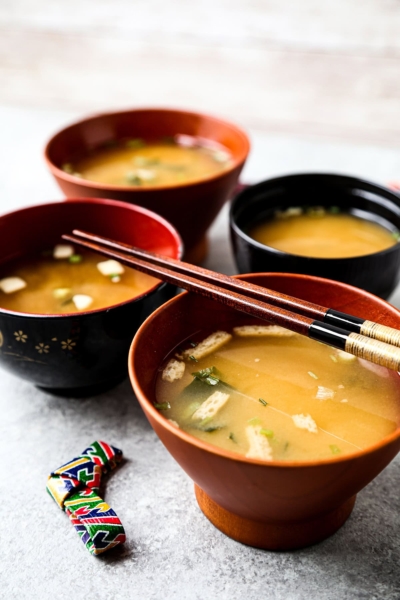
Small dishes of tsukemono are a familiar sight at Japanese meals. They are often served with white rice and soup such as miso soup, where their crunch and punch of flavor provide contrast to softer, milder dishes.
This homemade version uses white miso as the only pickling ingredient, making it a type of misozuke—food pickled in miso paste. There is no vinegar brine to prepare and no cooking involved. The white miso gives the vegetables a mellow, nutty flavor with a subtle sweetness.
Table of contents
What are Tsukemono?
Tsukemono (漬物) means “pickled things” and is the general Japanese term for pickled foods. It covers many different styles made with salt, vinegar, rice bran, soy sauce, sake lees, mustard, miso, and other pickling ingredients.
Some types of tsukemono are fermented over time, while others are prepared more quickly. This recipe is a simple refrigerated miso pickle that is not intended to be fermented for long.
Tsukemono Ingredients
Scroll down to the recipe card for the full list of ingredients.
- Carrots: They add natural sweetness and remain pleasantly firm after pickling.
- Zucchini: Zucchini absorbs the miso flavor easily and has a slightly more tender texture than the other vegetables.
- Turnips or daikon: Either can be used. Both have a fresh, mildly peppery flavor that becomes more delicate after pickling.
- White miso paste: White miso is milder and sweeter than darker varieties, making it a good choice for vegetables. Add it one spoonful at a time and mix until the vegetables are evenly coated. My miso paste guide explains the differences between white, red, and mixed miso.
Have some miso left in the container? Here are more easy recipes using miso.
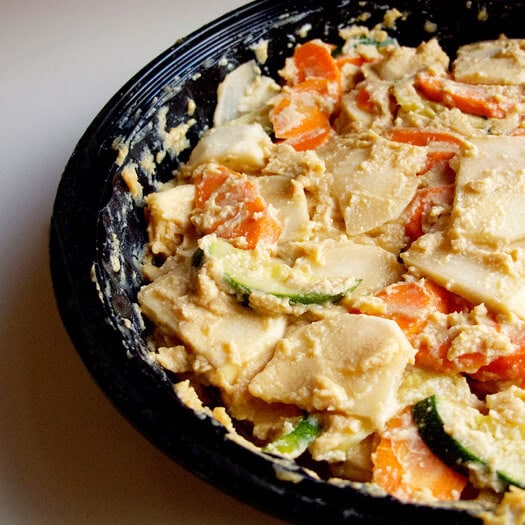
How to Make Japanese Pickled Vegetables
Slice the vegetables evenly, coat them with white miso paste, and leave them to pickle in the refrigerator. Once they are ready, rinse off the miso and allow the surface moisture to evaporate before storing or serving. Refer to the recipe card below for the complete instructions and timing.
Serving and Storage
Serve these pickled vegetables with a bowl of Japanese rice and miso soup, or add them to a meal with grilled fish, chilled tofu, a bowl of udon or soba, or Japanese curry. For more ways to complete your meal, explore my collection of easy Japanese side dishes.
Keep the tsukemono refrigerated in an airtight container for up to two weeks.
If you enjoy making pickles at home, try my pickled daikon, quick cucumber pickles, salted pickled cabbage, or ishiru pickles next.
PrintJapanese Pickled Vegetables (Tsukemono)
Crunchy Japanese pickled vegetables coated in white miso paste and left to pickle overnight.
- Prep Time: 10 minutes
- Cook Time: Pickling time: 24 hours
- Total Time: 24 hours 10 minutes
- Yield: 2 servings 1x
- Category: Pickles
- Method: Marinating
- Cuisine: Japanese
- Diet: Vegetarian
Ingredients
- 2 carrots
- 2 zucchinis
- 2 turnips or 1 medium size daikon, peeled
- White miso paste
Instructions
- Sliced the vegetables. Using a mandoline or a knife, slice your veggies about about 1/4 inch (6 mm) thick.
- Mix the vegetables with the miso paste. Put the vegetables in a bowl or storage container (not too deep, like a plastic take-out container) and add miso paste, one spoonful at a time, mixing it with the vegetables, until they are all coated. Alternatively, you can also use a pickled press and follow the same steps.
- Let them pickle. Let the vegetables pickle for 24 hours. They do not need to be refrigerates but should be kept somewhere dark, dry, and cool.
- Rinse the vegetables. Rinse the vegetables under water until all the miso paste is gone. Pat them dry with paper towel and leave uncovered for a couple of hours, to evaporate some of the water.
- Serve. Serve a few pieces in individual small serving dishes.
Notes
Keep the pickled vegetables in an airtight container and refrigerate for up to 2 weeks.
Nutrition
- Serving Size: 1 serving
- Calories: 126
- Sugar: 11g
- Sodium: 175mg
- Fat: 1.5g
- Saturated Fat: 0.1g
- Unsaturated Fat: 0.2g
- Trans Fat: 0g
- Carbohydrates: 25.7g
- Fiber: 7g
- Protein: 4.8g
- Cholesterol: 0mg








hello! can we freeze them, or do you have any suggestions on how to conserve them longer than 2 weeks? Thanks! Manon
Hi Manon! Yes, you can freeze the pickles in a plastic storage bag. Thaw them in the fridge overnight when you are ready to eat them 🙂
For amount of vegetables in the recipe, approx. how much miso are you using Tbsp wise? Also, do you dry them uncovered in the fridge or room temp? Last question :), how long do this last in a container in the fridge?
Hi Craig! It’s hard to tell how much miso to use exactly, you basically need enough to cover the vegetables. However they don’t need to be submerged, they just need to be coated, so once you mix them with the miso, the veggies will release water making it it easier to stir. Start with one tablespoon, mix well, add another one, mix well, add another one, etc… I think around 1/4 cup should be close enough but it all depends on the size of vegetables you are using. I leave them uncovered on the counter when I’m doing a quick 1 hour pickle session and cover them with a lid when I refrigerate them. They will last about 2 weeks in the fridge 🙂
Yes Carmen, it’s that easy and super yummy!
That’s it? So easy? OMG, so making these!!!! Thank you Nika san!