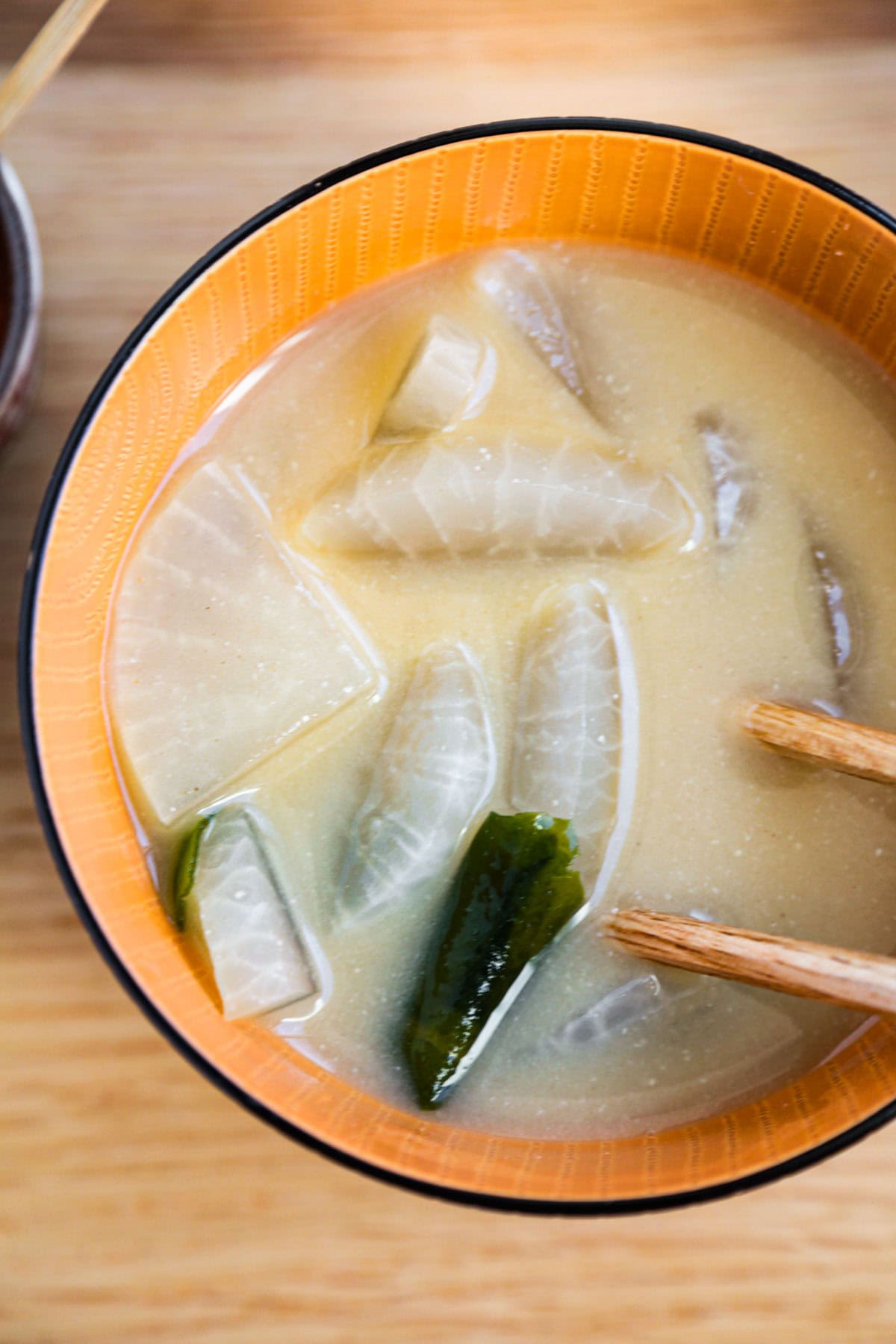
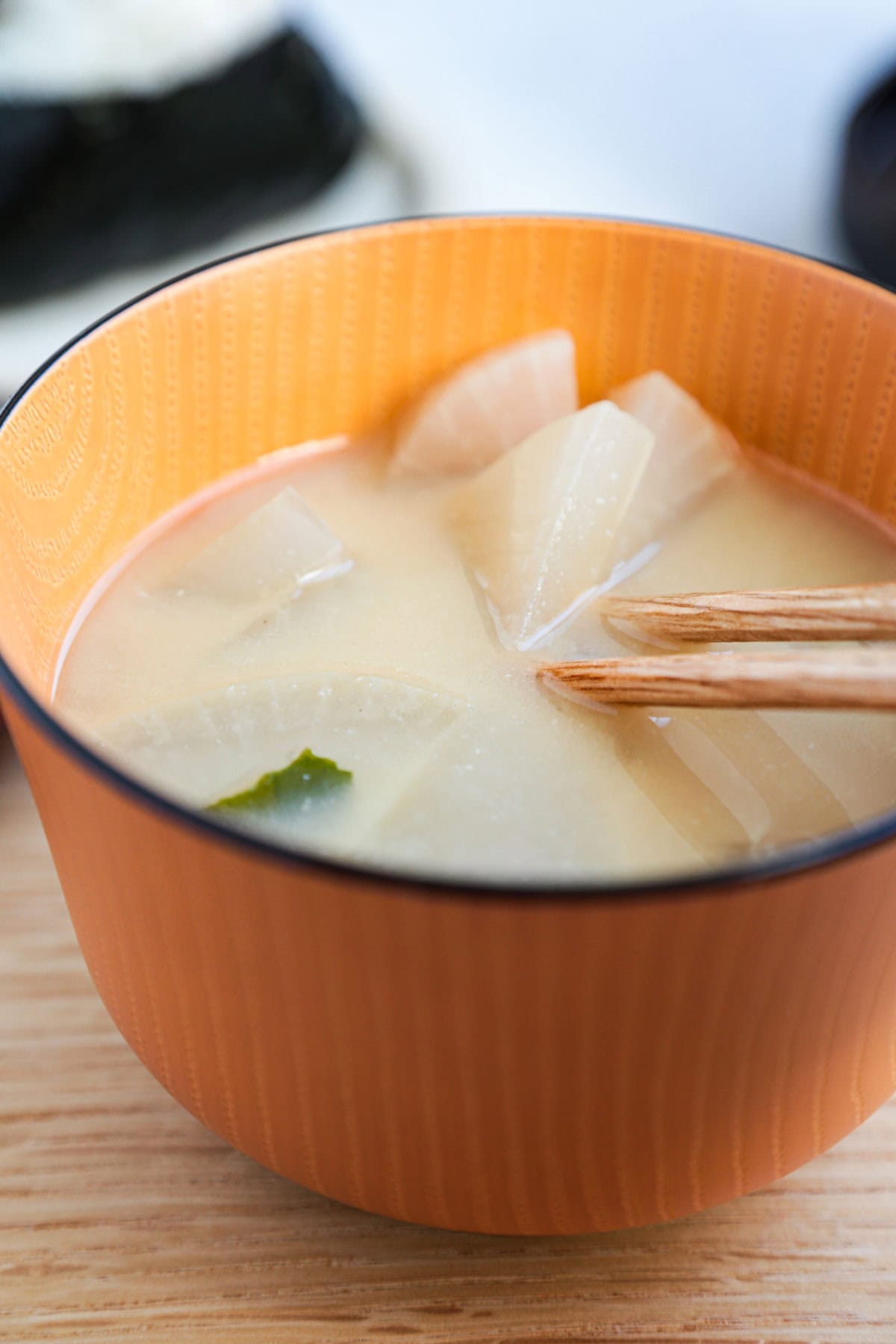
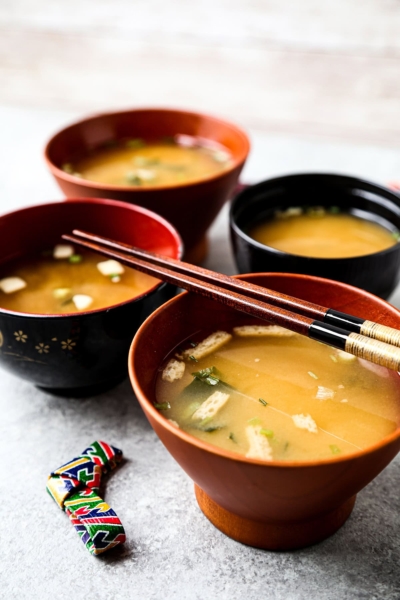
Learn how to make daikon miso soup with just 6 ingredients! Melt-in-your-mouth daikon pieces are simmered in a savory and umami-rich miso broth, for the ultimate Japanese comfort food.
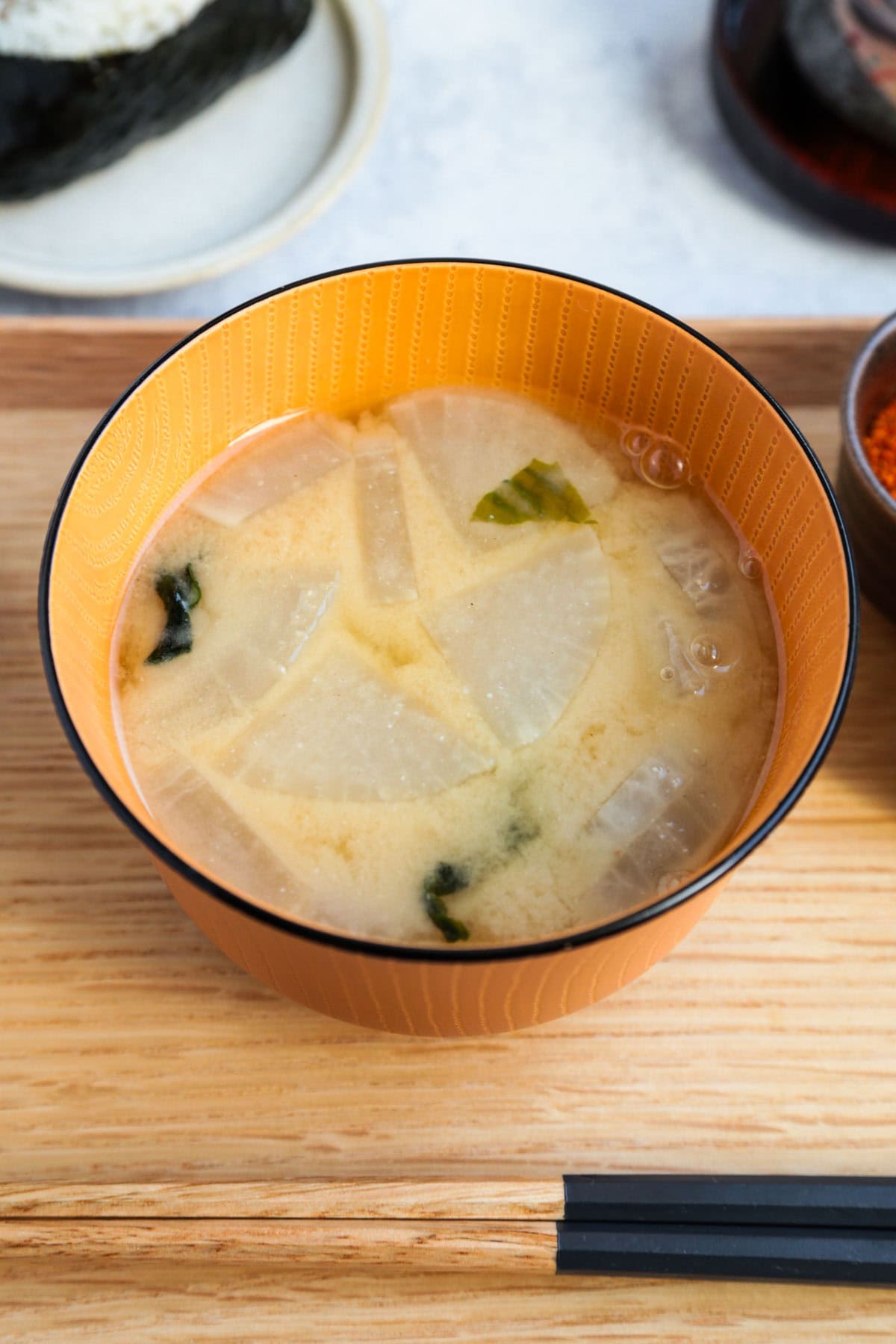
This daikon miso soup is light, earthy, and delicate – the kind of soup that feels nourishing without being heavy. It’s also invigorating if you are feeling a little low on energy or under the weather.
This is traditional Japanese home cooking, the kind of food you find served alongside a bowl of short grain rice, some tsukemono (pickles) and grilled fish. It’s easy to make, requires just a handful of ingredients, and highlights the clean, subtle flavors that make miso soup so timeless.
Why Daikon Works So Well In Miso Soup
Daikon radish has a mild, slightly sweet flavor that softens as it cooks. When simmered gently in dashi, it becomes tender and absorbs the briny flavor, making it a perfect match for miso.
Unlike leafy add-ins, daikon gives the soup body without overpowering it. It also holds its shape well, so the soup stays light and clear instead of starchy or cloudy, such as this chicken and daikon soup.
Table of contents
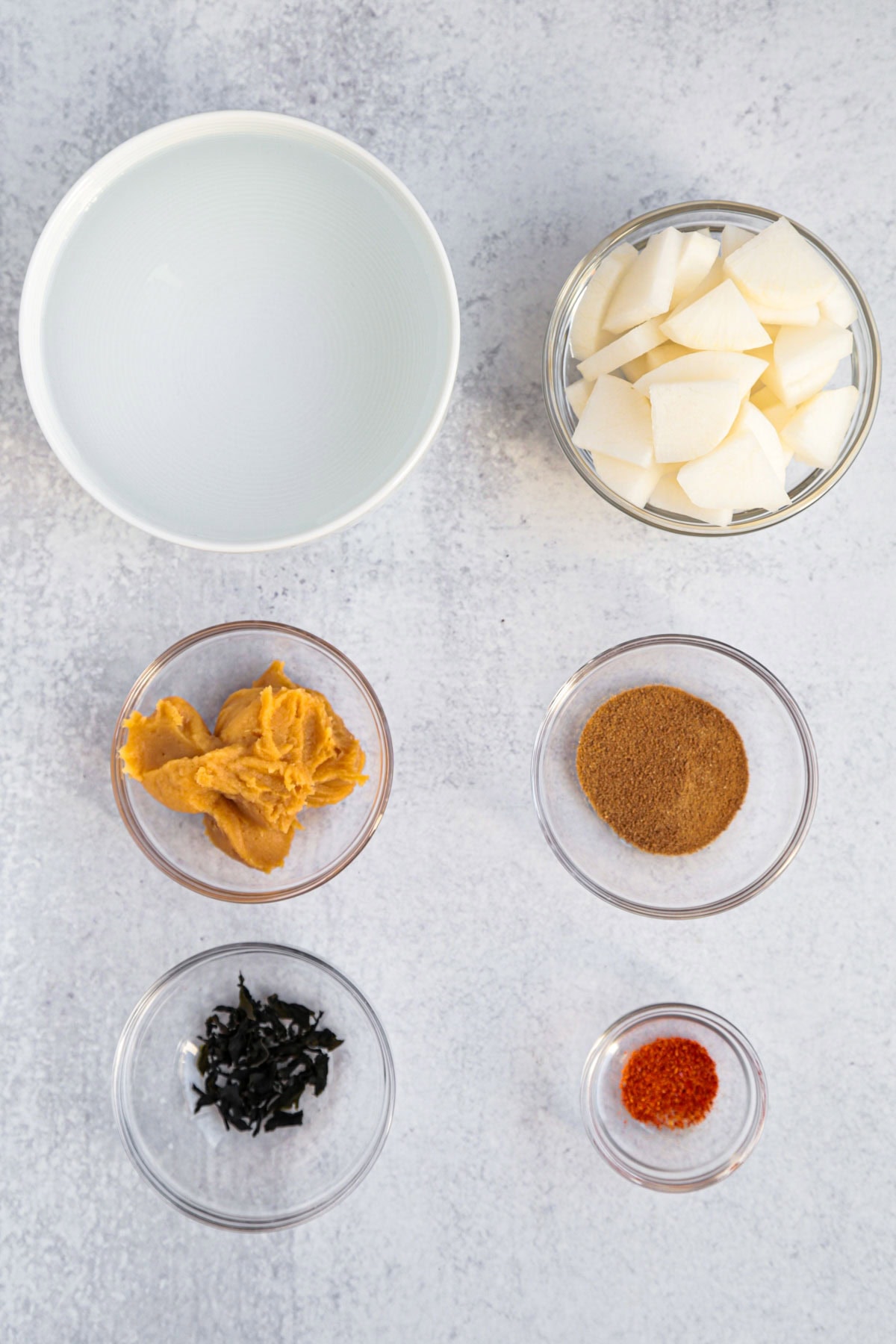
Daikon Miso Soup Ingredients
- Miso paste: You will need white miso paste for this recipe. Or, if you prefer miso soup on the saltier side, use awase miso, which is a mix of red and white miso.
- Dashi powder: Adding a little dashi powder is my mother’s secret to a truly delicious soup. Even if the miso paste you are using already contains dashi, using a little extra brings out even more depth of flavor.
- Water: 3 cups of water yields about 4 small bowls of miso soup. Double the recipe for larger groups or to make extra.
- Daikon: Choose a daikon that’s firm, heavy, and unblemished. For miso soup, the white end part is used because of its spicier taste, whereas the green part, which is sweeter, is used for salads.
- Wakame: Wakame is added just before serving the soup to add a mineral element. Since wakame continues to grow and get slimy as it soaks liquid, it’s best to add it at the very last minute.
- Ichimi togarashi: Ichimi togarashi is ground red chili peppers that are often sprinkled into to soups to add a little heat. Optional but great for those who enjoy spicy foods.
New to Japanese food? Learn about these 14 essential Japanese ingredients for easy home cook meals.
How To Make Daikon Miso Soup
Scroll down to the recipe page for the full recipe.
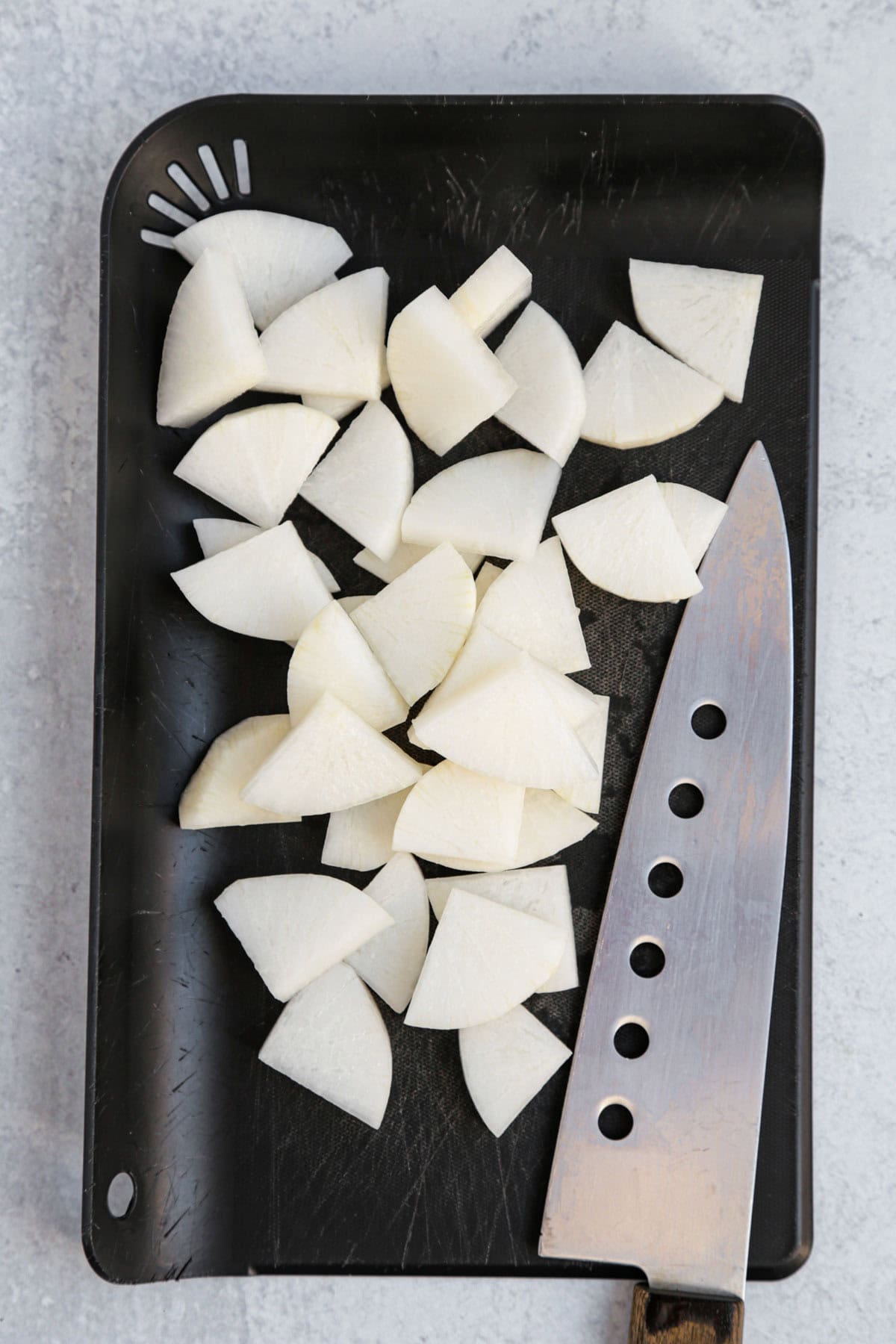
- Prep the daikon. Peel the white outer part and slice the daikon into half moons.
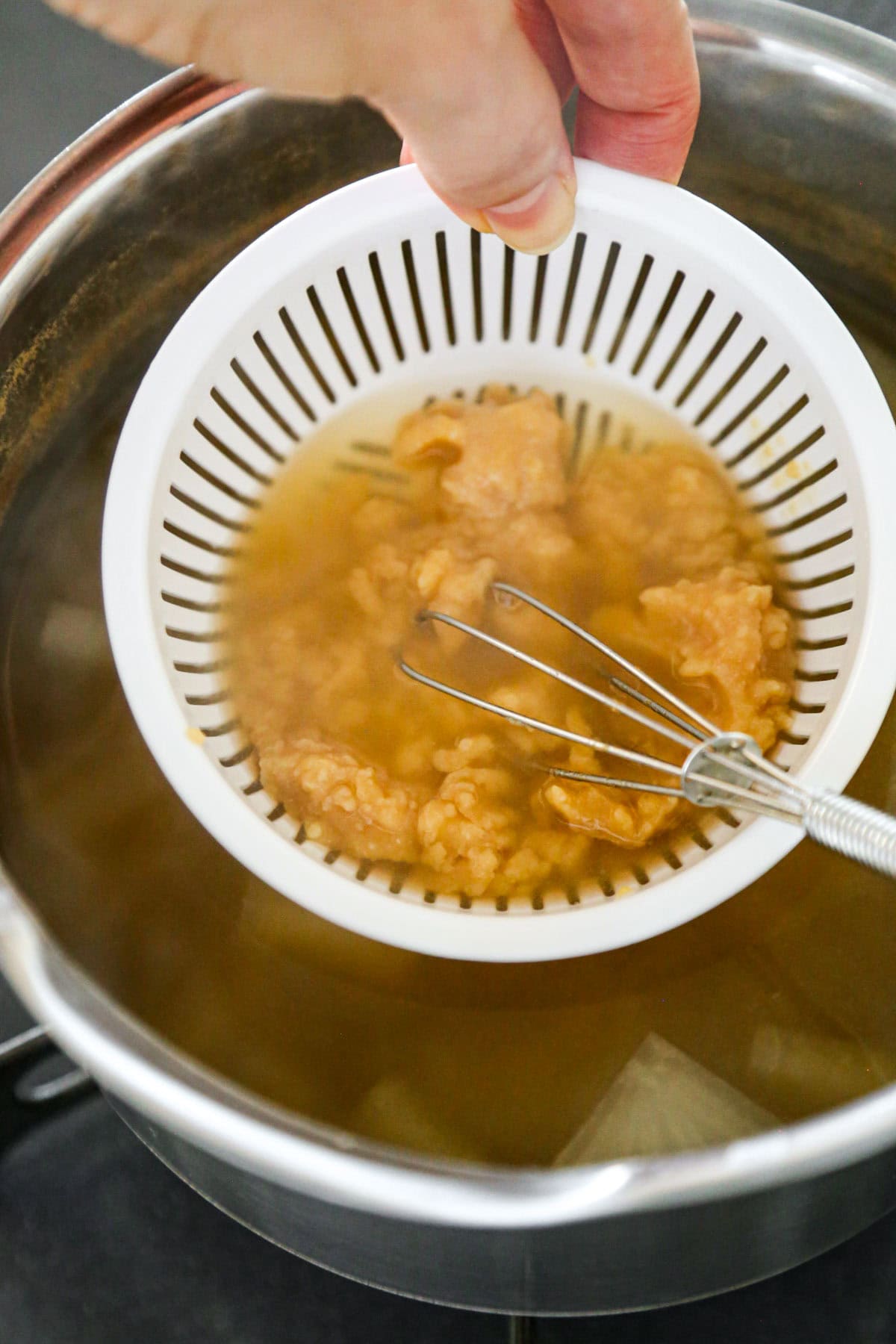
- Make the soup. Bring the dashi powder and water to a boil and add the daikon. Simmer for about 15 minutes, until the daikon is tender. Turn the heat off and stir in the miso paste.
- Add the wakame and serve. Add the wakame seaweed and let it sit for about 1 minute to rehydrate. Serve hot, with a light sprinkle of ichimi if you like a touch of heat.
Tips for Best Flavor
- Don’t boil the miso: High heat can dull miso’s flavor. Always dissolve it after turning off the heat.
- Adjust miso to taste: Different brands and types vary in saltiness and umami. Start with less and add more if needed.
- Slice evenly: Uniform daikon pieces cook at the same rate which means that every slice will be consistent in texture.
Recipe Variations
- Add green onions: Adding freshly chopped green onions before serving gives the soup a refreshing crunch.
- Use homemade dashi: Instead of dashi powder, using homemade dashi adds even more depth of flavor.
- Add carrots: Using a mix of daikon and carrots – 50/50 – is quite common in Japan.
Why White Miso Paste Works Best
Both my mother and I like to use white miso paste over other types of miso paste when making miso soups, because of its delicate qualities. It’s less salty, a little nutty and sweet, and is easier to drink. It also pairs especially well with lighter types of miso soups like my mother’s amazing onion miso soup, and the classic miso soup with tofu and wakame.
As I have mentioned before, everyone has their own favorites so don’t let me stop you from using awase miso or red miso if that’s what you like! But for those who prefer soups on the milder and more delicate side, white miso paste is the way to go.
What to Serve with this Miso Soup
This soup pairs beautifully with a traditional washoku meal of steamed rice, grilled fish, and pickles. It’s also delicious with Japanese salads such as gomae (spinach sesame salad), hijiki seaweed salad, Japanese potato salad, or the popular iceberg salad with carrot ginger dressing served at most Japanese restaurant across the US and Canada.
For something more substantial, it can be a side to rice dishes such as inari sushi, onigiri (rice balls), California roll, or Japanese fried rice. Or fried dishes such as konnyaku karaage, chicken katsu, and tempura.
Did you like this recipe? Are there changes you made that you would like to share? Share your tips and recommendations in the comments section below!
PrintDaikon Miso Soup
A comforting miso soup with melt-in-your-mouth daikon radish. It’s the ultimate Japanese comfort food.
- Prep Time: 10 minutes
- Cook Time: 15 minutes
- Total Time: 25 minutes
- Yield: 4 sides 1x
- Category: Soup
- Method: Boiling
- Cuisine: Japanese
- Diet: Low Calorie
Ingredients
- 3 cups water
- 1 tablespoon dashi powder
- 3 to 5 tablespoons white miso paste or awase miso paste
- 6 ounces daikon radish
- 1 teaspoon wakame seaweed
- Ichimi (ground chili peppers), optional
Instructions
- Peel the daikon. Using a chef’s knife, start by slicing off the leafy part if you are using a whole daikon. Cut the equivalent of 6 ounces of daikon and reserve the rest for future use. Slowly peel the daikon, lengthwise, by rotating it, until you get to the clear part. The skin can be quite thick but you should be able to see where the clear part begins.
- Slice the daikon. Now that the daikon is peeled, slice it in half, lengthwise, and slice the halves in half, lengthwise (quarter of a moon). Slice into bite size pieces and set aside.
- Make the miso soup. In a medium size pot over medium high heat, add the water and dashi powder. Bring to a boil.
- Cook the daikon. Add the daikon and lower the heat. Cover and simmer for 15 minutes, or until the daikon is very tender.
- Add the miso paste. Add the miso paste to a small strainer or a strainer small enough that it can be lowered into the pot. Turn the heat off and lower the strainer so the miso paste is covered in broth. Slowly stir the miso paste with chopsticks or a spoon, and let it fully dissolve.
- Serve. Add the wakame seaweed, wait 1 minute, and serve the soup with ichimi.
Notes
Storage: Save the miso soup in a storage container and refrigerate for up to 3 days.
Nutrition
- Serving Size: 1 serving
- Calories: 42
- Sugar: 0g
- Sodium: 17.5mg
- Fat: 1.1g
- Saturated Fat: 0g
- Unsaturated Fat: 0g
- Trans Fat: 0g
- Carbohydrates: 5.7g
- Fiber: 1.5g
- Protein: 2.5g
- Cholesterol: 0mg
Frequently Asked Questions
Yes, as long as you use kombu dashi instead of regular dashi powder. And make sure the miso paste you are using is vegan (some contain dashi).
You can cook the daikon in dashi ahead of time, but it’s best to add the miso paste and wakame just before serving, for the freshest flavor.
Daikon should be simmered until it’s very tender and easily pierced with a fork. If the daikon is fresh, it will cook pretty quickly (5-10 minutes), whereas daikon that is older can take up to 15-20 minutes.
Yes, tofu pairs very well with daikon miso soup! Use soft or silken tofu that’s been drained and slice into small bite size pieces. Gently add the tofu after dissolving the miso paste.









I make this all the time! Where I live, a good daikon can be difficult to secure, so I’ve begun to use regular radishes, which cook up just fine and are preferable to the overgrown/woody/bitter my grocery has the audacity to sell. Delicious.
Such a great idea Jasmine! Yes, a good daikon makes such a difference, doesn’t it!