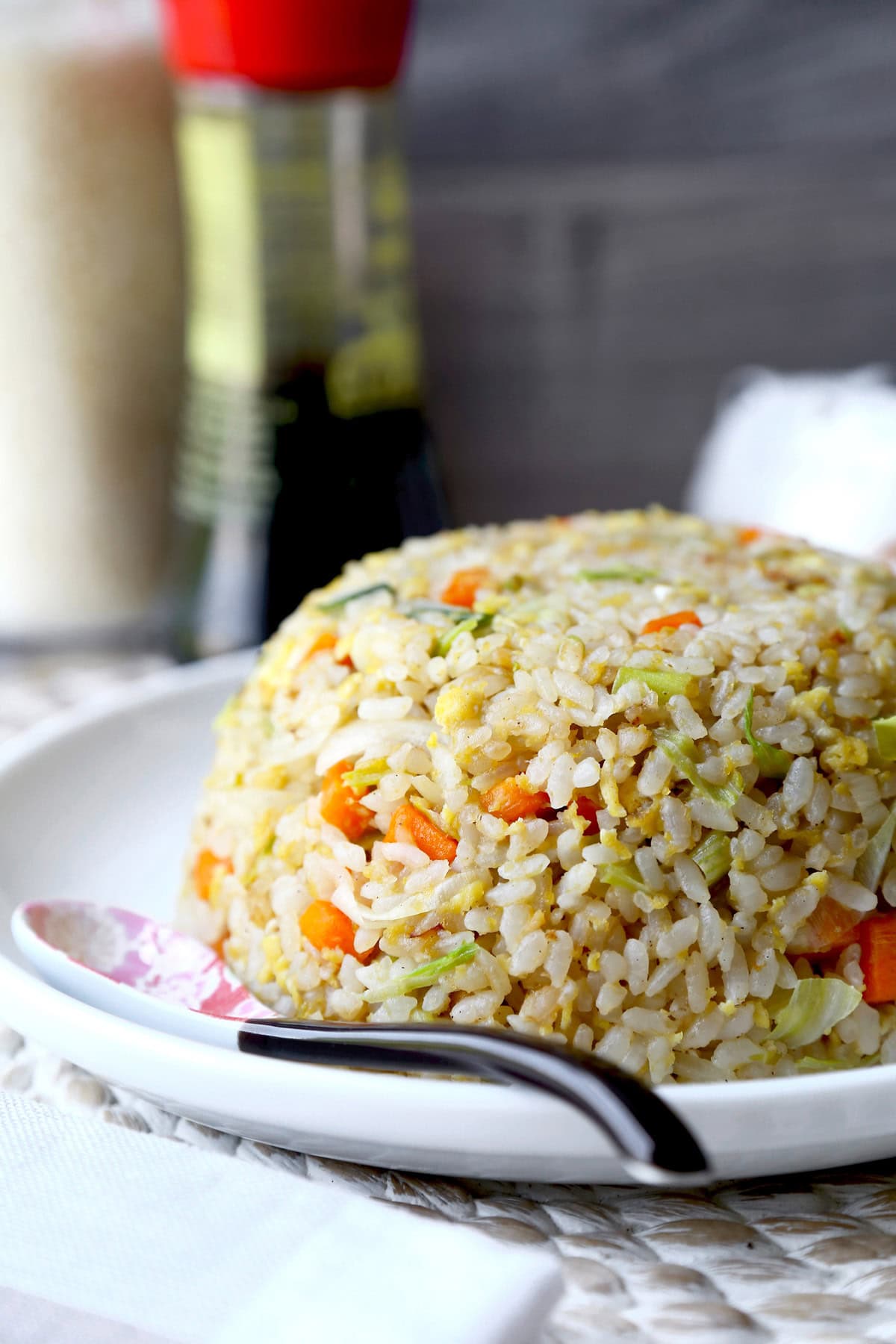
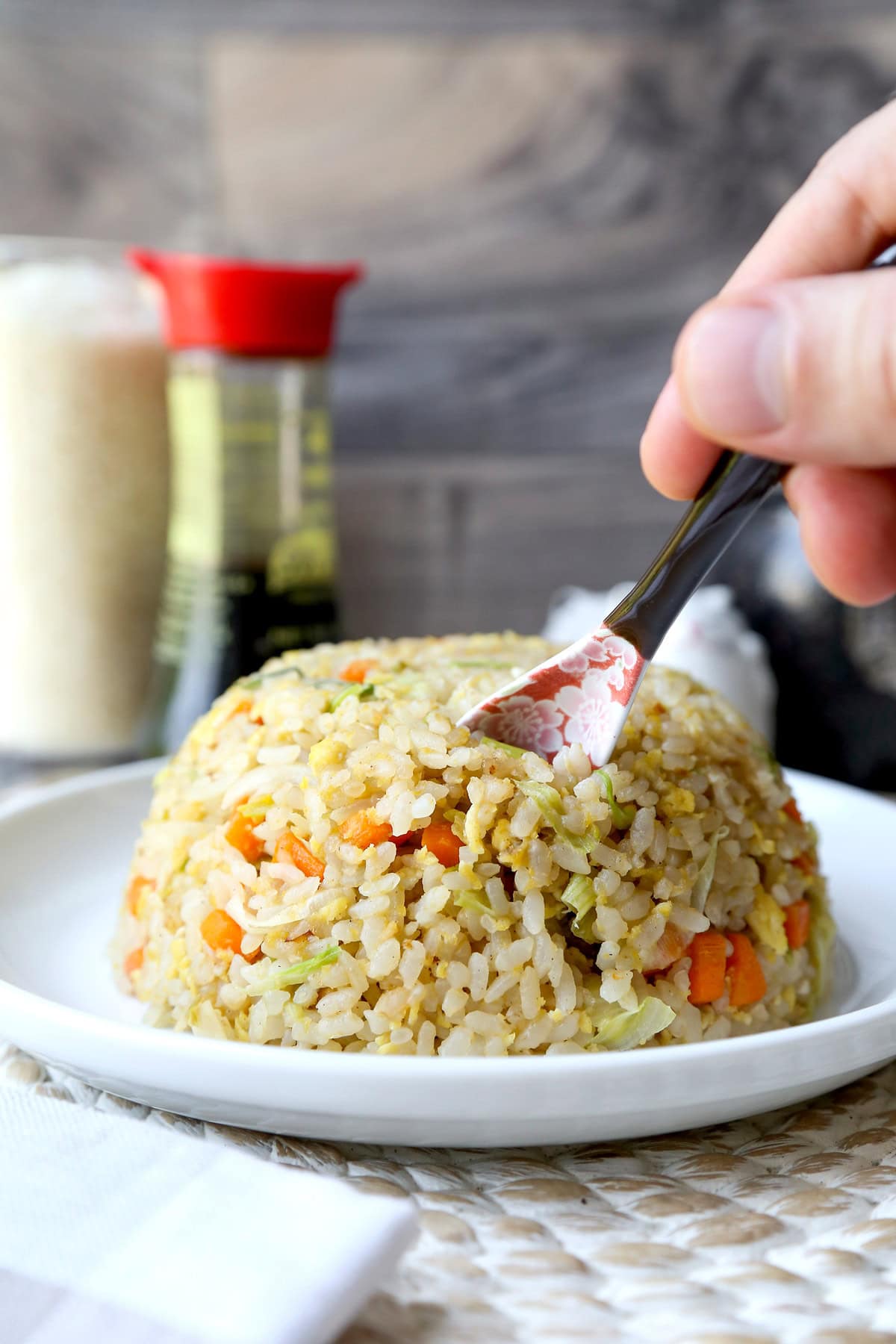
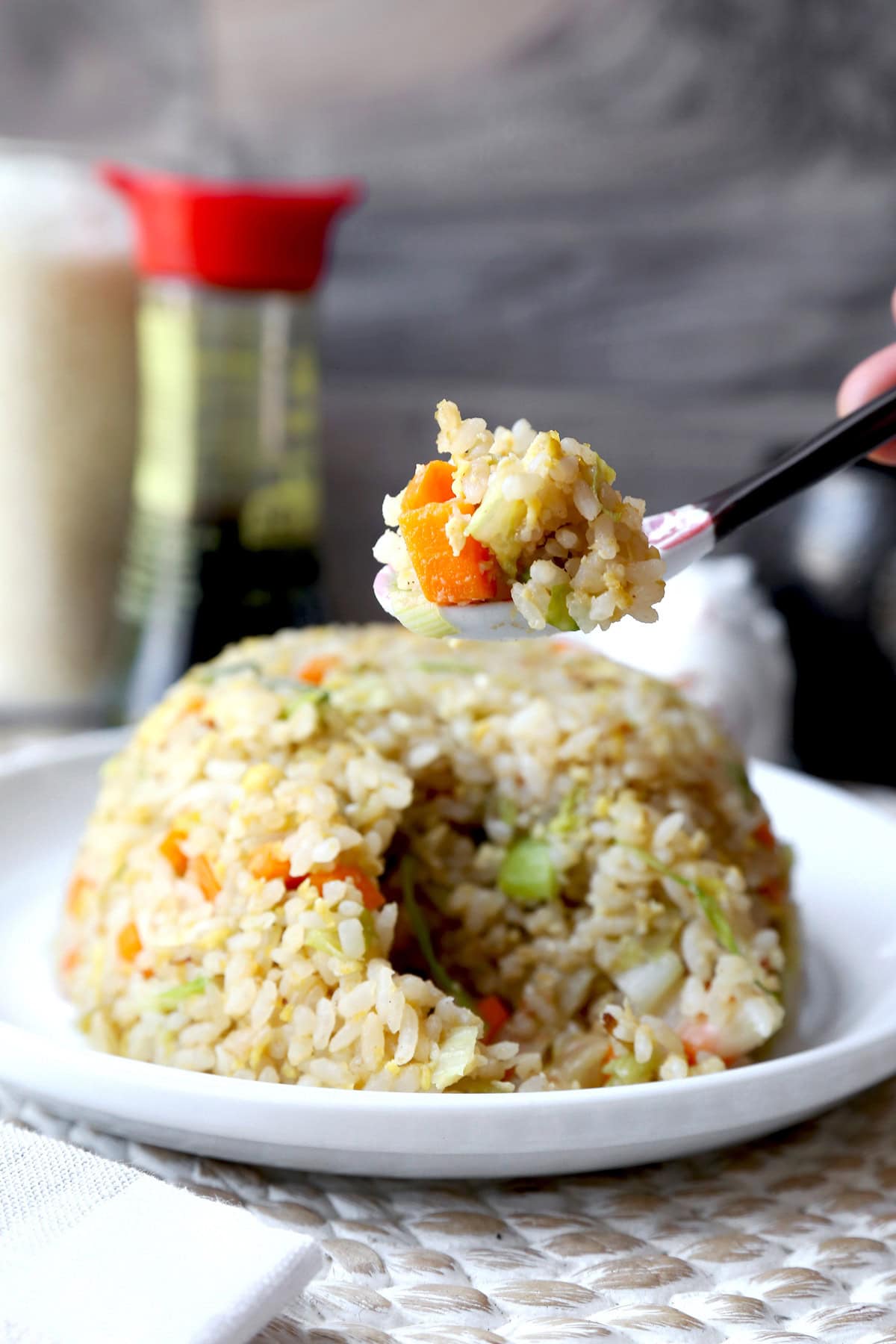
No teppanyaki grill? No problem. This simple Japanese fried rice recipe, known as yakimeshi, is smoky, chewy, delicately savory and buttery. Perfect for weeknights, leftovers, or any time you want restaurant quality without the fuss.
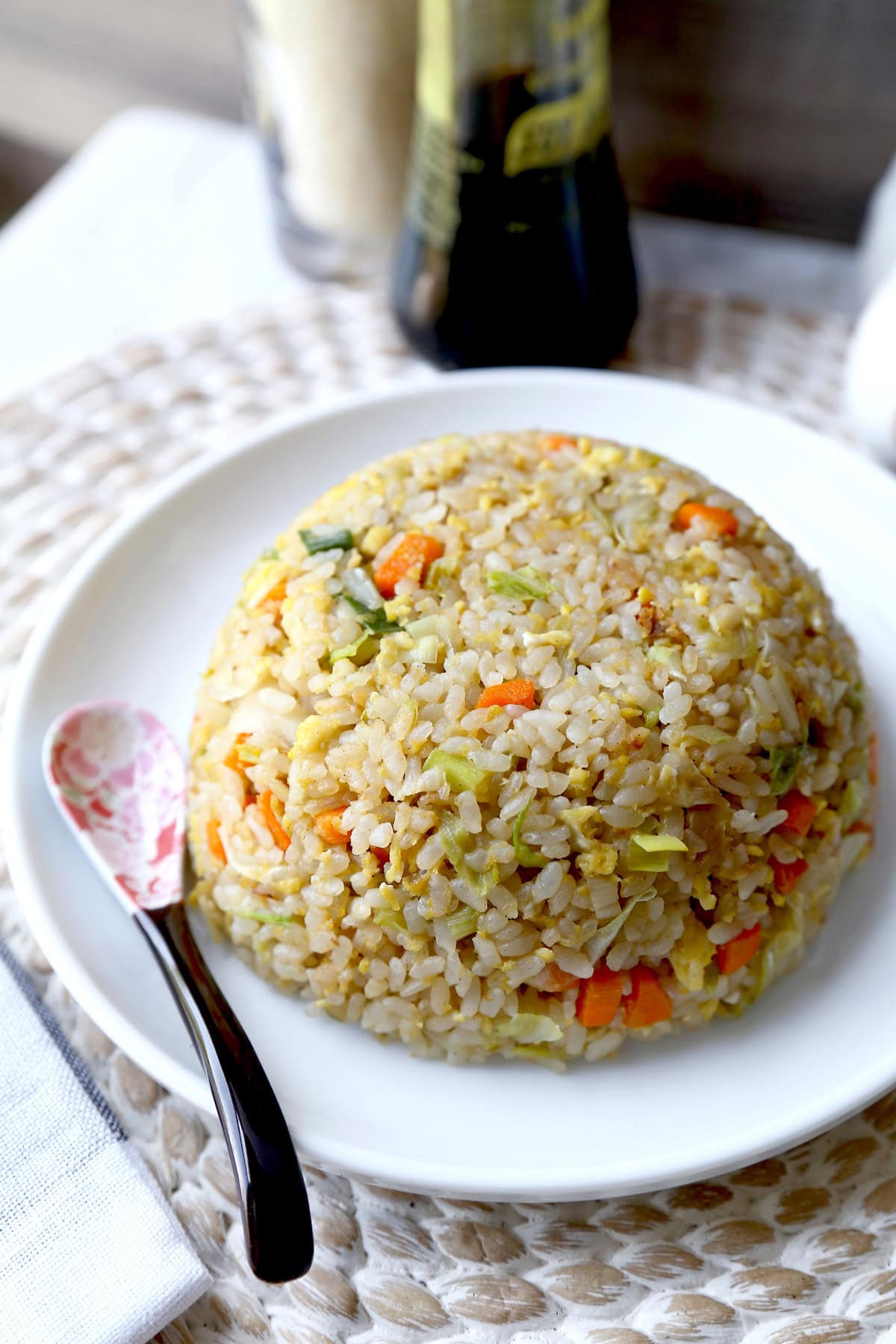
Making Japanese fried rice at home is much easier than it sounds. All you need is a simple frying pan or wok, a handful of pantry staples, and about 15 minutes. No special equipment, no extra steps—just delicious, fuss-free fried rice. What you’ll end up with is something similar to that smoky and umami-packed hibachi fried rice served at Japanese teppanyaki restaurants.
This easy yakimeshi recipe is one of my favorite ways to use leftover rice, whether I’m cooking for one or feeding the whole family. It’s uncomplicated, yet delivers the same bold, restaurant-style flavors – without the need for a teppanyaki grill.
If you love simple rice dishes like this, you may also enjoy this simple shrimp fried rice and chicken fried rice recipes.
Table of Contents
What Makes Japanese Fried Rice Different
Japanese fried rice, also called yakimeshi or chahan, is a rice dish that’s made using leftovers such as eggs, veggies, meats and seafood. It’s subtly different from other fried rice recipes, such as Chinese fried rice, because:
- Japanese fried rice is made using short-grain rice, while Chinese fried rice uses long-grain rice, like Jasmine rice. This means that Chinese fried rice has a firmer and drier texture than Japanese fried rice, which tends to be chewy and slightly sticky.
- The egg is added before the rice when making Chinese fried rice. Japanese fried rice uses the reverse technique – the rice is added first and the eggs are scrambled after.
When it comes to hibachi fried rice, the only difference is in the theatrics used to make fried rice. Being able to flip an 8” chef’s knife behind your back and catch it with your eyes closed is a neat trick – but will not make your dish tastier.
For step-by-step help with fried rice basics, be sure to check out my complete fried rice guide.
Yakimeshi Ingredients
Scroll down to the recipe card the full recipe.
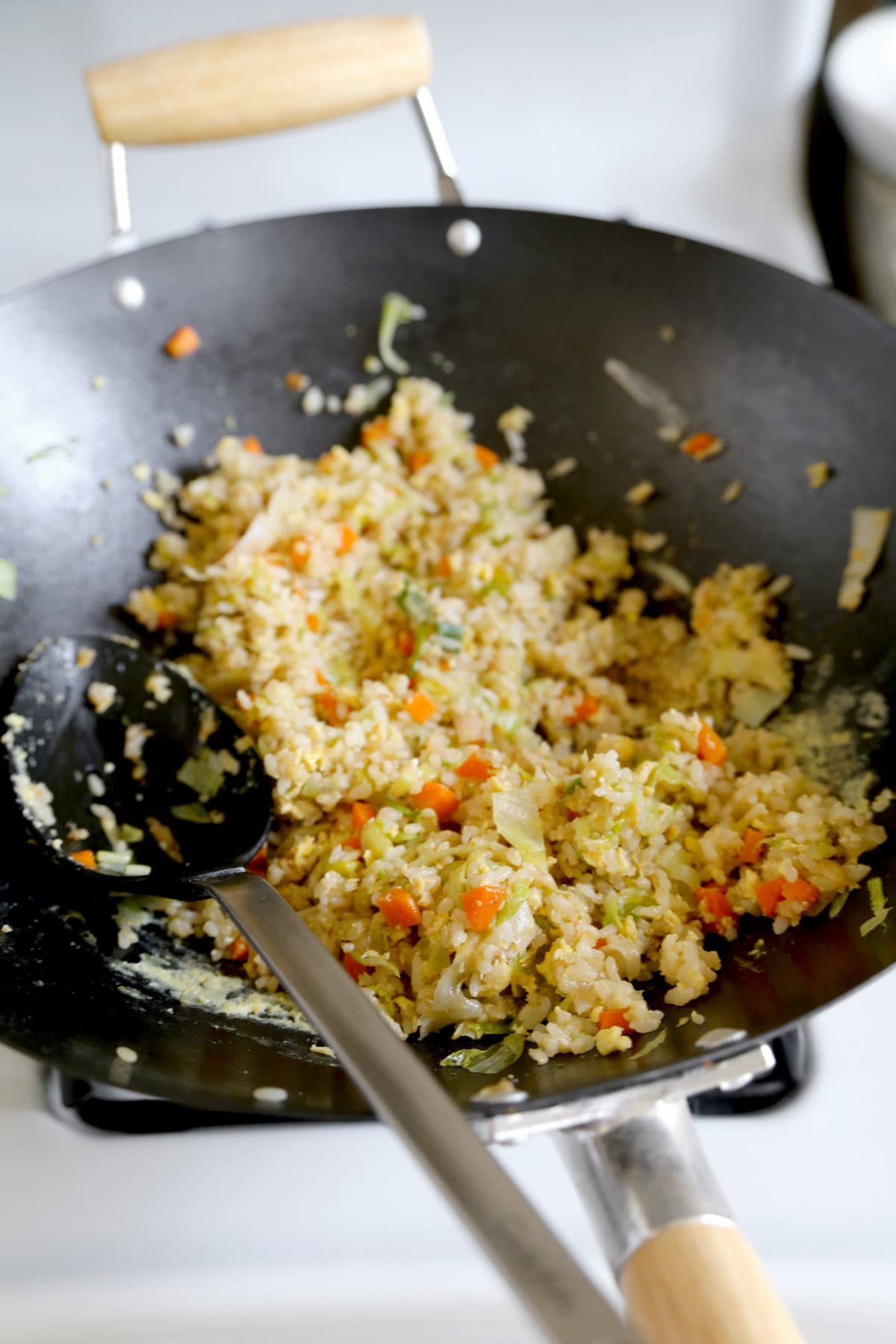
- Oil: I always use a neutral oil such as grapeseed oil, peanut oil or vegetable oil.
- Garlic: Just a couple of garlic cloves as aromatics, to infuse the rice with a slight sweet and pungent taste.
- Leek: Leeks are often use in Japanese cooking for their mild and sweet taste. But feel free to use a regular onion or some shallots as well.
- Carrot: A small carrot will do. It adds a little sweetness and a pop of color.
- Day old cooked Japanese rice: Use Japanese rice that’s been sitting in the fridge for 1-2 days to get the best texture.
- Lettuce: Using shredded lettuce gives the dish a mild and refreshing taste.
- Eggs: Eggs gives the dish a creamy texture and a protein boost.
- Soy sauce: Soy sauce is for umami and saltiness.
Learn about these 14 Essential Japanese Ingredients to become an expert at Japanese cooking!
Alternative Ingredients
This yakimeshi recipe is basically a blueprint. You can technically use any vegetable or protein for this recipe!
Here is a list of common ingredients found used in Japanese fried rice:
- Vegetables. Green beans, mushrooms, green peas, or celery.
- Proteins. Extra firm tofu, chicken, pork belly, salmon, or shrimp.
- Creaminess. With a little Japanese kewpie mayonnaise on top for creaminess, and a touch of fruitiness and tanginess.
- Tanginess and acidity. Chopped Japanese pickled mustard greens, called takana, like this scrumptious takana chahan recipe.
- Refreshing crunch. Chopped green onions are the perfect topping to add color and a delightful crunch.
- Nutty flavor. A dash of toasted sesame oil to add nuttiness.
- Less salt. Use low sodium soy sauce for those watching their sodium intake.
- Heat. Sprinkling some ichimi togarashi or gochugaru for a little heat.
To make this fried rice recipe vegan, omit the eggs and add a protein like tofu, tempeh, or vegan egg scramble. For more ideas, check out this collection of popular fried rice recipes for different flavors and styles.
How To Make Japanese Fried Rice
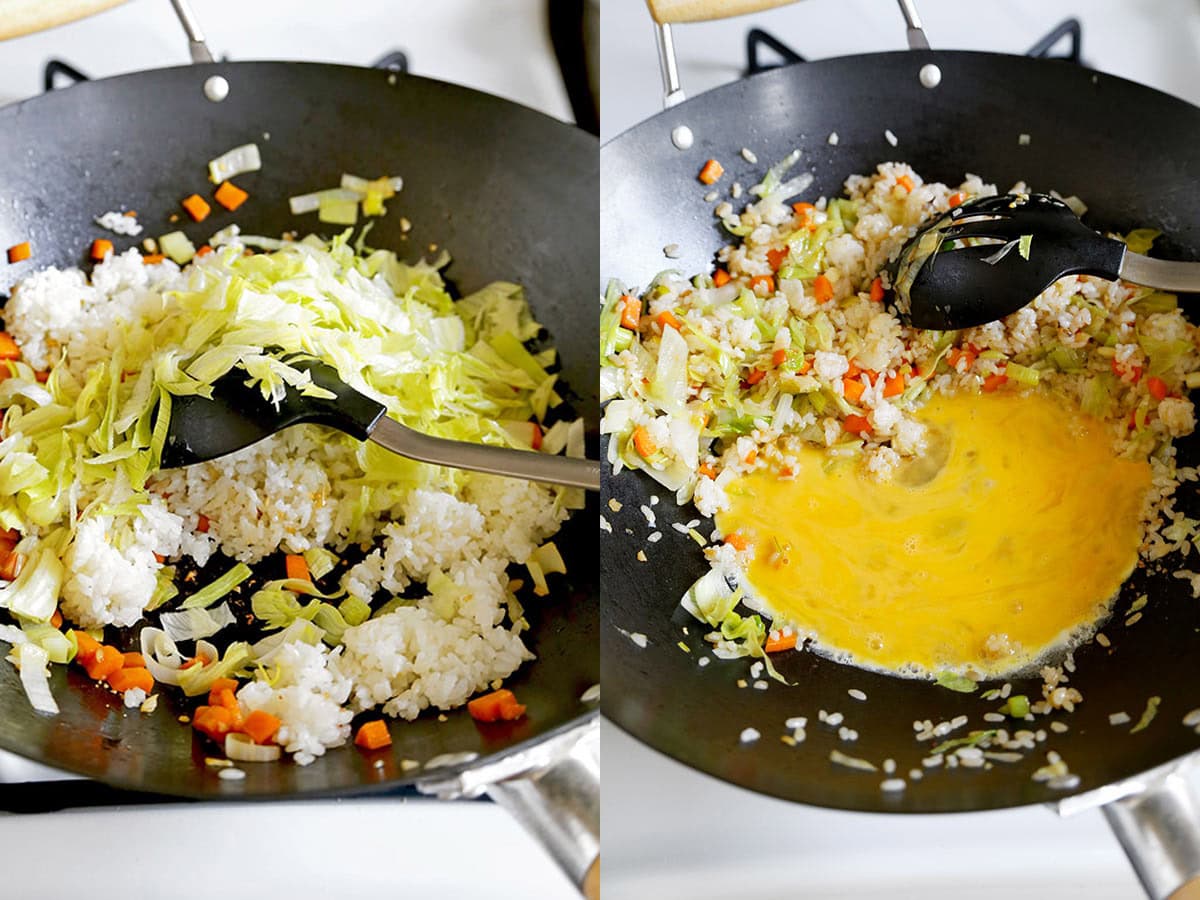
- Stir fry the vegetables. PIace a large skillet or a flat bottom wok over medium-high heat and when the wok is hot, add the oil and stir fry the vegetables until they have begun to soften.
- Stir fry the rice. Add the rice and gently break it up. Add the lettuce and mix it with the other ingredients.
- Add the egg. Push the fried rice to one side and scramble the egg on the other. Fold the scrambled egg into the fried rice.
- Season and serve. Add the seasoning and stir fry until all the ingredients are combined and flavor is evenly distributed. Enjoy!
Why Day-Old Rice Works Best
Using cold, leftover rice is the secret to great fried rice.
Freshly cooked rice tends to be high in moisture which leads to clumping and a mushy texture. That’s because the rice steams when it hits the wok instead of frying.
Chilled day-old rice has time to dry out in the refrigerator and develop a firmer texture. This allows each grain to separate and fry lightly in the pan, giving it a light, fluffy, and airy texture.
Only have fresh rice? Try spreading it out on a tray and refrigerate for 20 to 30 minutes before cooking.
Cooking with Japanese rice for the first time? Read my tutorial on how to make Japanese rice.
Best Pan To Use For Fried Rice
If you ask my Japanese mother how to fry rice, she’ll tell you that any old pan is fine. And she’s right… up to a certain point. The best pans to use are the deep ones such as a wok or a deep skillet, and that’s because it makes tossing the rice and veggies at high heat much more easy, and less messy.
Bonus: If you have a gas range, the cooking flame will also heat the sloping sides of your wok, which is excellent for making fried rice.
Storage And Reheating
Store leftovers in an airtight container in the refrigerator for up to 3 days.
- Reheat in the microwave – or in a pan on the stovetop with a little cooking oil.
- Season reheated leftover fried rice with a little salt and white pepper for that fresh out of the wok flavor.
What To Serve With Japanese Fried Rice
To make it a full teppanyaki dinner experience, serve yakimeshi with:
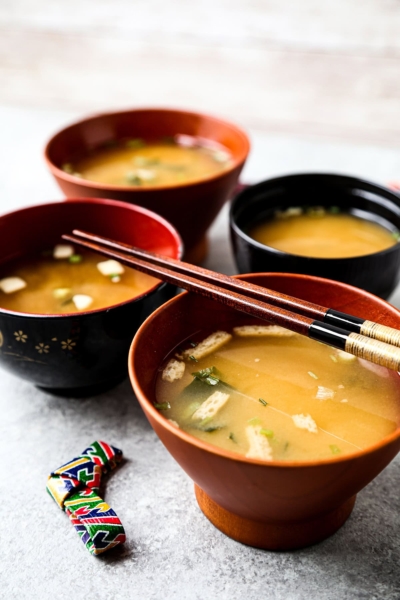
- Miso soup. You simply cannot go wrong with this classic Japanese soup!
- Iceberg lettuce dressed with a carrot ginger dressing.
- Yakisoba. Noodles are a popular add-on beyond rice.
- Yum yum sauce. A mayo-based shrimp sauce that’s very popular in American teppanyaki houses.
Also common in the US are gyoza, shrimp tempura, and California rolls.
Did you make this dish? I’d love to hear how it turned out! Please leave a rating and review below — it really helps other Pickled Plum readers and supports my site.
Japanese Fried Rice (Yakimeshi)
No Teppanyaki grill top needed to whip up this simple and savory Japanese Fried Rice recipe. Yakimeshi can be made in a skillet and be ready to serve in just 15 minutes!
- Prep Time: 10 minutes
- Cook Time: 5 minutes
- Total Time: 15 minutes
- Yield: 4 people 1x
- Category: Rice
- Method: Stir Fried
- Cuisine: Japanese
- Diet: Vegetarian
Ingredients
- 1 tablespoon vegetable oil
- 2 cloves garlic, minced
- 1 small leek or onion, finely chopped
- 1 small carrot, finely chopped
- 300 grams 1-2 days old cooked Japanese rice that was kept in the fridge
- 1 cup lettuce, shredded
- 2 large eggs, whisked
- 1 tablespoon soy sauce
- salt and ground white pepper, to taste
Instructions
- Heat the oil and garlic. In a wok or large skillet over medium-high heat, add the oil and garlic and fry for 30 seconds.
- Cook the veggies. Add the leek and carrot and cook for 1 to 2 minutes, or until the vegetables are soft but still yielding a crunch.
- Add the rice. Add the day-old rice and gently break it up until it’s no longer clumpy. Add the lettuce and mix it in with the rice. Toss well.
- Cook the egg. Push the rice to one side of the pan and add the whisked eggs to the empty side. Move in a zigzag motion to scramble the eggs, using a spatula and fold the cooked eggs into the rice.
- Season, mix and serve. Add the soy sauce, salt, and pepper, and toss the rice until the seasoning is evenly spread through the fried rice. Turn the heat off, transfer the fried rice to a plate and serve.
Notes
Store leftovers in an airtight container and refrigerate for up to 3 days.
Nutrition
- Serving Size: 1 serving
- Calories: 183
- Sugar: 3g
- Sodium: 191mg
- Fat: 4.4g
- Saturated Fat: 1.4g
- Unsaturated Fat: 1g
- Trans Fat: 0g
- Carbohydrates: 29.3g
- Fiber: 1.5g
- Protein: 6.1g
- Cholesterol: 94.8mg
Frequently Asked Questions
There may be too much moisture in the rice grains already. Freshly cooked rice is plump with moisture and needs time in the fridge to dry out. This issue is only compounded when adding liquid ingredients like soy sauce. There’s nowhere for that additional moisture to go unless the rice is fairly dry to begin with.
I learned this from my mom — it adds a refreshing crunch and subtle sweetness that balances the savoriness of the rice. I love the wilted crunch it brings – and that it’s a magnet for whatever flavors I’m using.
Sure! If you decide to cook the egg separately from the fried rice, just make sure to pull it before it’s fully cooked (like 85%) and set it aside. You can add the cooked egg to the fried rice as one of the last additions and cook it that last 15% with everything – so it’s properly incorporated into the yakimeshi.
Yes, but expect a slightly different texture when using jasmine rice. Japanese rice gives yakimeshi that classic chewiness.
Use high heat, don’t overcrowd the pan, and let the rice sit briefly before stirring. That light browning adds depth without burning.








Questions and Reviews
Very good, and quite easy