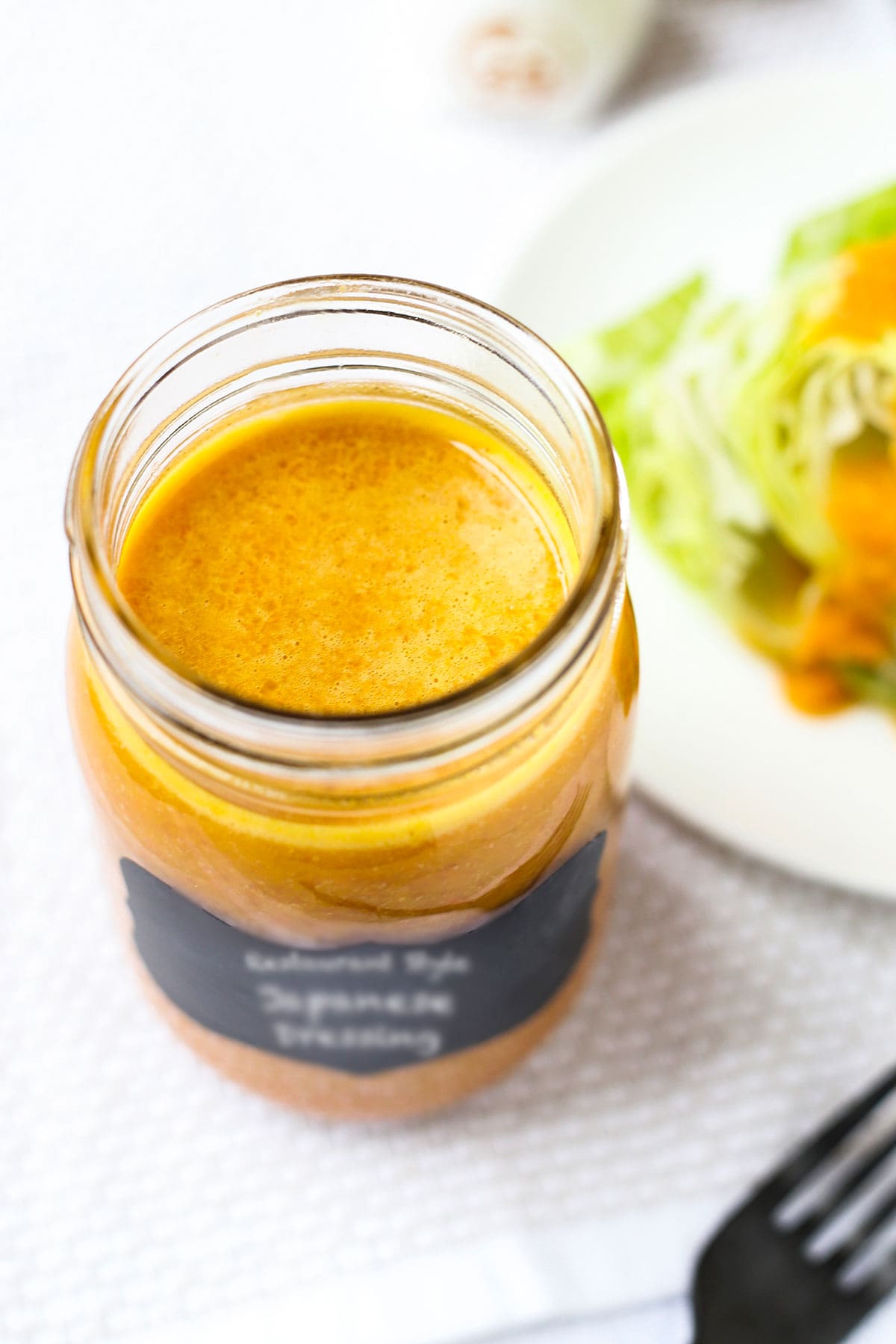
Make this iconic Japanese carrot ginger dressing in less than 10 minutes! Inspired by Japanese-American steakhouses, the sweet and tangy flavors make the perfect pairing to ice cold iceberg lettuce!
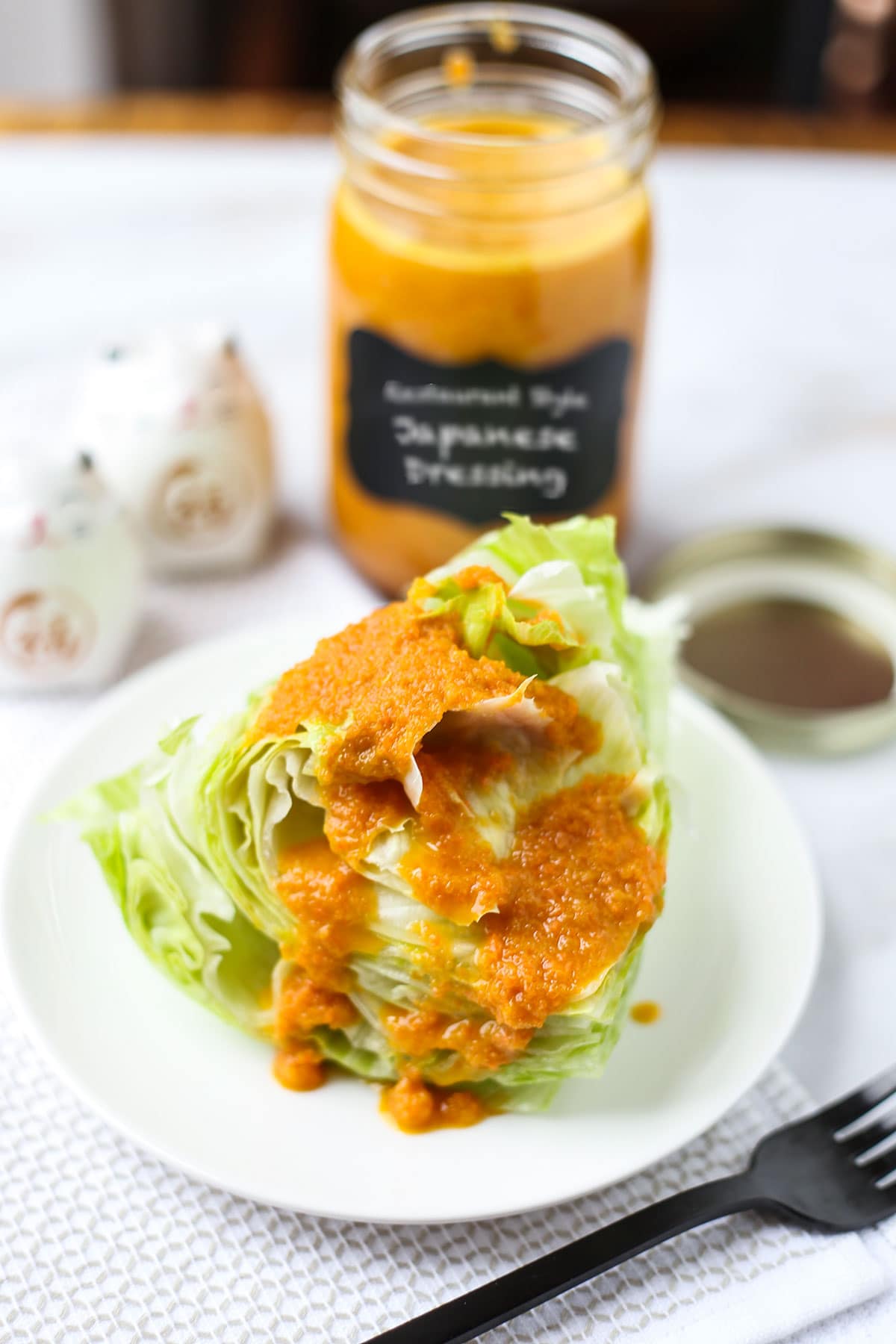
I‘ve been a fan of the sweet and tangy taste of Japanese carrot ginger dressing ever since I was a college student. My friends and I used to sneak out of campus and take the bus to our favorite Japanese restaurant in downtown Montreal. I always ordered the sushi lunch special: spicy tuna roll, miso soup, and iceberg lettuce topped with carrot ginger dressing. Ginger dressing is one of the most common styles served at Japanese restaurants, alongside sesame and miso-based options covered in this Japanese salad dressings guide. I fell in love instantly with the bright and tangy taste of the dressing.
I decided to make my own version after discovering how easy it was to make. I like assertive flavors so this dressing is anything but boring! It has plenty of sweetness, a little fruitiness, and some tanginess. The flavors offset each other beautifully, bringing the perfect balance to this Japanese-American classic.
If you love bold Japanese flavors, you might also like my miso dressing recipe, which has a deeper umami profile.
Why You’ll Love This Dressing
This dressing delivers:
- Quick. Bold restaurant-style flavor in under 10 minutes.
- Balanced. Just the right balance of sweet, tangy, and umami.
- More than just salads. A versatile sauce for salads, bowls, proteins, and more.
- Adjustable for certain dietary needs. Can easily be made vegan and gluten-free.
Table of contents
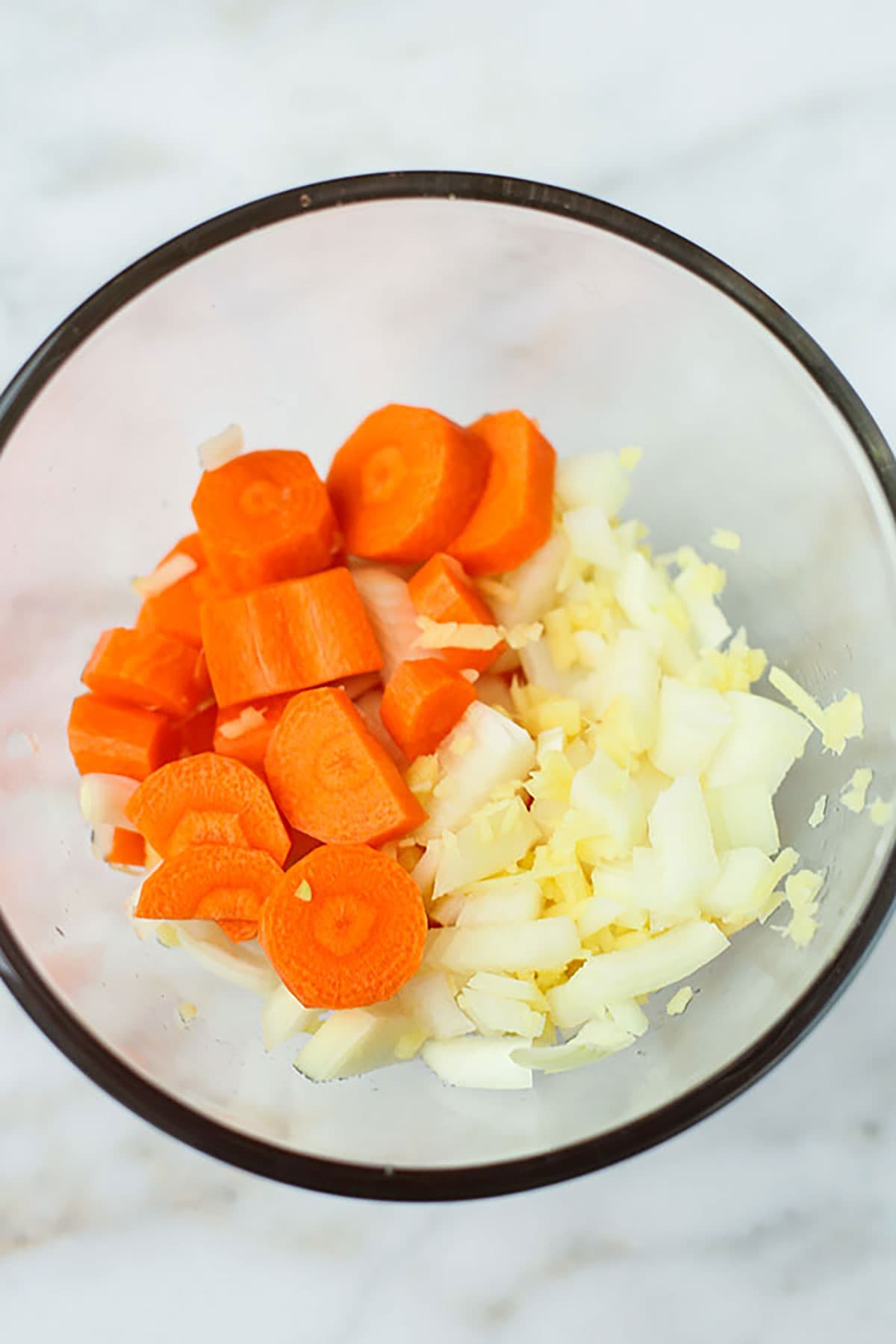
Japanese Carrot Ginger Dressing Ingredients
- Carrots: I’m using 7 ounces of carrots which comes to about 200 grams. Since everything will be blended the carrot can be roughly chopped here.
- Onion: A yellow sweet onion is best for this recipe but you can also use a regular yellow or white onion. I’m using 4 ounces which is about 110 grams.
- Ginger: You can use more than 2 tablespoons of ginger if you like your dressing to have some heat. Two tablespoons, which is what I’m using, is just enough to infuse it with ginger flavor without feeling any tingling on the tongue.
- Sugar: Granulated sugar is preferred but you can use brown as well. One tablespoon is all you need.
- Soy Sauce: The soy sauce adds umami and earthiness to the dressing. Use a Japanese soy sauce such Kikkoman or Yamasa.
- Rice Vinegar: Rice vinegar infuses this dressing with plenty of tanginess, similar to the bite you get in ponzu sauce.
- Salt: I use kosher salt which has bigger granules. If you are using regular salt, start with 1/4 teaspoon, do a taste test, and work your way up if needed.
- Oil: Any neutral oil will do here. You can use organic canola oil, vegetable oil, grapeseed oil, corn oil.
Variations
- Make it fruity. Use apple cider vinegar instead of rice vinegar for a fruitier taste.
- Add some nuttiness. Add 1 or 2 tablespoons of toasted sesame oil to introduce a nutty element.
- Intensify the umami factor. Add a little white or awase miso paste to bump up the umami and savory notes.
How To Make This Dressing
Kitchen Equipment Needed
Blender: You will need a small or a regular size blender.
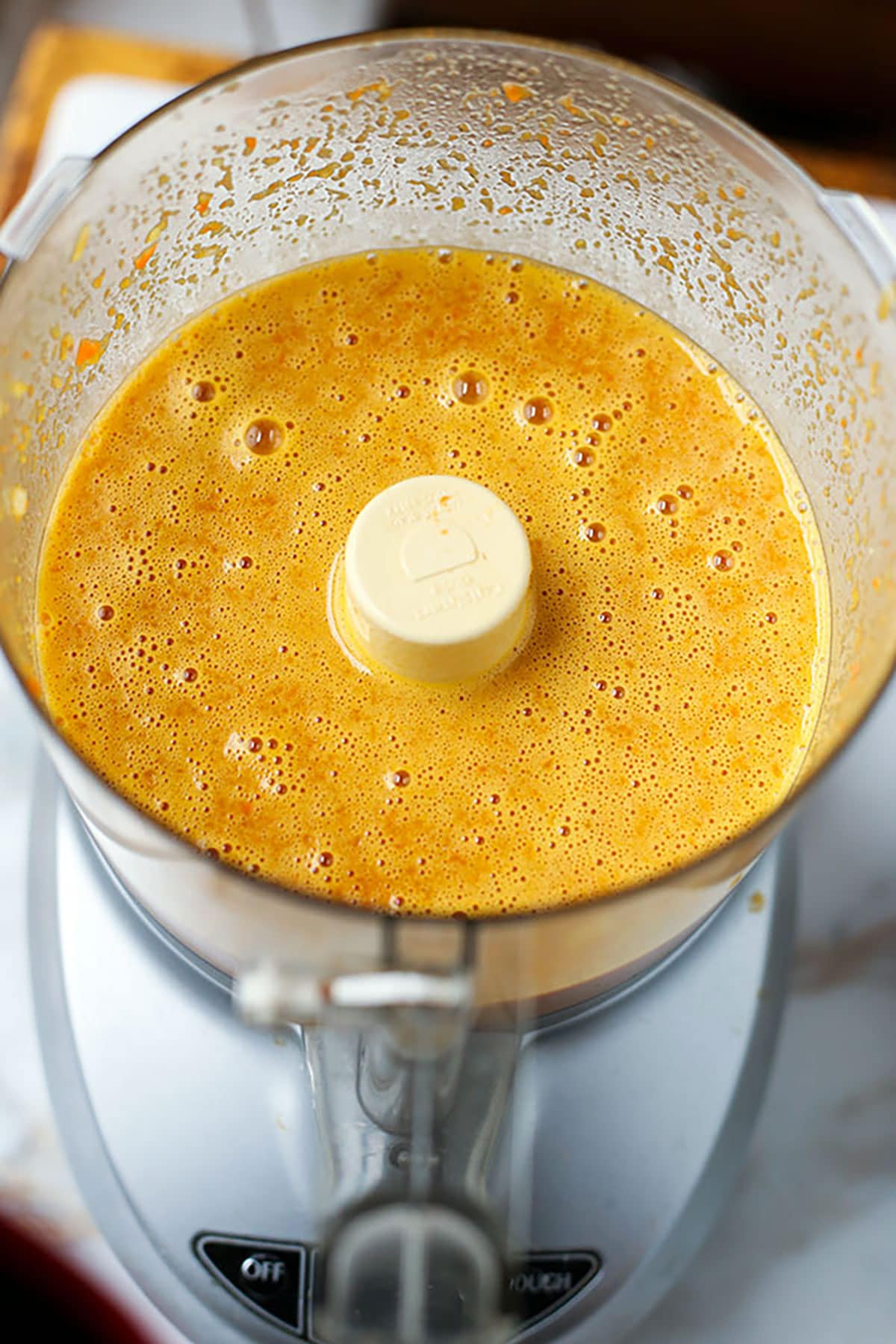
- Add all the ingredients, except for the oil, in the blender and press start. Blend until the texture is smooth.
- While keeping the blender on, slowly add the oil so that it emulsifies (blends) with the other ingredients. It’s important to do it slowly otherwise the oil can separate and ruin the dressing, so take your time for this step!
- Do a taste test and if you think it needs adjusting, add a little more sugar or salt.
Recipe Tips for Best Results
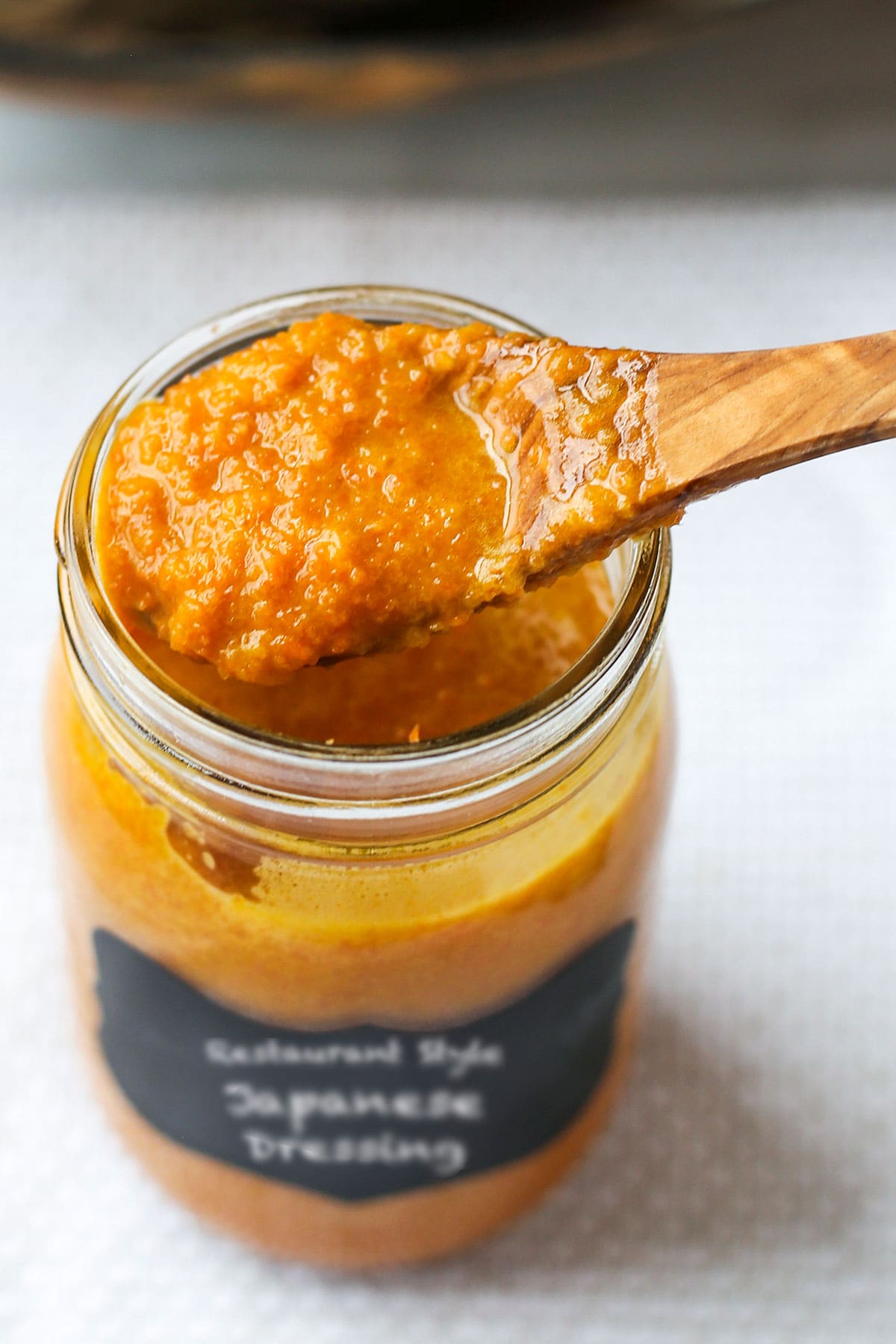
- Do not overblend. This dressing tastes best when it’s not completely watery. Leave a little graininess to the carrots so they can sit on lettuce leaves and make every bite taken, more intense.
- Use fresh ingredients. Make sure that the carrots, onion, and ginger you are using are in great condition. Fresh carrots and onions have a natural sweetness that older ones don’t have. And fresh ginger is juicier and milder in flavor.
Storage
Save the dressing in a jar or storage container with a tight fitting lid. It will keep in the fridge for up 2 weeks.
What to Serve With It
Serving this dressing over a bed of crispy iceberg lettuce is by far my favorite combination. However, you can use romaine lettuce or endives as well, or any other type of crunchy greens to enjoy this lovely dressing.
Carrot ginger dressing is usually served with a small salad as part of a Japanese lunch meal here in the US – with onigiri, California roll, Japanese fried rice, pork or chicken katsu, or oyakodon. These are all great dishes to pair this dressing with along with other delicious Japanese classics such as miso ramen, curry rice, agedashi tofu, and kitsune udon.
If you enjoy Japanese salad dressings you might also like:
- Sesame dressing, which a little richer and nuttier.
- Soy garlic dressing. Light and on the savory and umami side.
- Japanese vinaigrette (wafu dressing). Another classic vinegar and soy sauce forward dressing.
- Shiso dressing. Herbaceous and full of aromatics from the perilla leaves, it’s one of my favorites.
- Wasabi dressing. Creamy and a little spicy, it goes well with heartier salads like this traditional kani salad.

Did you like this recipe? Are there changes you made that you would like to share? Share your tips and recommendations in the comments section below!
PrintJapanese Carrot Ginger Dressing
The classic sweet and tangy carrot ginger dressing from your favorite Japanese restaurant! Make it at home in just 10 minutes.
- Prep Time: 10 minutes
- Cook Time: 0 minutes
- Total Time: 10 minutes
- Yield: About 2 cups 1x
- Category: Dressings
- Method: Blender
- Cuisine: Japanese
- Diet: Vegan
Ingredients
- 7 ounces carrots, peeled and chopped
- 4 ounces onion, peeled and finely chopped
- 2 tablespoons ginger, peeled and finely chopped
- 1 tablespoon granulated sugar
- 1/4 cup soy sauce
- 1/2 cup rice vinegar
- 1/2 teaspoon salt
- 3/4 cup organic canola or vegetable oil
Instructions
- Blend. Put all the ingredients except for the oil in a blender and blend until smooth.
- Add the oil. Slowly add the oil and blend until the mixture has emulsified.
- Serve. Use this dressing with a crisp lettuce like iceberg or romaine.
Notes
Save the dressing in a jar or other storage container. Refrigerate for up to 2 week.
Nutrition
- Serving Size: 1/4 cup
- Calories: 212
- Sugar: 3.7g
- Sodium: 372mg
- Fat: 20.5g
- Saturated Fat: 1.5g
- Unsaturated Fat: 5.8g
- Trans Fat: 0g
- Carbohydrates: 6.3g
- Fiber: 1g
- Protein: 1g
- Cholesterol: 0mg
Frequently Asked Questions
You can use olive oil but keep in mind that if you are using a high quality olive oil with strong fruity and floral notes, the overall taste of the dressing might taste slightly different.
Unfortunately, I don’t recommend that you freeze this dressing as the texture of the fresh ingredients will deteriorate and get mushy and unpleasant.
No, this dressing is not gluten-free because it contains soy sauce. However, it’s very easy to make it gluten-free! Simply use a gluten-free soy sauce or use a substitute like tamari or liquid aminos.
Sesame ginger dressing is usually made with sesame oil or sesame seeds and tastes nuttier. carrot ginger dressing on the other hand is bright, sweet, and vinegar-forward.








I plan on making this and I am certain it will be delicious; however, if I can make a suggestion. When you go to printing- if you can make the box to subscribe to Pickled Plum a very light gray color that would be nice – the big black box uses an awful lot of black ink. Just a thought. Love your website. Thanks.
Sorry, but I followed the recipe to the gram it’s no where near what I have tasted at Japanese restaurants
Hi Rpoms! I have tried this dressing in many different restaurants, cities, and countries and I have to say that it can taste vastly different! So I completely understand why it may not have tasted like the one you had. I hope you still enjoyed it though 🙂
Delicious! Will save this!
Great recipe! So good for skin tone, too. I found that adding a half a lemon brightened up the flavor and added a more crisp note to the carrots.
I have made this recipe so many times. I found that I like it best with white wine vinegar, add a clove of garlic and omit the sugar and reduce the soy to 1/4.
This dressing was delicious! I only used a half a cup of the oil. Even though I used low sodium soy sauce, next time I would leave out the salt because it was a little too salty.