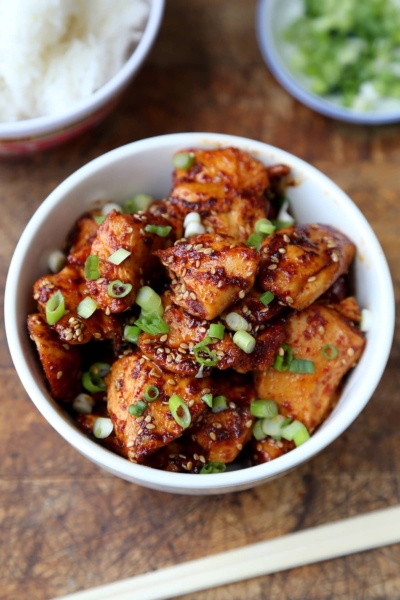
Learn how to make Korean sticky chicken in just 20 minutes! There is no marinating required for this recipe – the chicken is dressed in a honey and peppery gochugaru sauce for the perfect sweet and spicy mix.
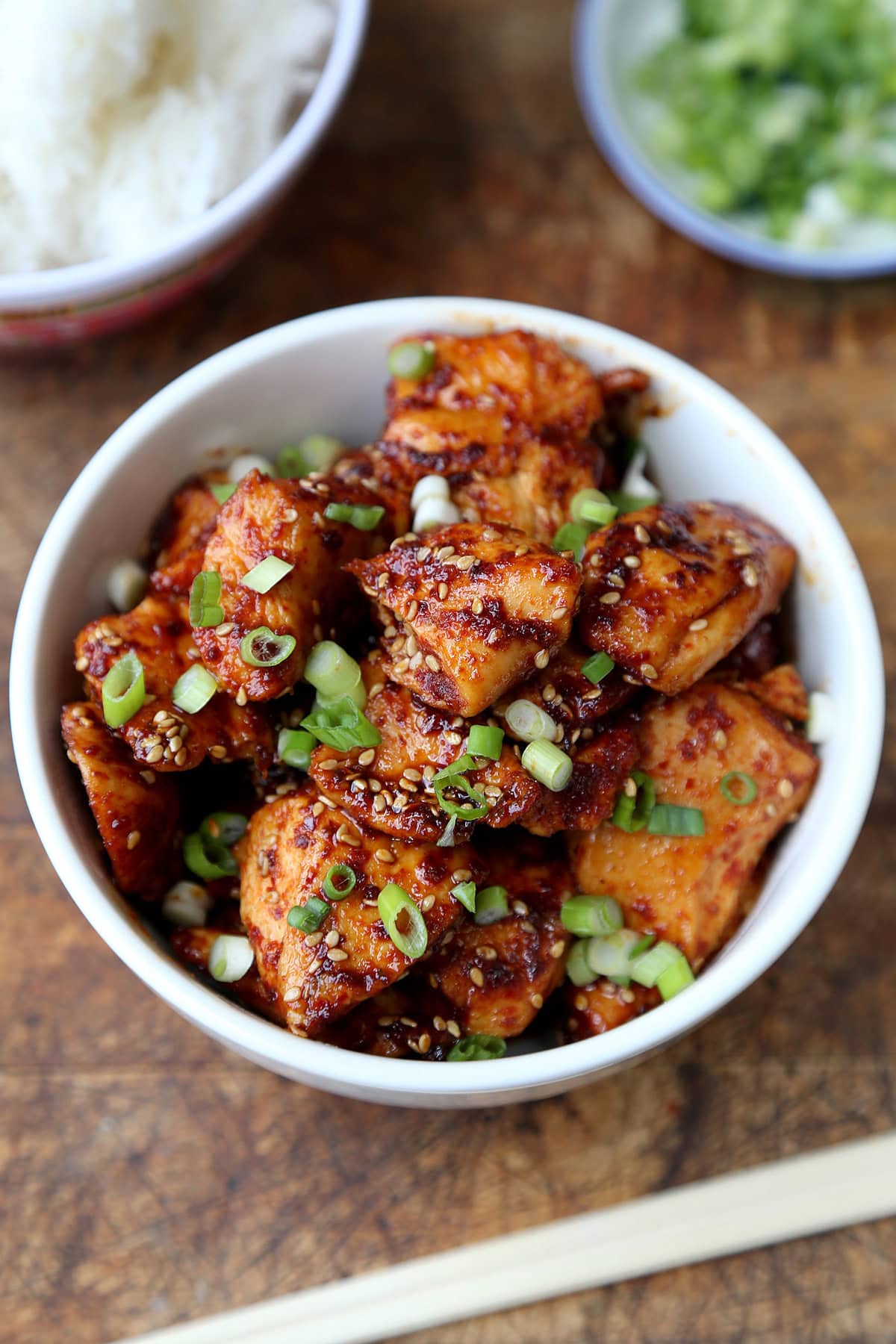
I’ve always loved the combination of sweet and spicy. In fact it’s one of my favorite things about Chinese food and Korean food. That particular love is why I created this Korean chicken recipe as it has the wonderful flavors of a dish that’s perfectly balanced. It’s bold, sticky, and has just the right amount of heat. It’s the kind of dish that disappears fast once it hits the table.
Unlike Korean fried chicken, which is deep-fried, this version is made in a skillet using only 1 tablespoon of oil. The sauce is inspired by classic Korean flavor combinations like gochugaru, soy sauce, sugar, and sesame oil. The result is a restaurant-style meal that’s approachable, comforting, and easy enough to make at home. If you love Korean flavors but want something simple, cozy, and weeknight-friendly, this recipe delivers.
Table of Contents
Why this Recipe Works
- No deep-frying required – only 1 tablespoon of oil is needed
- No marinating required – quick, no wait time
- Balanced flavor – sweet, savory, garlicky, and slightly spicy
- One skillet meal – minimal cleanup, maximum payoff
- Family-friendly – easy to adjust the heat level
What Makes Korean Sticky Chicken Different?
Korean sticky chicken is all about the sauce.
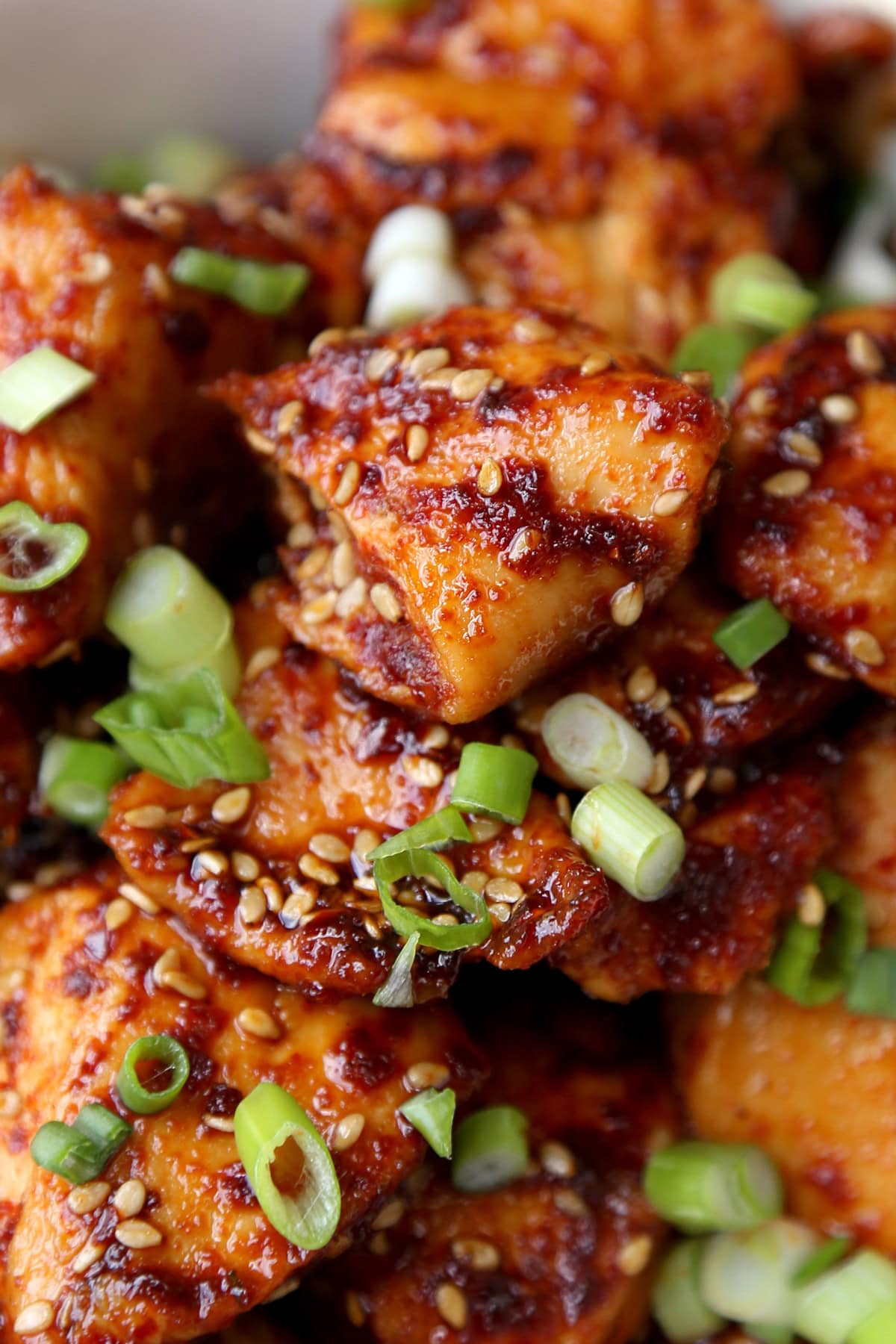
Instead of relying on batter and frying oil, the chicken is pounded with gochugaru (to infuse flavor), and seasoned with soy sauce, rice vinegar, honey, and sesame seeds. As the sauce reduces, it clings to the chicken, creating that irresistible sticky finish.
The magic happens when sweet and savory elements meet heat — not overpowering, but layered and deeply satisfying.
Korean Chicken Ingredients
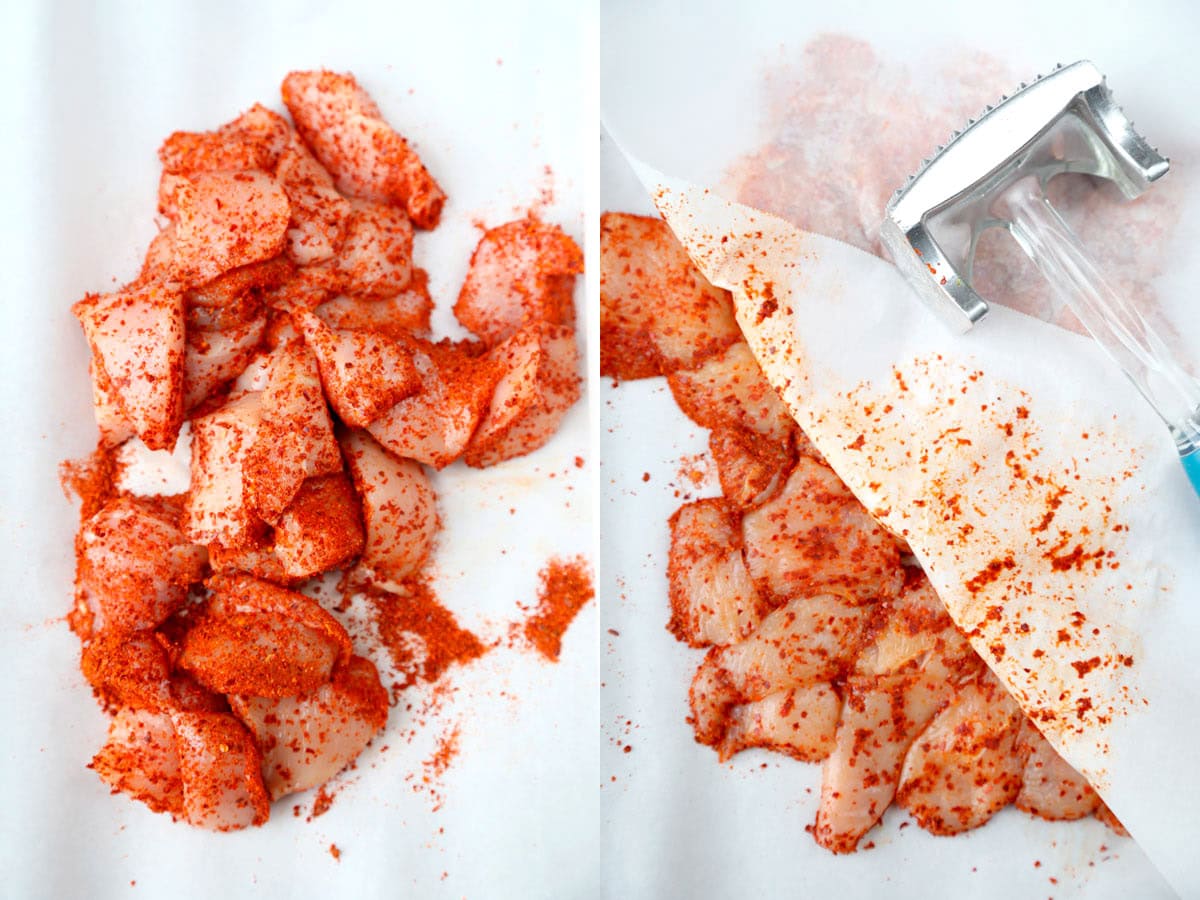
- Chicken: Skinless, boneless chicken breasts or chicken thighs are best for this recipe. Since there is pounding involved, you want to make sure that the cut you pick doesn’t have any bones.
- Gochugaru: Gochugaru, or Korean chili pepper flakes, are smoky and have just enough heat to warm the palate. The spice level is comparable to poblano peppers and jalapeños. Think of the consistency as a cross between a chili powder and chili flakes.
- Oil: Any neutral oil with a high smoke point such as refined peanut oil or safflower oil can be used
- Soy sauce: Use a regular Japanese soy sauce such as Kikkoman on Yamasa. Japanese soy sauce is full of umami and fairly complex in flavor compared to other types of soy sauce.
- Rice vinegar: Rice vinegar to lighten up the dish and add a little tanginess.
- Sesame seeds: Sesame seeds add texture and some nuttiness.
- Honey: Use a honey you like to eat since you will be using quite a bit for this dish.
- Green onion: As garnish for a bright and sharp crunch.
How To Make Korean Sticky Chicken
This recipe comes together quickly once you start cooking, so it’s best to prep everything first.
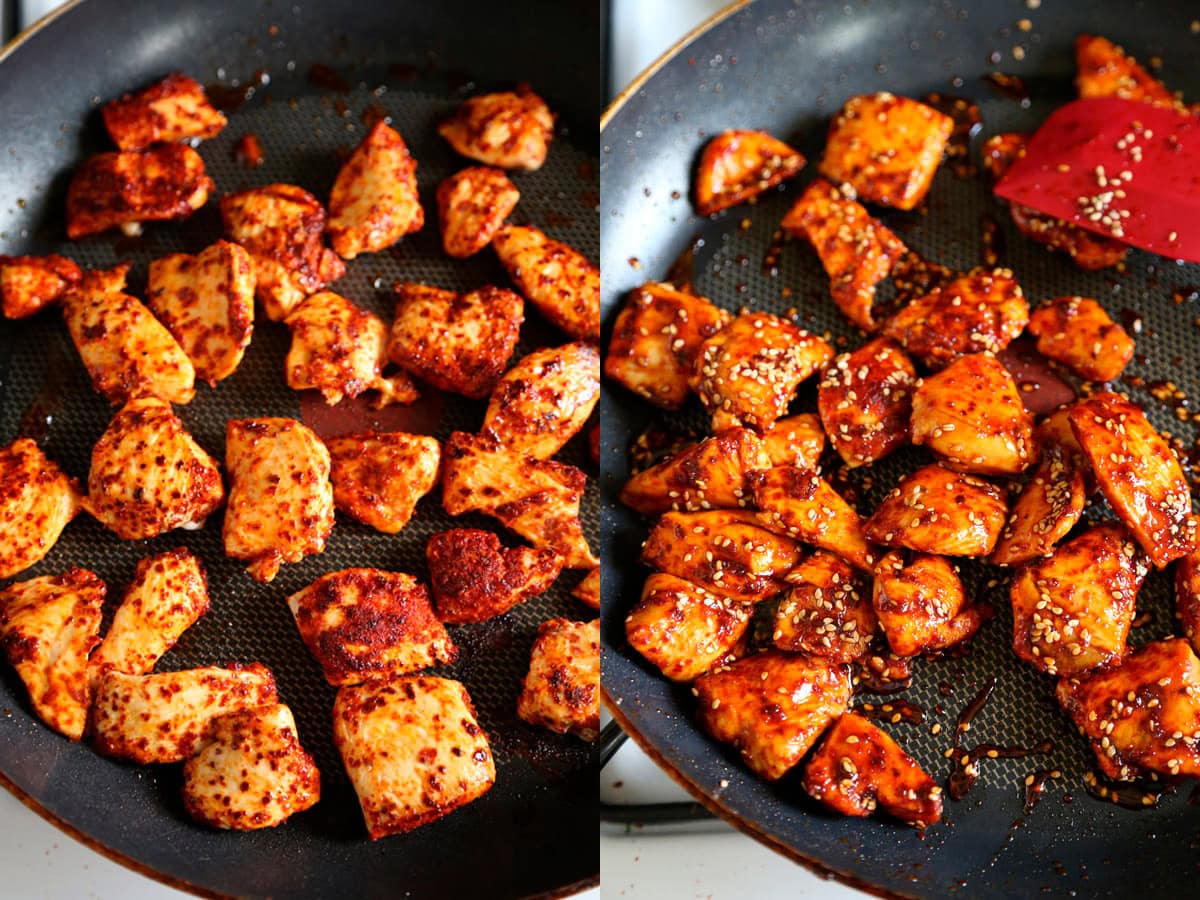
- Bash the chicken. Place the chicken on a piece of parchment and sprinkle gochugaru on top. Cover with another piece of parchment paper and pound the chicken a few time with a meat tenderizer or rolling pin. This locks in the flavor.
- Pan fry the chicken. Cook the chicken on each side for a few minutes over medium heat until it’s fully cooked and beginning to brown. Transfer the chicken to a plate and set aside.
- Make the sauce. Mix the soy sauce, rice vinegar and honey in a small bowl. Lower the heat to low and add the sauce to the same skillet. Stir until the sauce starts to bubble – about 1 to 2 minutes.
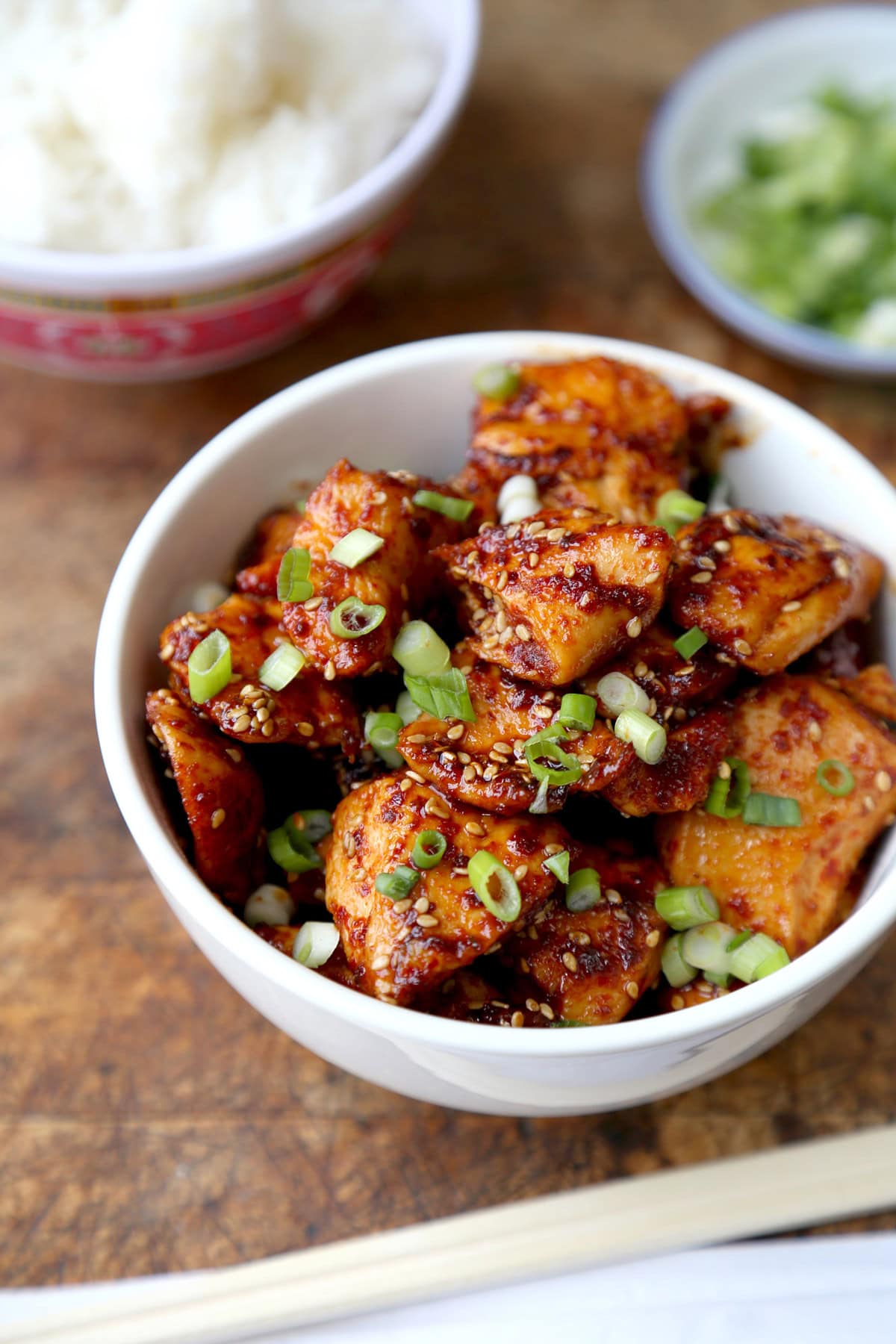
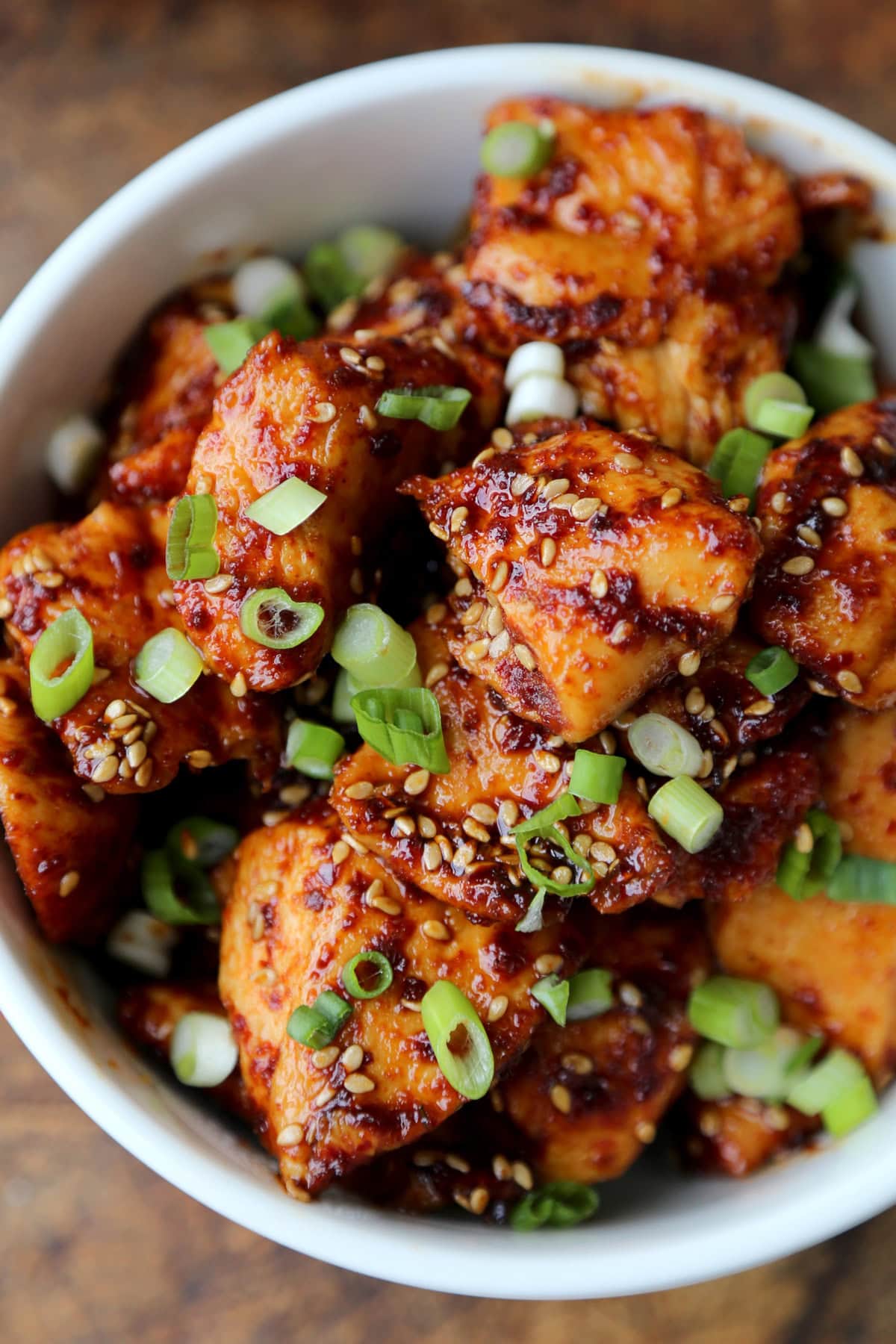
- Season and serve. Add the chicken to the skillet and mix it with the sauce. Turn the heat off and add the sesame seeds. Transfer the chicken to a serving dish and top with green onions.
That’s it — no complicated steps, no special equipment.
If you enjoy sweet and savory chicken dishes, you might also like this sesame chicken, which uses a similar glossy sauce, or this Mongolian chicken with sweet and nutty flavors.
Tips and Variations
- Don’t overcrowd the pan. This helps the chicken brown properly.
- Cook the sauce on very low. Let the sauce reduce slowly for maximum gloss.
- More nutty. Drizzle a little toasted sesame oil before serving to add nuttiness.
- More smoky. Add a little worcestershire sauce or tonkatsu sauce to the sticky chicken sauce to impart a more bbq-like taste.
- Thicker and gooey. To make the sauce gooey, similar to an empress chicken, mix 1/2 teaspoon of cornstarch and 2 tablespoons of water. If you choose this option, add the cornstarch slurry slowly, stirring the sauce the entire time so it incorporates evenly.
Adjusting the Spice Levels
Korean sticky chicken has mild to medium heat, depending on how much gochugaru you use. This recipe is close to chicken bulgogi heat level wise, and not as spicy as a bowl of tteokbokki. The heat is meant to enhance the flavor, not overpower it. Here are recommendations on how to adjust the level of heat so that you can enjoy this dish at its best.
- Mild: Use less gochugaru and add a bit more honey.
- Medium: Follow the recipe as written.
- Spicy: Mix 1 teaspoon gochujang (Korean chili paste) with 2 tablespoons water and add it to the sauce. Gochujang and gochugaru are very different so make sure not to confuse them! Or, add a little sriracha sauce or chili garlic sauce (sambal oelek).
If you don’t have gochujang, I have an easy homemade gochujang recipe for you to try. The result is surprisingly similar!
Can I Make this Ahead of Time?
Yes — and it reheats surprisingly well.
To store, put the Korean sticky chicken in an airtight storage container and refrigerate for up to 3 days.
To reheat, microwave the leftovers in a microwave safe container for 1-2 minutes, until hot. Reheating on medium will make the chicken less likely to dry out. Top with freshly chopped green onions and a few sesame seeds for that fresh out of the pan experience.
This Korean chicken is as delicious cold out of the fridge in the middle of the night as it was fresh out of the pan the day before.
What to Serve With Korean Sticky Chicken
Finding sides to pair with Korean chicken is very easy. Think of a meal you had at a Korean restaurant where a variety of banchan, Korean for sides, were served. Lots of small sides with a bowl of rice is the traditional way to enjoy Korean food.
Some of the most popular banchan are gaji namul (steamed eggplant), sigeumchi namul (spinach salad), kimchi, musaengchae (spicy daikon radish salad), sookju namul (bean sprout salad), and oi muchim (spicy cucumber salad).
This Korean sticky chicken is the kind of recipe you’ll come back to again and again. It’s comforting without being heavy, bold without being complicated, and packed with flavor in every bite. If you enjoy easy Asian-inspired dinners that feel special without the extra work, this one deserves a spot in your regular rotation.
Korean Sticky Chicken
Hot, sweet and savory, my Korean sticky chicken is perfect with a steamy bowl of white rice, and only takes 20 minutes to make from start to finish.
- Prep Time: 10 minutes
- Cook Time: 10 minutes
- Total Time: 20 minutes
- Yield: 3 servings 1x
- Category: Main
- Method: Pan fried
- Cuisine: Korean
Ingredients
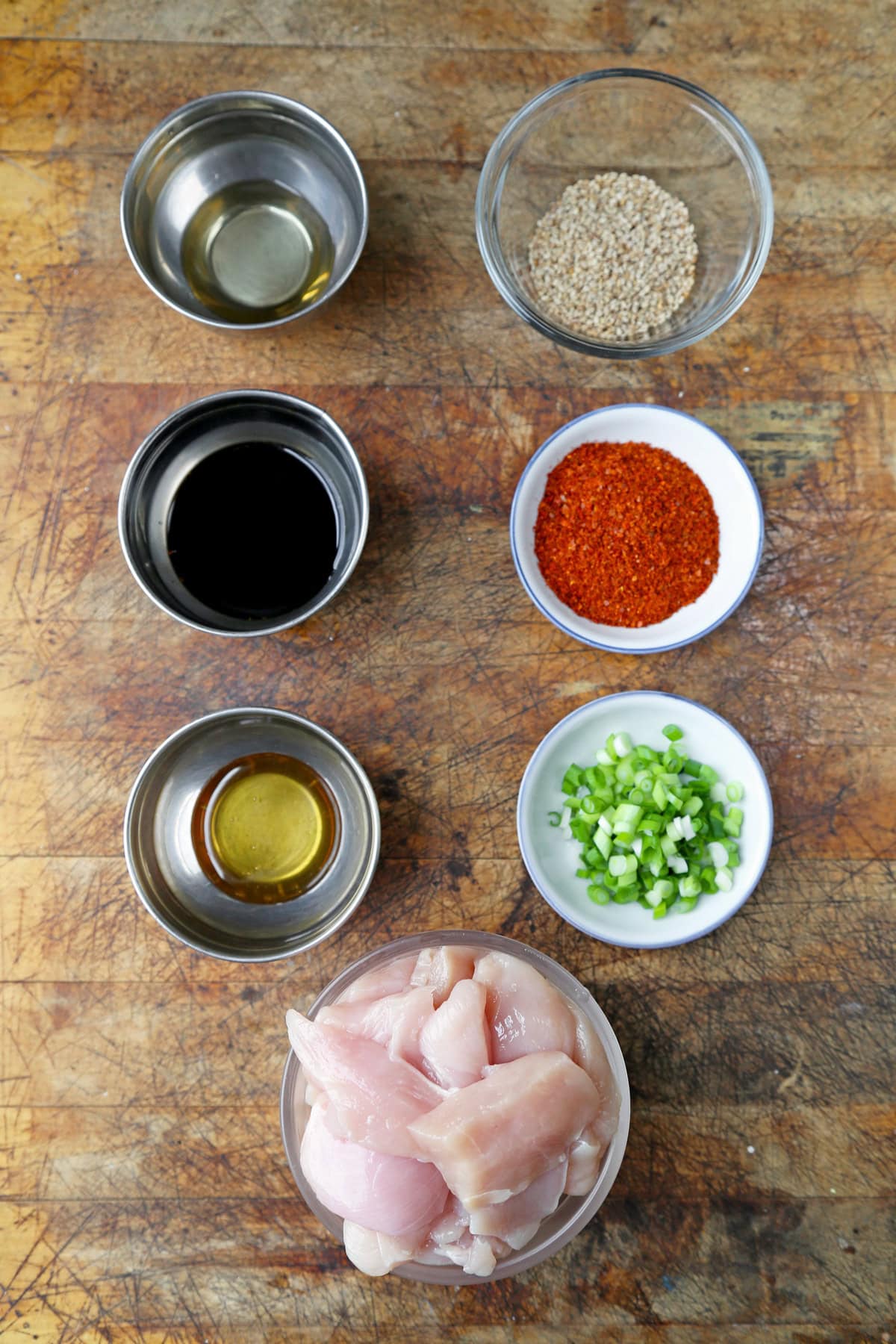
- 1 pound skinless and boneless chicken breasts or thighs, sliced into large chunks
- 2 tablespoons gochugaru (Korean red chili flakes)
- 1 tablespoon grapeseed oil, vegetable oil, or other neutral oil
- 2 tablespoons soy sauce
- 1 tablespoon rice vinegar
- 2 tablespoons honey
- 1 tablespoon sesame seeds
- 2 stalks scallions, chopped
Instructions
- Season the chicken. Place a piece of parchment paper on a flat surface like a cutting board. Add the chicken pieces to it and sprinkle the gochugaru on top.
- Pound the chicken: Cover with another piece of parchment paper and gently pound the chicken with a meat tenderizer or rolling pin, until the gochugaru is sticking to the chicken.
- Cook the chicken. In a large skillet over medium-high heat, add the oil and swirl it around to coat the bottom surface of the skillet. When the oil is hot, add the chicken. Cook on each side for 2 to 3 minutes or until the chicken is cooked through. Transfer to a plate and set aside.
- Heat the sauce. Using the same pan, lower the heat to low. Add the soy sauce, rice vinegar, and honey, and let the sauce cook for 1 minute, until it starts to thickens.
- Sauce the chicken. Return the chicken to the pan and cook for about 1 minute, until the chicken is coated evenly. Turn the heat off.
- Garnish and serve. Sprinkle the sesame seeds on top. Toss the chicken one last time and transfer it to a serving plate. Top with chopped scallions a serve with a side of warm Japanese rice or jasmine rice.
Notes
Storage: Transfer the Korean sticky chicken to an airtight storage container and refrigerate for up to 3 days.
Reheating: Reheat the chicken in a skillet over low heat for a few minutes, until hot. Or, microwave on medium for 1-2 minutes.
Nutrition
- Serving Size: 1 serving
- Calories: 304
- Sugar: 12.7g
- Sodium: 360.5mg
- Fat: 10.7g
- Saturated Fat: 1.6g
- Unsaturated Fat: 4.8g
- Trans Fat: 0g
- Carbohydrates: 16.2g
- Fiber: 1.5g
- Protein: 35.9g
- Cholesterol: 110.3mg
Frequently Asked Questions
Yes, but not without a few ingredient changes. Use extra firm tofu instead of the chicken and use maple syrup instead of honey. And it goes without saying – do not pound the tofu! For something similar to this recipe, try this pan fried tofu with gochujang sauce recipe.
No. Korean fried chicken is deep fried and has a texture that is much more crunchy. The sauce in this recipe captures the spicy/sweet flavor essence of Korean fried chicken, but is simply pan fried. That said, this sticky chicken sauce would make a great wing sauce!
The only spicy element in this recipe is from gochugaru. Now, while there are exceptions, most Korean chili pepper flakes err on the side of smoky heat rather than volcanic, melt-your-face fire. This makes it great for people who may be sensitive to spice, but still love Korean flavors.
No, you must use gochugaru as it’s one of those integral ingredients that forms much of the architecture of how Korean food tastes. Without it, you’ll miss out on the trademark smoky, spicy flavor profile Korean food is so well known for.
You can easily find gochugaru online – or sold in Korean supermarkets.









Questions and Reviews
I tried this the other day and OMG! It is delicious
I am cooking it again today and can’t wait.
Thank you so much Lyn!
I made this for my family last night. It was simple and quite delicious. Thanks for sharing.
I’ve found a treasure trove of knowledge in your blog. Your dedication to providing trustworthy information is something to admire. Each visit leaves me more enlightened, and I appreciate your consistent reliability.