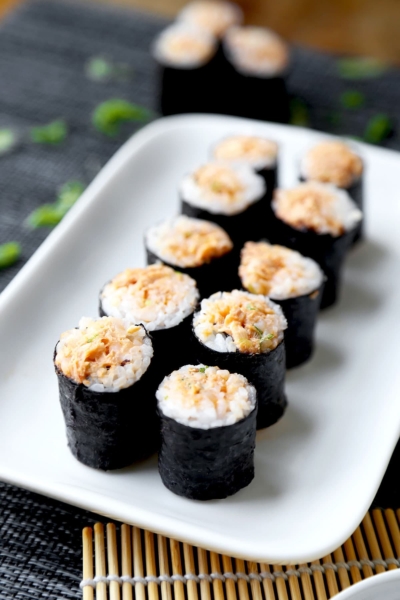
Maki sushi are so much fun to eat! Light and filled with various fillings, these mini sushi rolls are always a crowd pleaser in my kitchen!
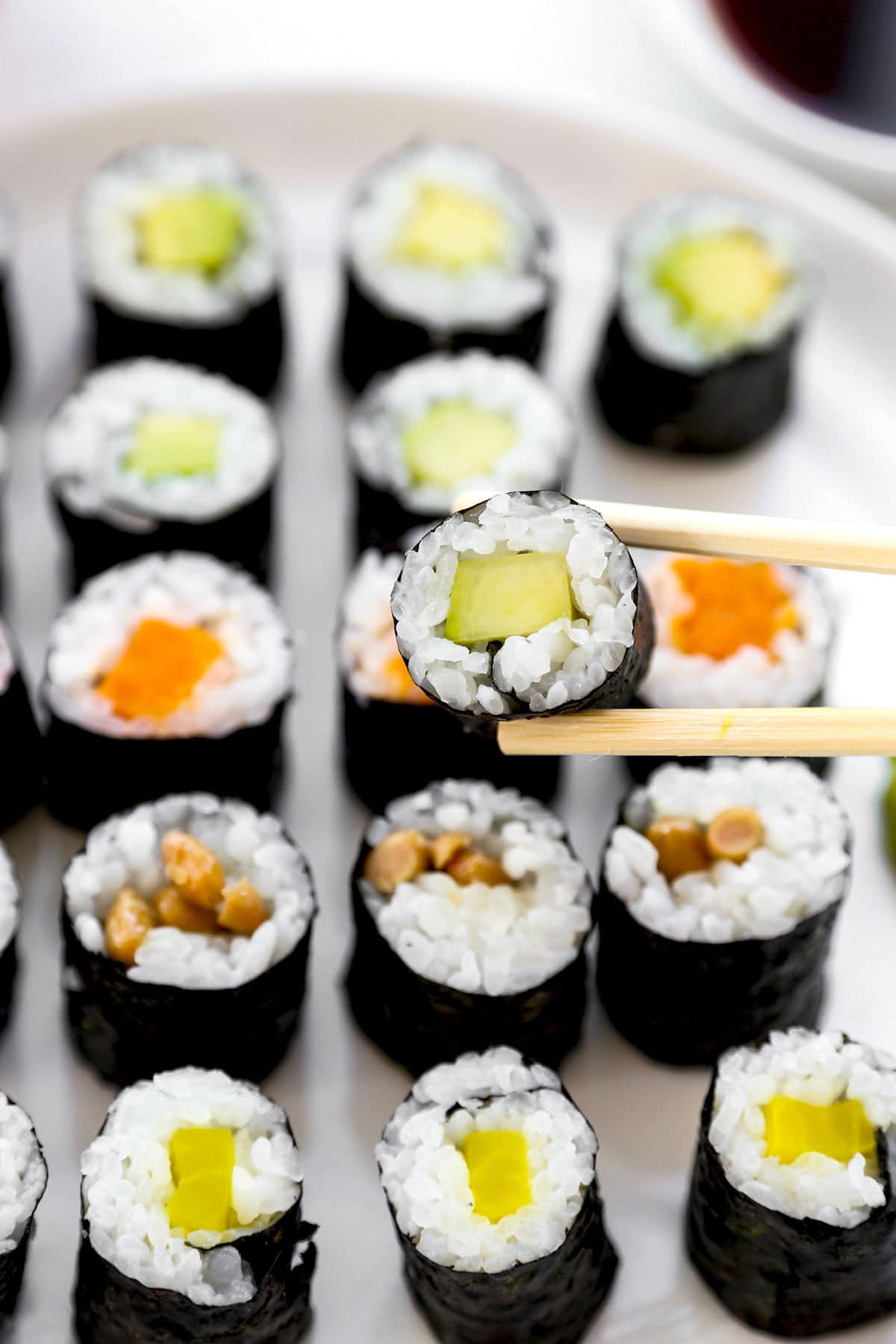
Making maki sushi at home is one of those kitchen projects that feels special without being complicated. Once your sushi rice is ready, the rest is all about assembling, rolling, and having fun with different fillings.
These simple sushi rolls are light, fresh, and easy to customize. You can keep them classic with cucumber or tuna, go vegetarian with avocado and takuan, or make a mix of flavors for a beautiful sushi platter.
If you’ve been curious about making sushi at home, this is the perfect place to start.
Table of contents
What is Maki Sushi?
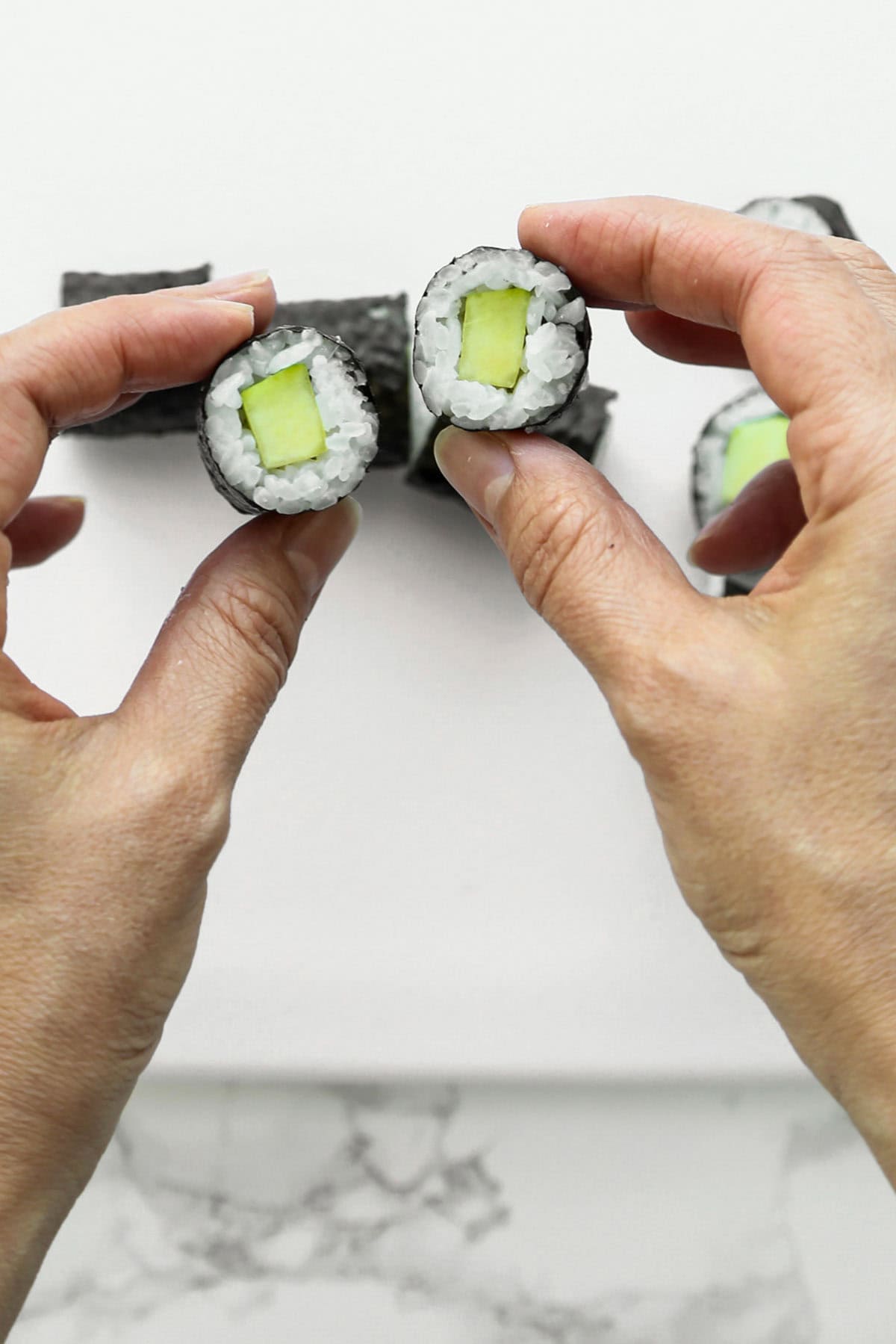
Maki sushi is rolled sushi wrapped in nori seaweed. The word maki means “roll” in Japanese, and it refers to sushi rice and fillings rolled together and sliced into bite size pieces.
This recipe focuses on hosomaki (thin rolls), which are typically made with one filling. They are smaller, easier to roll, and ideal for beginners.
Types of Maki Sushi
There are many different types of maki sushi available and the most popular ones are:
- Hosomaki (細巻き): This is the one I’m making in this post. It’s a mini sushi roll containing only one filling.
- Nakamaki (中巻き): Nakamaki is similar to hosomaki but bigger because it contains 2-3 ingredients in the center (e.g., California roll, Philadelphia roll).
- Futomaki (太巻き): Futomaki is similar to nakamaki but fatter because it contains 4-5 ingredients in the center (e.g., spider roll).
- Temaki (手巻き): Called hand roll in English, temaki is the only maki that’s cone shaped so it can be carried around by hand.
- Gunkan maki (軍艦巻): Called warship roll for its battleship-like shape, this maki is oval shaped and has a strip of nori wrapped around the circumference of the rice. It’s topped with luxurious ingredients such as ikura (salmon roe) and uni (sea urchin).
- Uramaki (裏巻き): This one is a little different than the others because the nori is on the inside, while the rice is on the outside of the roll.
- Temari sushi (手まり寿司) – Temari sushi are small, round ball-shaped sushi that are topped with fish or vegetables.
To learn more about the different types of sushi available, check out my post: Nigiri vs Musubi vs Maki vs Sushi vs Sashimi – What is the difference?
Ingredients for Maki Sushi
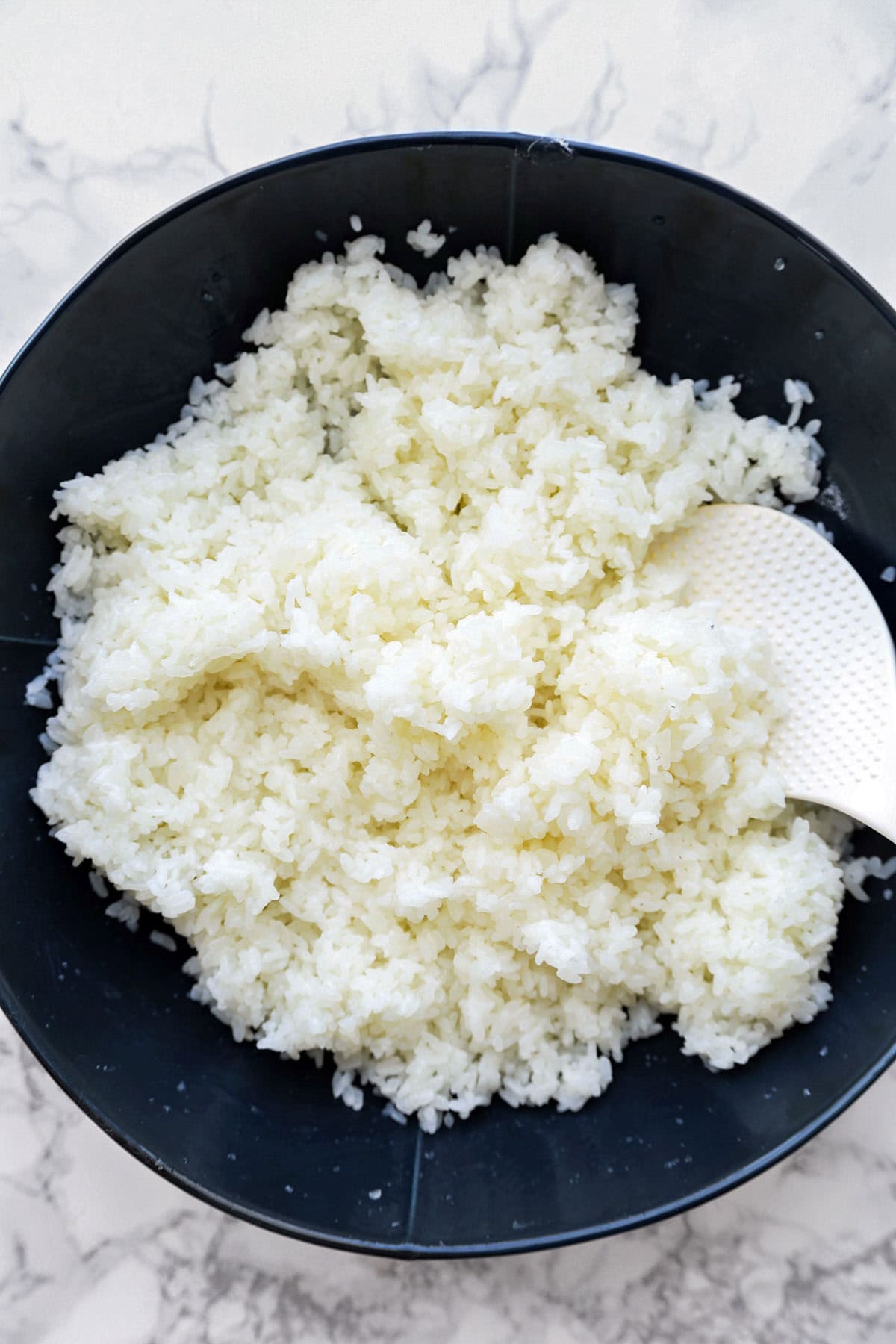
- Sushi rice: A mix of cooked short grain Japanese rice, rice vinegar, sugar, and salt.
- Nori: Look for plain nori sheets (roasted seaweed) that are around 7″x8″ in size. You will be cutting them in half to make maki rolls.
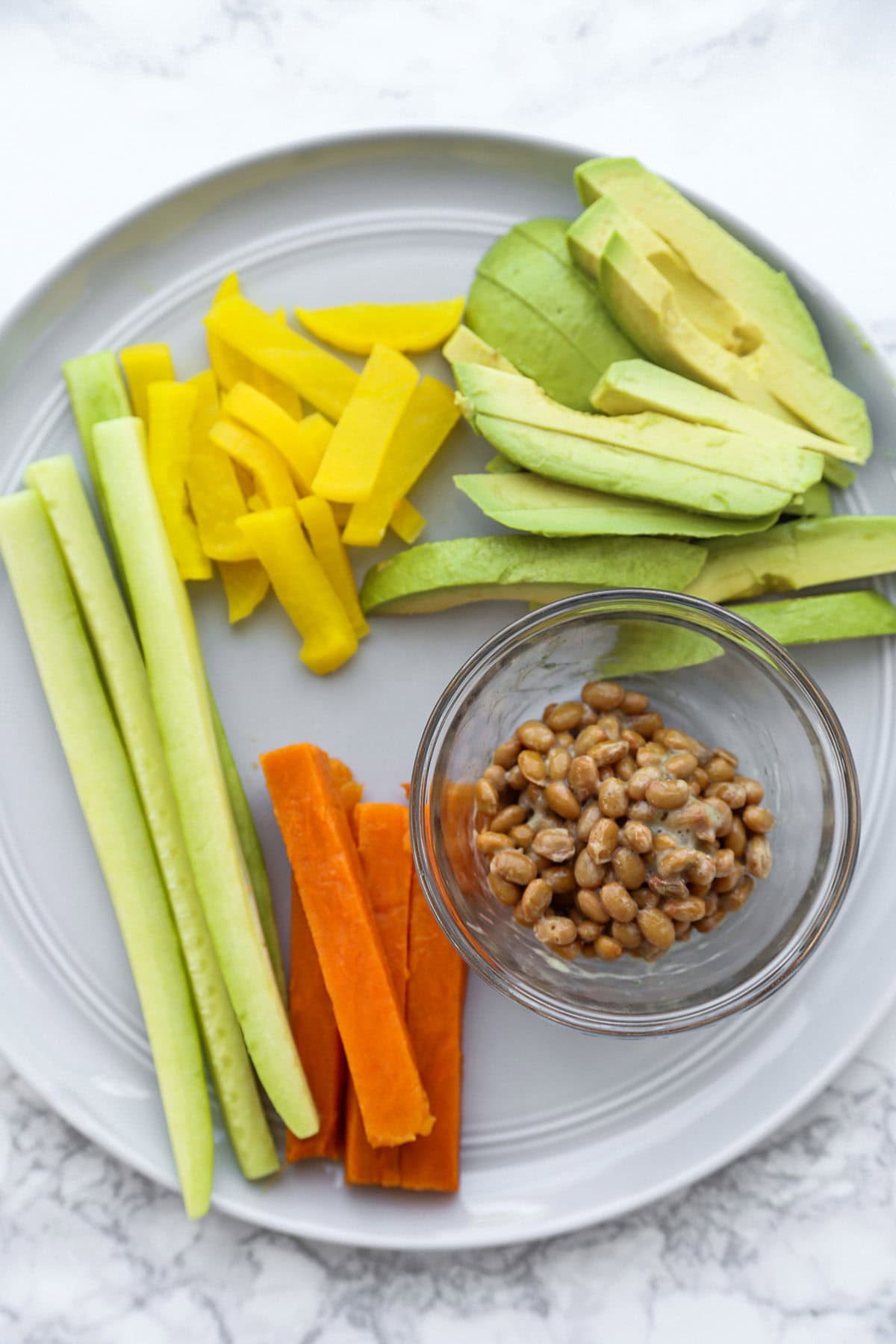
- Fillings: You can mix and match depending on your taste. Some of the most popular fillings are: Cucumber, avocado, takuan (pickled daikon), kanpyo (dried gourd), umeboshi (pickled plum), natto, tuna, spicy tuna, salmon, and yellowtail. If you are new to making sushi, stick to easy fillings such as cucumber and takuan.
- For serving with: Soy sauce, wasabi, and pickles (tsukemono) are all favorites.
Tools Needed to Make Sushi at Home
- Bamboo mat (makisu) – helps shape tight rolls
- Sharp knife – for clean slicing
- Bowl of water + vinegar – to wipe your knife and prevents sticking
- Rice paddle or spoon – for mixing rice
- Mixing bowl (or hangiri) – also for mixing rice
Using a Rice Cooker for Perfect Rice
I’ve made rice on the stove and rice in a rice cooker and I hate to say it but the machine wins every single time. My rice comes out perfectly fluffy and it’s not just for Japanese rice – there’s a function for brown rice, jasmine, and multigrain rice.
I use mine a few times a week and not just for rice! Some rice cookers like the one I have offer more than just one function: they can steam, bake, and slow cook. With these small machines you can make anything from quinoa, soups, stews, and even cakes!
If you love cooking with rice, check out my guide to making perfect rice!
How to Make Maki Sushi
- Prepare sushi rice and let it cool to room temperature.
- Place a bamboo mat on a flat surface.
- Cut nori sheets in half lengthwise.
- Place nori on the mat, shiny side down.
- Wet your fingers and spread a thin layer of rice, leaving 1 inch at the top.
- Add your filling across the center.
- Roll the sushi using the mat, applying gentle pressure.
- Continue rolling into a tight cylinder.
- Slice with a sharp knife dipped in vinegar water.
- Serve with wasabi and soy sauce for dipping, and pickled ginger as a palate cleanser between bites.
Checklist for Making Good Maki Sushi
- Use room temperature rice
- Keep your hands slightly wet
- Don’t overfill the roll
- Use a sharp knife and clean it often
- Roll firmly, but don’t squeeze too hard
How to Store Maki Sushi
Maki sushi is best eaten fresh. If needed:
- Store in an airtight container
- Refrigerate for up to 24 hours
- Eat cold (do not reheat). Before eating, take the rolls out and leave them on the kitchen counter for about 30 minutes, away from direct sunlight. This softens the rice and makes the texture much more pleasant.
Vegetable rolls hold up better than fish rolls overnight.
What to Serve with Maki Sushi
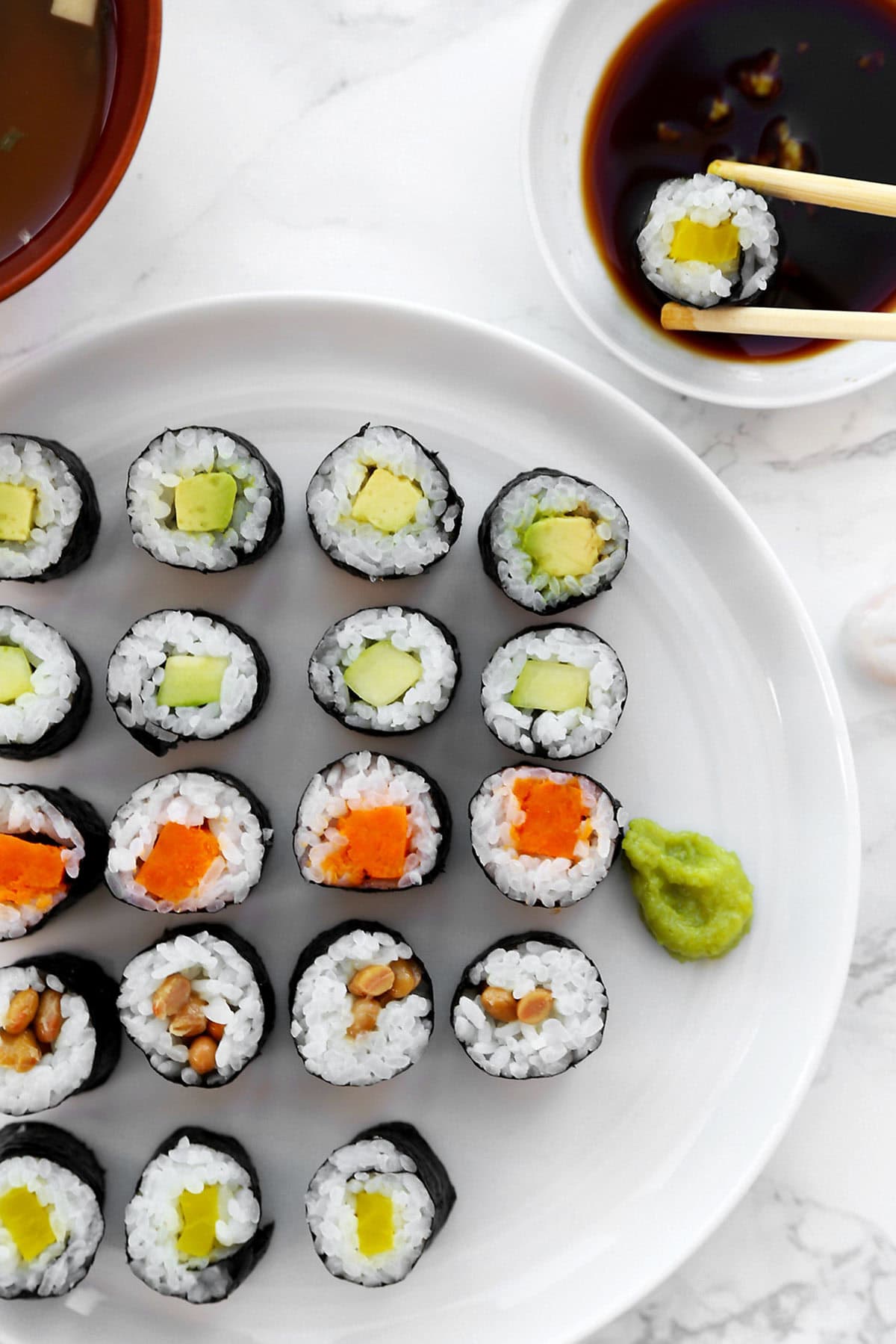
Now that you have a colorful plate of maki sushi, it’s time to serve it with other yummy Japanese dishes. For a traditional Japanese dinner, serve these rolls with:
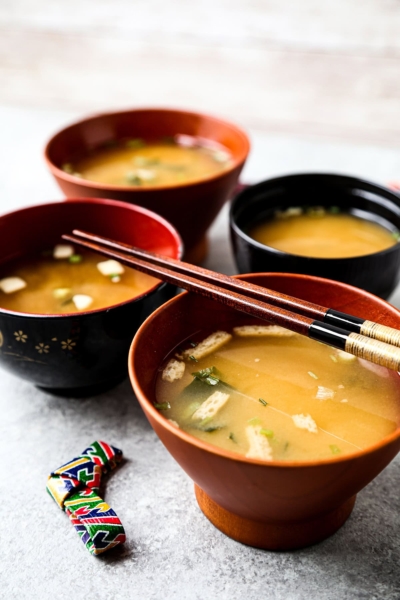
- Miso soup or daikon miso soup
- Green salad with ginger carrot dressing
- Seaweed salad
- Kani salad
- Nasu dengaku
- Miso ramen
Did you like this recipe? Are there changes you made that you would like to share? Share your tips and recommendations in the comments section below!
PrintMaki Sushi
Light and filled with various fillings, these mini sushi rolls are sure to become a new favorite in your kitchen!
- Prep Time: 30 minutes
- Cook Time: 20 minutes
- Total Time: 50 minutes
- Yield: 8 rolls 1x
- Category: Rice
- Cuisine: Japanese
- Diet: Vegetarian
Ingredients
- 4 cups sushi rice – visit my post on how to make sushi rice
Filling options (feel free to use other fillings, these are basic ones)
- Persian or Kirby cucumber, cut into 1/2-inch long strips
- Takuan (pickled daikon radish), cut into 1/2-inch long strips
- Avocado, pitted, cut into 1/2-inch long strips
- Cooked sweet potato (don’t overcook it to the point where it’s mushy), cut into 1/2-inch long strips.
- Natto (1 box)
- Sashimi grade tuna, salmon, or yellowtail (about 5 oz for 8 rolls), cut into 1/2-inch long strips
Other
- 4 nori sheets
- Soy sauce, for dipping
- Wasabi (optional)
- Pickled ginger (optional)
Instructions
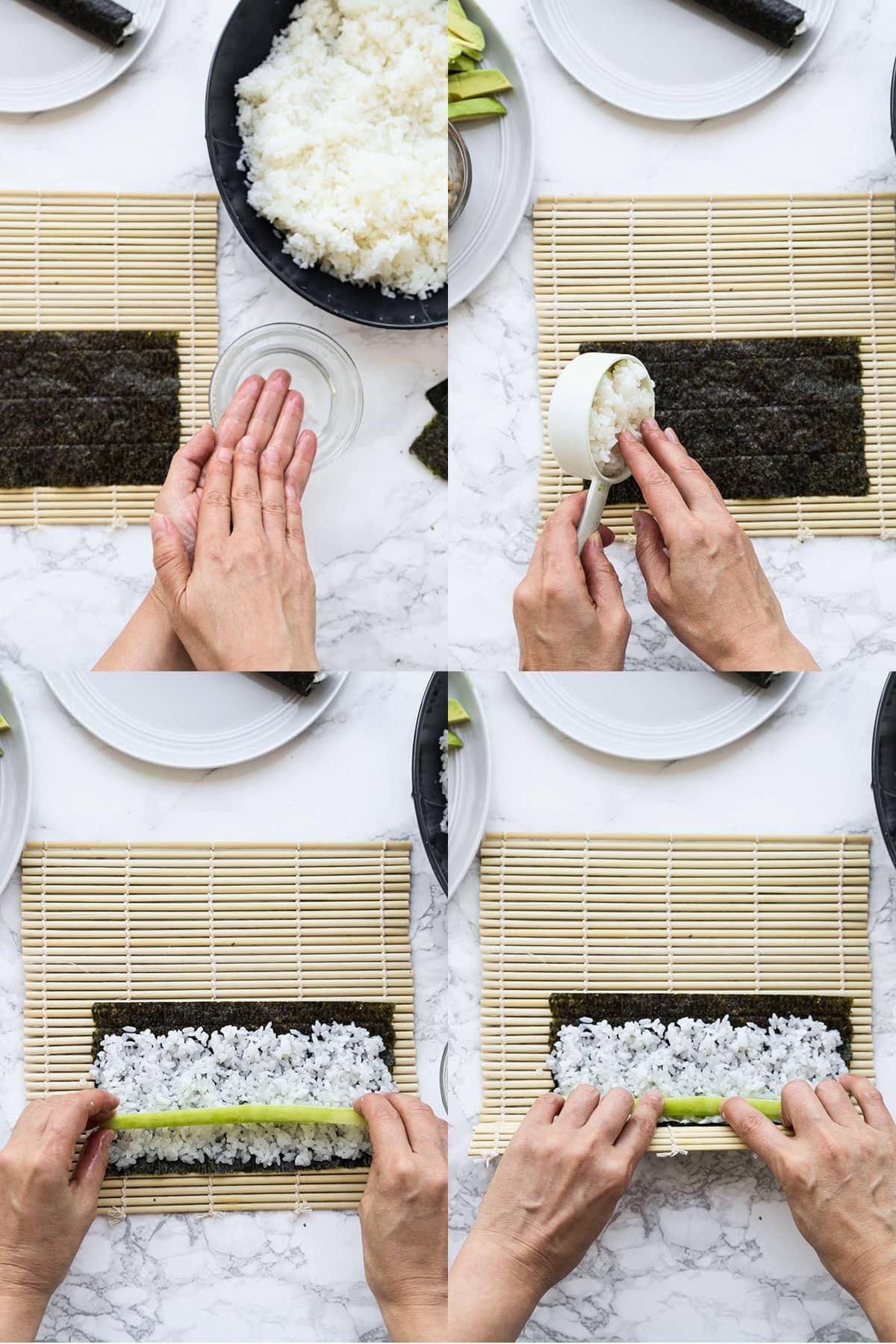
- Place the bamboo mat on a flat surface, facing you (you will be rolling the mat away from you). Fill a small bowl with 1/2 cup tepid water and 1 tablespoon rice vinegar. Place it next to the bamboo mat.
- Slice the nori sheets in half, lengthwise, and place on a plate next to the bamboo mat.
- Grab a nori sheet and place it on the bamboo mat’s edge closer to you, lengthwise, leaving 1” of bamboo space visible, shiny face down.
- Dip your fingers in the dipping bowl and moisten your hands. Grab 1/2 cup of sushi rice (using a measurement cup is the easiest to measure the rice) and place it on the nori sheet. Don’t overfill the cup or press the rice down, just scoop the rice as you normally would scoop any other grain.
- Spread the rice evenly across the sheet, leaving 1” of space free at the top of the nori sheet.
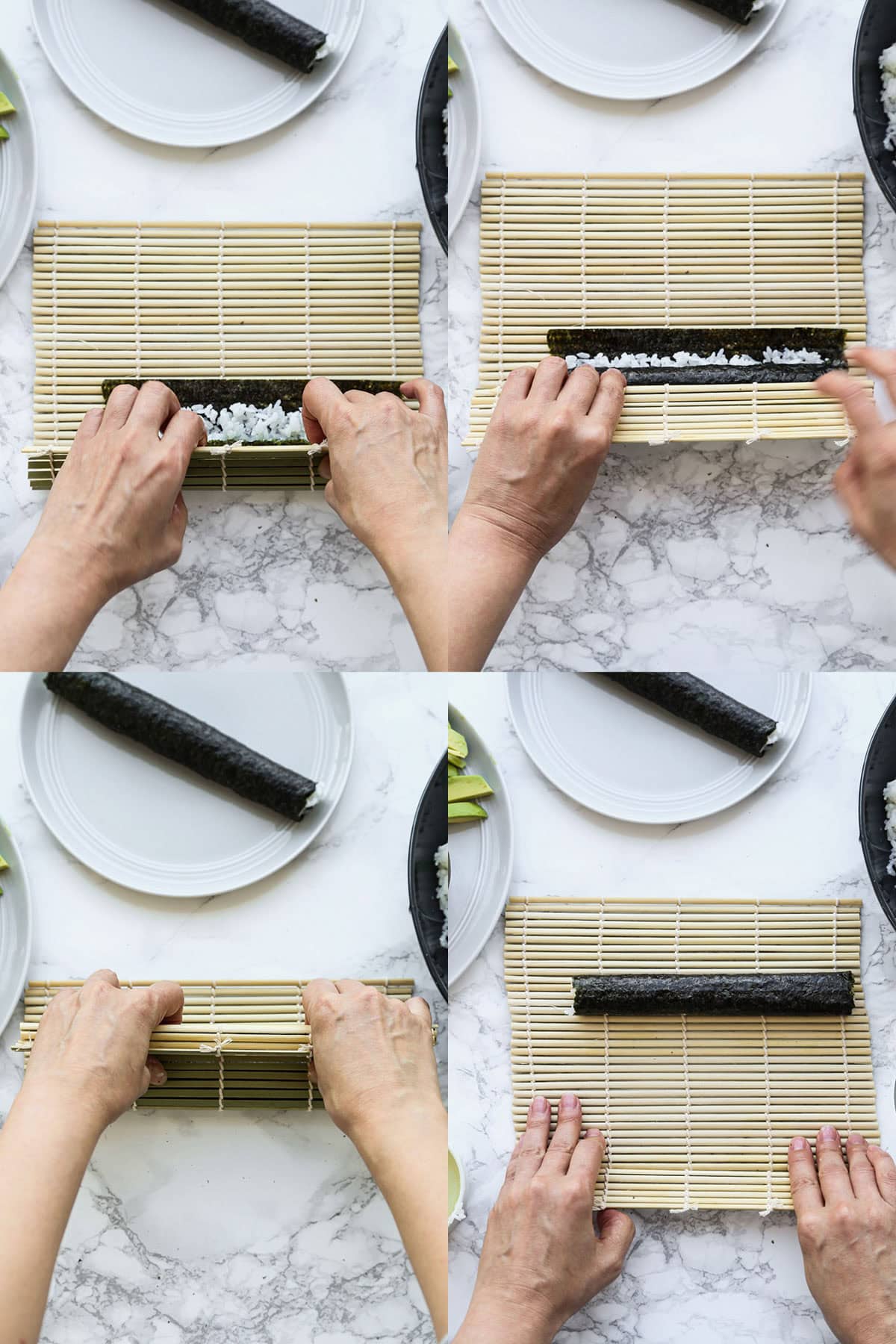
- Place the filling in the center of the rice, across lengthwise. Grab the bottom edges of the mat with your thumbs while holding on to the toppings with your other fingers. Roll it into a tight cylinder, tucking the fillings in firmly.
- Roll it forward while using a little pressure but not so much that the filling spills out. Let go of the mat when you get to the other end.
- Wipe a kitchen knife with vinegar water and evenly cut the roll into bite size pieces.
- Serve with soy sauce, wasabi, and pickled ginger on the side.
Notes
Maki sushi taste best when the rice is fresh and at room temperature. But you can refrigerate the leftovers in an airtight storage containers if it’s absolutely necessary. Eat cold – do not reheat!
Nutrition
- Serving Size: 1 roll
- Calories: 150
- Sugar: 3.3g
- Sodium: 303mg
- Fat: 1.5g
- Saturated Fat: 0.2g
- Unsaturated Fat: 0.2g
- Trans Fat: 0g
- Carbohydrates: 30.8g
- Fiber: 0.7g
- Protein: 2.5g
- Cholesterol: 0.1mg
Frequently Asked Questions
The rice should be a thin, even layer—just enough to cover the nori without piling it on. Too much rice makes the roll bulky and hard to seal, while too little can cause the roll to fall apart.
Usually from overfilling or not rolling tightly enough. Or, it could be the rice you are using. Make sure it’s short grain and not medium grain rice.
It helps a lot, especially for beginners, but you can improvise if needed. You can use parchment paper or plastic wrap to help shape the roll. A bamboo mat is inexpensive and makes a big difference, especially if you plan on making sushi regularly.
Nori becomes chewy when it absorbs moisture from the rice. This is normal for maki sushi, but if it feels overly soft, it could mean the nori wasn’t fresh.
Cucumber rolls are the easiest and most forgiving.