My homemade furikake adds savory, nutty flavor to rice with a mixture of bonito flakes, sesame seeds, and nori. This easy Japanese rice seasoning takes just 15 minutes to make, and a little goes a long way!
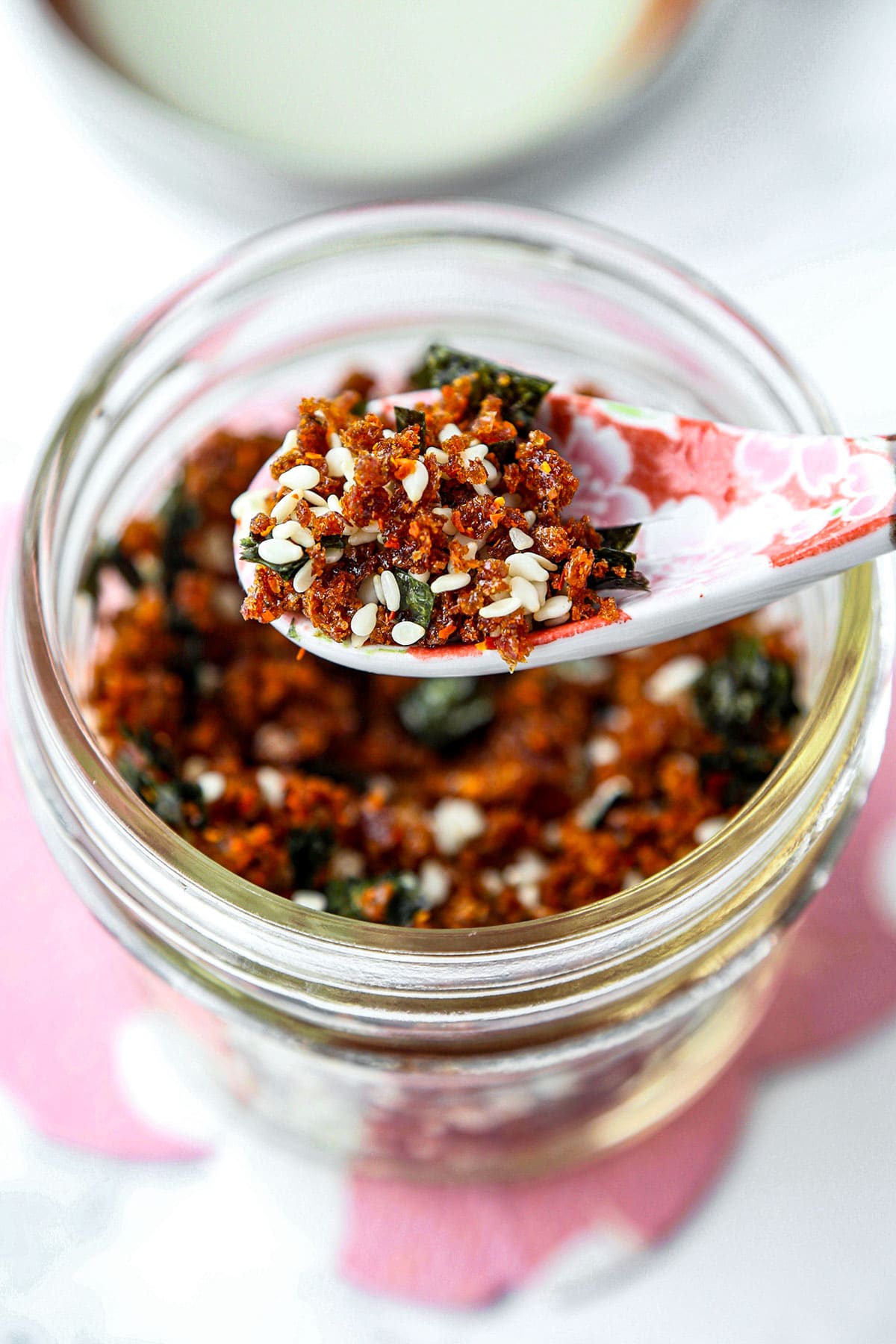
Furikake was always in our pantry growing up because my mother ate rice almost every day. Living far from Japan, she found comfort in familiar foods, and a bowl of Japanese rice was one small way to feel closer to home. Sometimes she ate it with Japanese pickles (tsukemono), and other times she sprinkled a packet of furikake over the top.
I loved it from the first bite. In fact, one packet was rarely enough for me! The combination of sesame seeds, seaweed, and savory flakes made a simple bowl of rice something I looked forward to eating.
My homemade version uses bonito flakes cooked with soy sauce and sugar, then mixed with sesame seeds and nori. It has a little sweetness and plenty of umami, with an optional pinch of chili for heat.
Table of contents
What is Furikake?
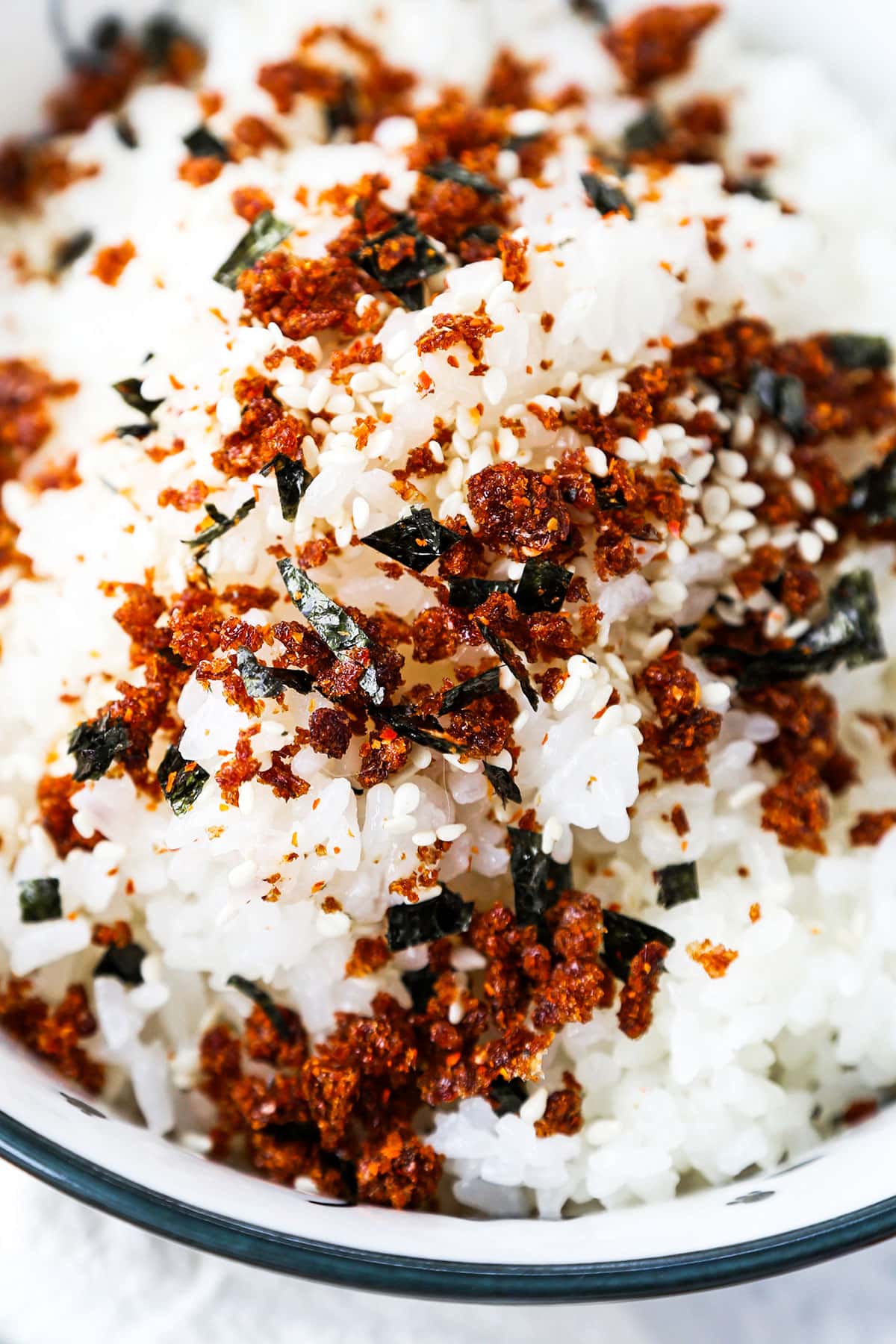
Furikake is a Japanese seasoning sprinkled over cooked rice. There are many varieties, with ingredients such as sesame seeds, nori, dried fish, egg, or shiso. Some are crunchy and dry, while others have a softer texture.
This recipe is a bonito-based furikake. The seasoned flakes give it a slightly softer texture than many store-bought blends, while the sesame seeds add crunch.
Furikake Ingredients
Scroll down to the recipe card for the proper measurements and full instructions.
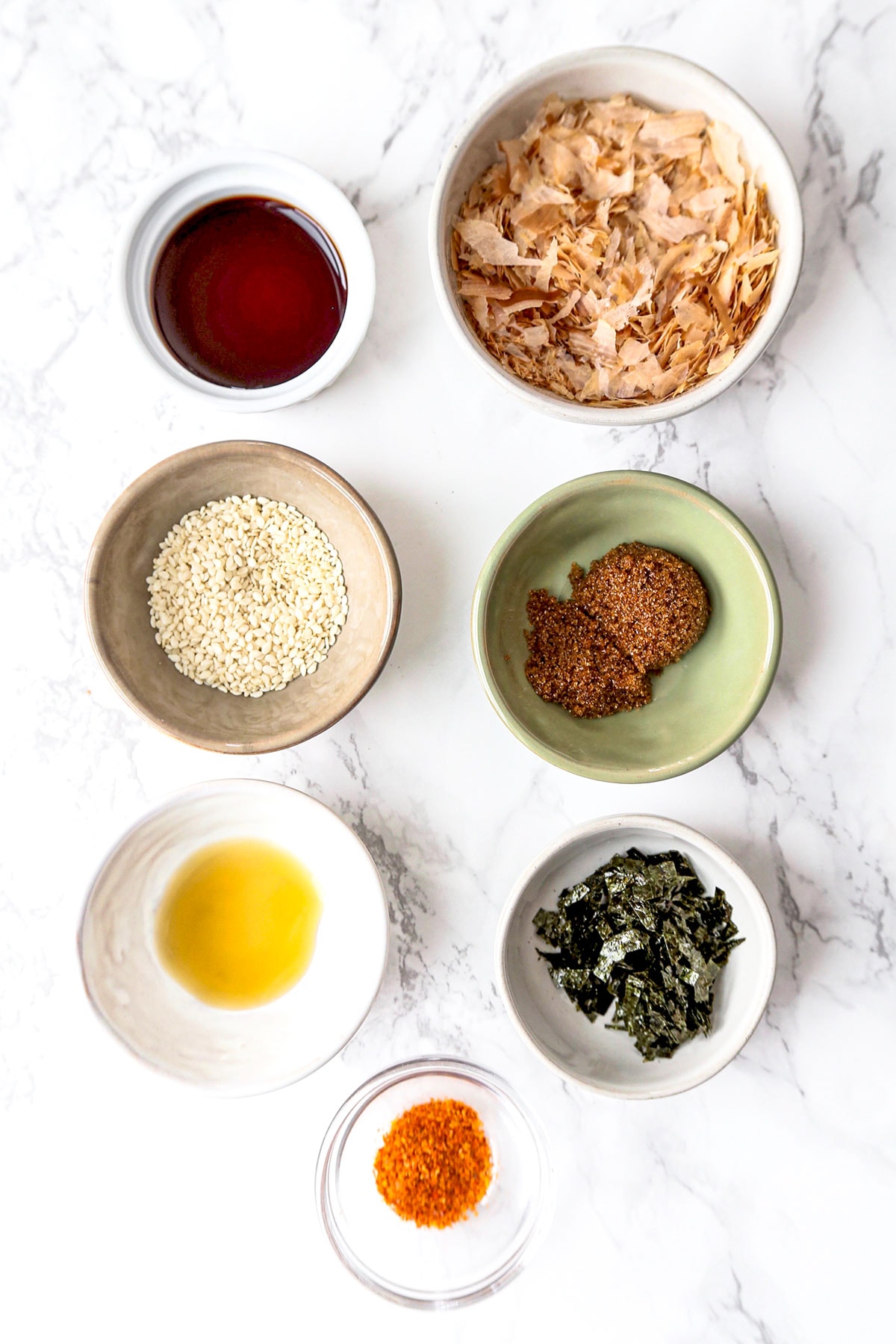
- Bonito Flakes: Also called katsuobushi, these dried fish flakes give the seasoning its savory, smoky flavor. Measure bonito flakes before crushing them into small pieces.
- Soy Sauce: Regular Japanese soy sauce seasons the flakes and adds depth. You’ll need only about 2 teaspoons for this recipe.
- Sugar: You can use brown or white sugar for the furikake. It will add a bit of sweetness around the edges to counter the more savory ingredients.
- Sesame Oil and Sesame Seeds: Both are used to add an element of nuttiness. The sesame oil imparts a nutty fragrance and flavor throughout the dish while the sesame seeds add a lovely crunch.
- Nori: Nori is seaweed that has been dried and pressed into thin sheets. Scissors or a knife are used to cut the nori into small pieces.
- Ichimi or Shichimi: Optional, for a little heat. Ichimi is ground chili pepper, while shichimi is a Japanese seven-spice blend whose ingredients vary by brand.
Variations
When it comes to furikake, the main thing to remember is that dry ingredients are most often used to make the seasoning more intense in flavor and last longer. However, I like to add fresh ingredients to it if I know I will be using the entire seasoning in one meal. Here are some ways to play with the textures and flavors for a different furikake experience:
- Without heat: Leave out the optional ichimi or shichimi for a mild seasoning.
- With extra seaweed: Add a little more finely cut nori if you enjoy its briny flavor.
- With fresh toppings: Flaked cooked salmon, crumbled hard-boiled egg yolk, or finely chopped pickled mustard greens are delicious alongside furikake. I would add these directly to the rice bowl rather than mixing them into the jar.
How To Make It
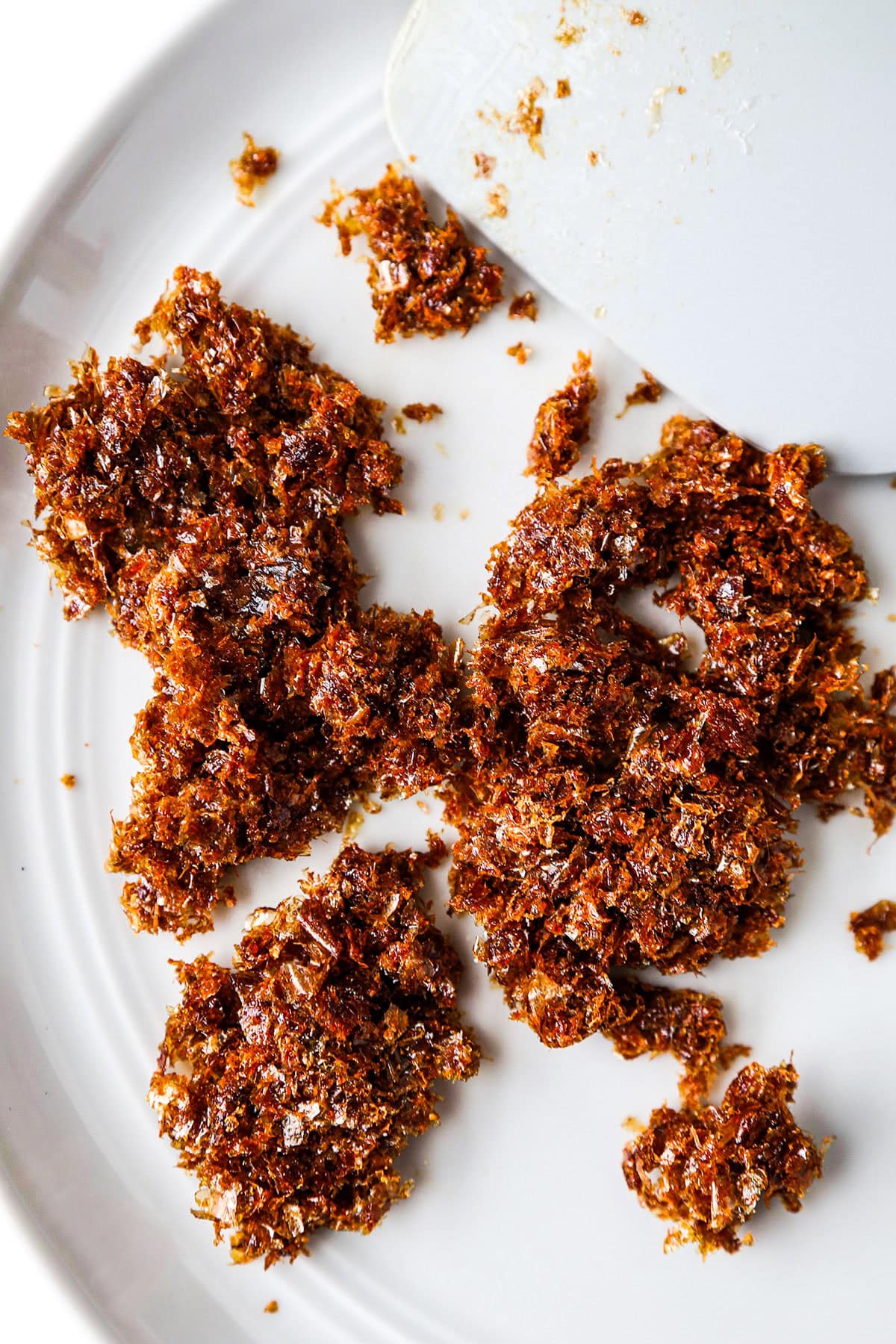
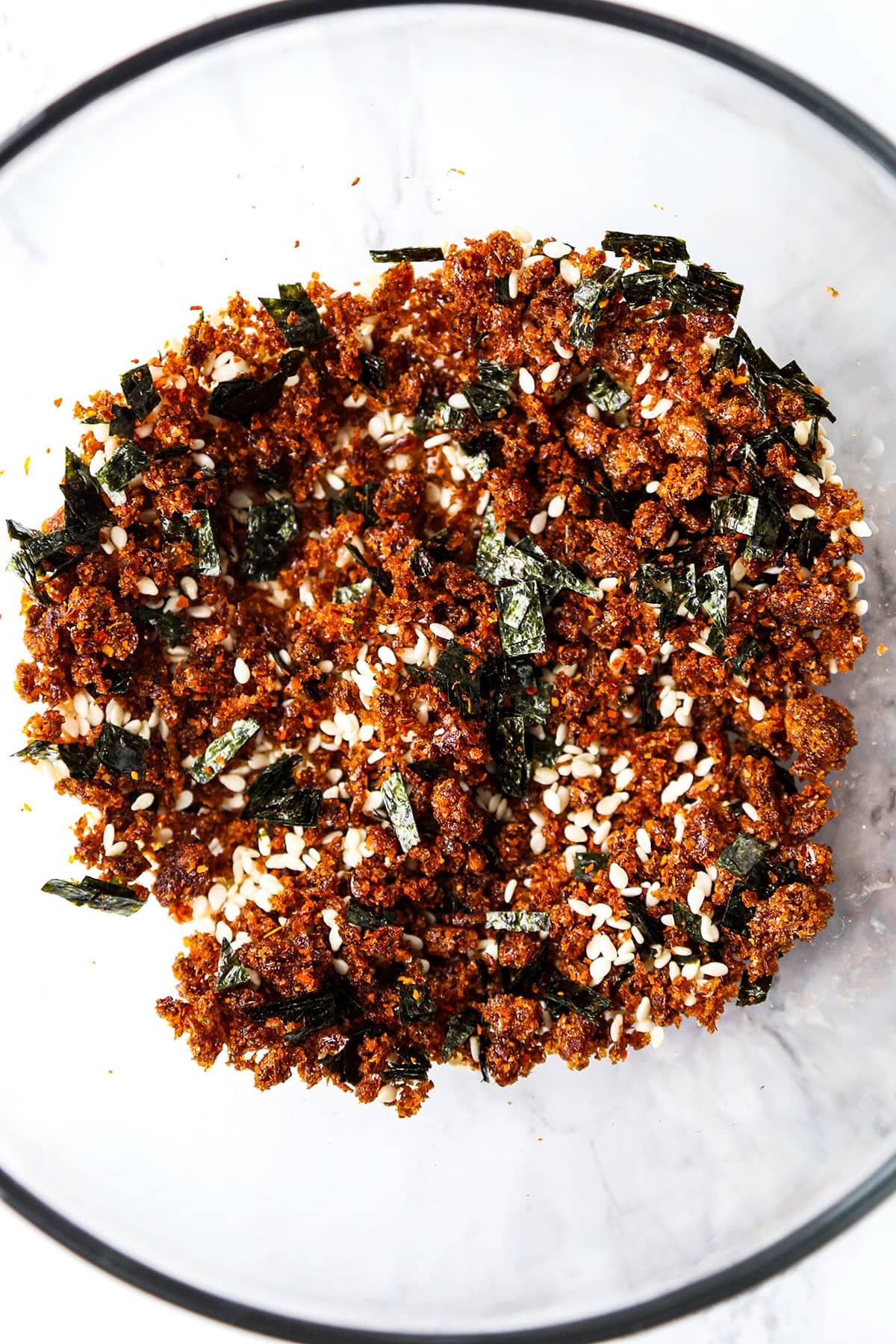
- Season the bonito flakes. Cook them with soy sauce and sugar over low heat, stirring until the mixture is sticky and resembles brown sugar. Stir in the sesame oil and turn off the heat.
- Cool and crumble. Spread the mixture on a sheet pan. Once cooled, break it into small granules.
- Mix. Stir in the sesame seeds, nori, and optional chili seasoning.
The full instructions and measurements are in the recipe card below.
Cooking Tips
- Keep the pieces small. Crush the bonito flakes and finely cut the nori so you get a little of everything in each sprinkle.
- Use low heat and stir constantly. The flakes and sugar can burn if the pan gets too hot. A nonstick pan makes the mixture easier to work with.
- Watch the texture. The seasoned flakes should be sticky and clumpy when they come off the heat. Cooking time can vary slightly depending on your burner.
- Cool before mixing. Let the bonito mixture cool before breaking it up and adding the nori and sesame seeds.
- Use leftover bonito flakes instead of new ones: Don’t throw away the bonito flakes from your dashi—you can use them to make this furikake. To learn how, read my post on how to reuse bonito flakes.
Storage
Fridge: Let the furikake cool completely, then transfer it to a jar or airtight container. Refrigerate for up to 2 weeks.
Freezing: For longer storage, freeze it in an airtight container or freezer bag for 1 to 2 months. These storage instructions are for the recipe as written, without fresh additions such as salmon or egg.
How To Use Furikake
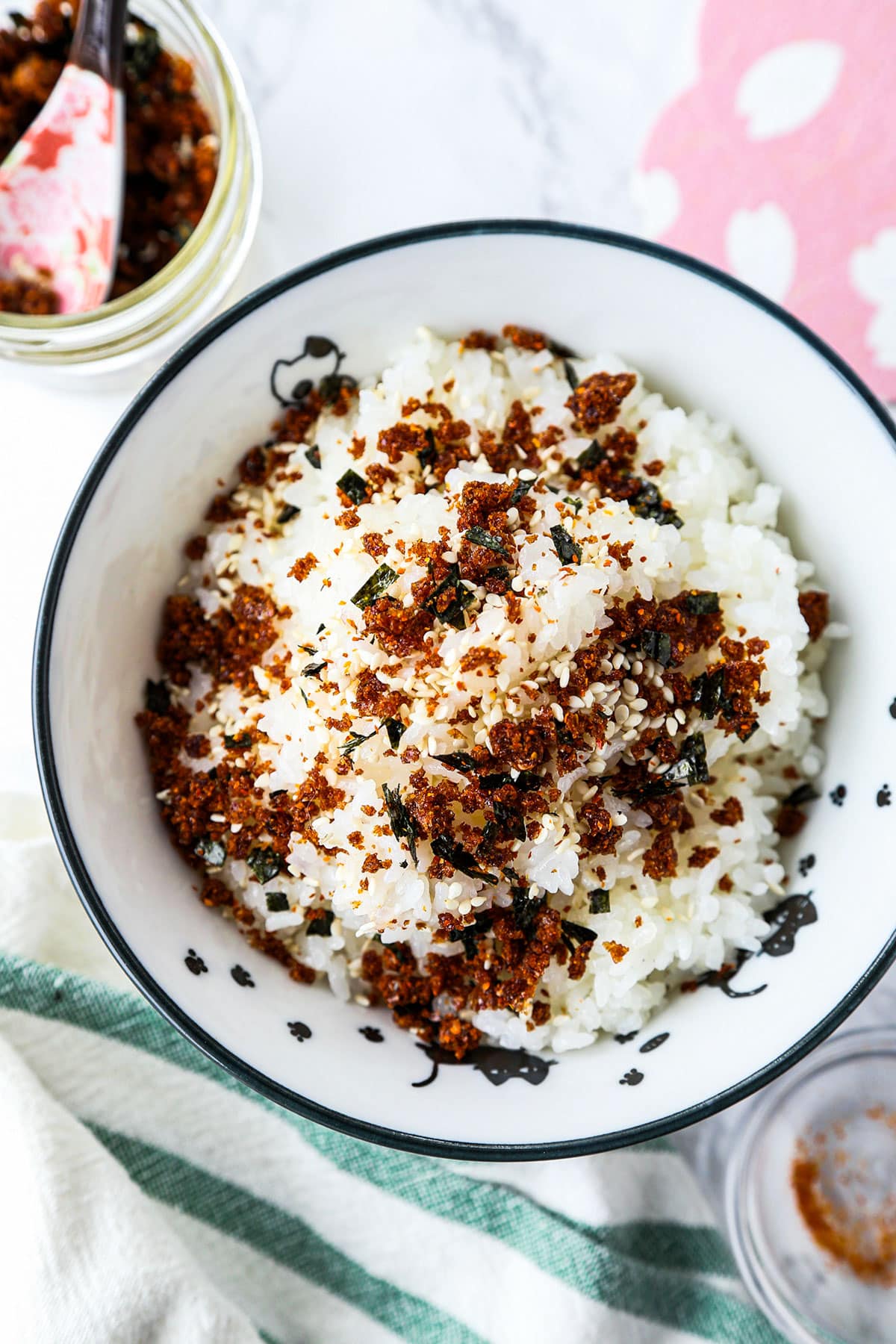
A bowl of warm Japanese rice is my favorite way to enjoy furikake, but there are plenty of other ways to use it:
- Onigiri: Mix a little into the rice before shaping your rice balls, or sprinkle it over the outside.
- Fries: Use it to make my furikake fries for a salty, savory snack!
- Tamago kake gohan: Sprinkle it over a simple bowl of tamago kake gohan (raw egg over Japanese rice) for extra umami and crunch.
- Salad: The texture and flavor can transform a simple green salad or potato salad into a wonderful thing indeed! Sprinkle furikake on top after you dress your salad. This way the dressing won’t blunt the crunch.
- Popcorn: Toss freshly popped popcorn with a little oil or melted butter, then add the seasoning so it sticks.
- Breaded Chicken: Add a little to the finished chicken for extra sesame flavor and umami. It goes especially well with my baked chicken katsu recipe.
- Pasta: Try a sprinkle over spaghetti vongole – the seaweed and bonito pair nicely with the clams.
- Rice Bowls: Spoon it over a salmon bowl, tuna bowl, or tofu and vegetable poke bowl as a finishing touch. It’s also delicious with this salmon teriyaki donburi or Korean style fish donburi.
For more meal ideas, browse my collection of easy Japanese recipes to make at home.
Did you like this recipe? Are there changes you made that you would like to share? Share your tips and recommendations in the comments section below.
PrintFurikake Seasoning
Use this all purpose Japanese seasoning on cooked rice – or on anything that needs a little umami crunch!
- Prep Time: 10 minutes
- Cook Time: 5 minutes
- Total Time: 15 minutes
- Yield: 1/4 cup 1x
- Category: Seasoning
- Method: Mixed
- Cuisine: Japanese
- Diet: Low Calorie
Ingredients
- 1/2 heaping cup bonito flakes (katsuobushi), crushed into small pieces
- 2 teaspoons soy sauce
- 2 teaspoons sugar
- 1/2 teaspoon sesame oil
- 2 tablespoons sesame seeds
- 1 1/2 tablespoon nori, cut into small pieces
- 1/4 teaspoon ichimi or shichimi powder (optional)
Instructions
- Season and pan fry the bonito flakes: In a pan over low heat, add bonito flakes, soy sauce and sugar and cook, stirring constantly for about 5 minutes – until the mixture is sticky and almost looks like brown sugar. Add in sesame oil and stir to coat the mixture evenly. Turn the heat off.
- Cool the mixture: Transfer to a sheet pan and let it cool to room temperature. Break the mixture with your fingers into small granules and transfer to a bowl.
- Make the furikake: Stir in sesame seeds, nori and shichimi.
- Serve: Sprinkle the mixture over cooked Japanese rice and serve.
Notes
When cooking, use a non-stick pan to prevent the bonito flakes from sticking and burning.
Nutrition
- Serving Size: 1 tablespoon
- Calories: 46
- Sugar: 2.3g
- Sodium: 171.8mg
- Fat: 2.8g
- Saturated Fat: 0.4g
- Unsaturated Fat: 1.2g
- Trans Fat: 0g
- Carbohydrates: 3.7g
- Fiber: 0.6g
- Protein: 2g
- Cholesterol: 2.1mg
Frequently Asked Questions
Yes. Use gluten-free soy sauce or tamari labeled gluten-free, and check the labels on your other ingredients, including any spice blend.
This recipe contains bonito flakes, which are made from fish. A blend of nori, sesame seeds, salt, and a little sugar is a simple vegan alternative, but it will have a different flavor and won’t use the same cooking method.
The bonito flakes are cooked with soy sauce and sugar, so this version has a slightly soft, crumbly texture. It isn’t intended to be as dry or crisp as some packaged blends. Let the cooked mixture cool completely before breaking it into small pieces.








Can you give me a weigh in grams for the Bonito flakes? Half a cup of flakes, crushed gives me a bit more than a tablespoon, half a cup of crushed flakes is almost half the 80 g bag. I’m not sure how much I should be using!
Hi Janet! I don’t how many grams it comes to since the recipe doesn’t have to be exact. But using about half of the bag seems about right. I use about 1/2 cup of bonito flakes, packed in, and crush the flakes after. I hope you enjoy the recipe! 🙂
This is by far the BEST Furikake recipe! Thanks for sharing. You won’t be disappointed if you try it!
Thank you for this recipe! Some of the commercial varieties have additives that one may not want. I also read somewhere that you can bake (leftover) shrimp tails and crush them to add to the mix.
Thanks now I don’t have to buy it in the stores, which we don’t have in tennessee. Just need to find bonito flakes. Thanks for posting this recipe
Caroline,
Thanks for writing up this nice post. Great to tie your Mom into the genesis of your making this. Good descriptions and backgrounds. Stopping at Berry Farms in Hopewell Junction tomorrow to pick up ingredients and then, in the words of Jackie Gleason, Away we go!
How long can you keep it and do you have to store it in the fridge?thank you
Hi Isabelle! If I know I’m going to eat it in the next few days, I leave it in my pantry in a glass jar. Otherwise, I recommend refrigerating it, it should keep for about a month.