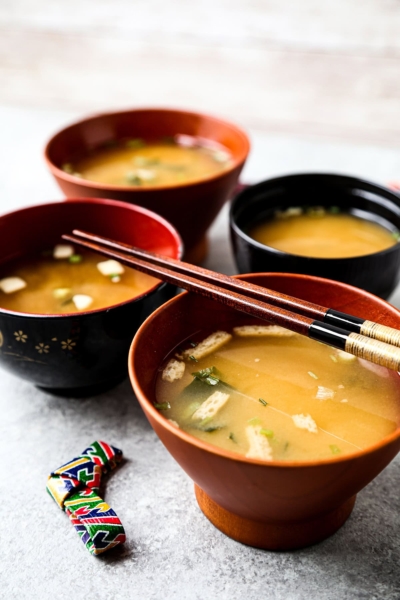
This high-protein salmon miso soup is made with edamame, bean sprouts, and tender pieces of salmon. It’s filling without being heavy and provides 30 grams of protein per serving.
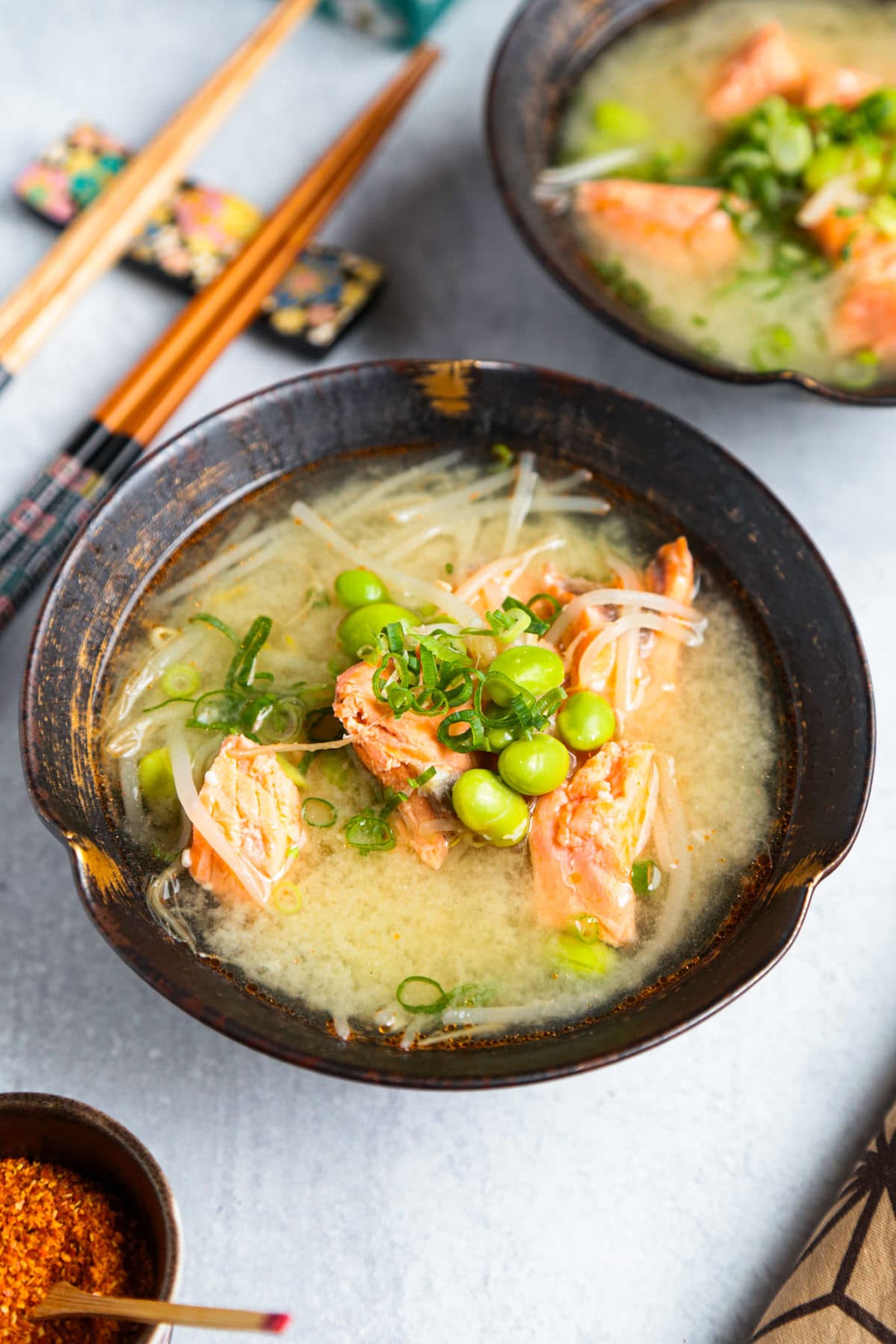
This high-protein miso soup takes the comfort of a classic Japanese miso soup and turns it into something substantial enough to eat as a full meal. The salmon poaches gently right in the dashi broth, so it stays tender, and the edamame and bean sprouts add nuttiness and a light crunch.
Everything cooks in one pot and is ready in less than 20 minutes. The salmon goes straight into the broth, so there’s no need to marinate or cook it separately. If you’ve made miso soup before, you already know most of this recipe. If you haven’t, it’s a great one to start with — the technique is simple and forgiving, and it teaches you the miso-dissolving trick you’ll use in dozens of other Japanese soups.
Why This Recipe Works
- It’s filling without feeling heavy. The salmon and edamame make this much more substantial than a traditional bowl of miso soup.
- It’s quick. Once the ingredients are prepared, the soup only needs about 6 minutes on the stove.
- Only one pot is needed. The salmon and vegetables are cooked directly in the dashi broth.
- It’s easy to customize. The salmon can be replaced with another firm fish, while the bean sprouts can be swapped for almost any quick-cooking vegetable without changing the basic method.
Table of contents
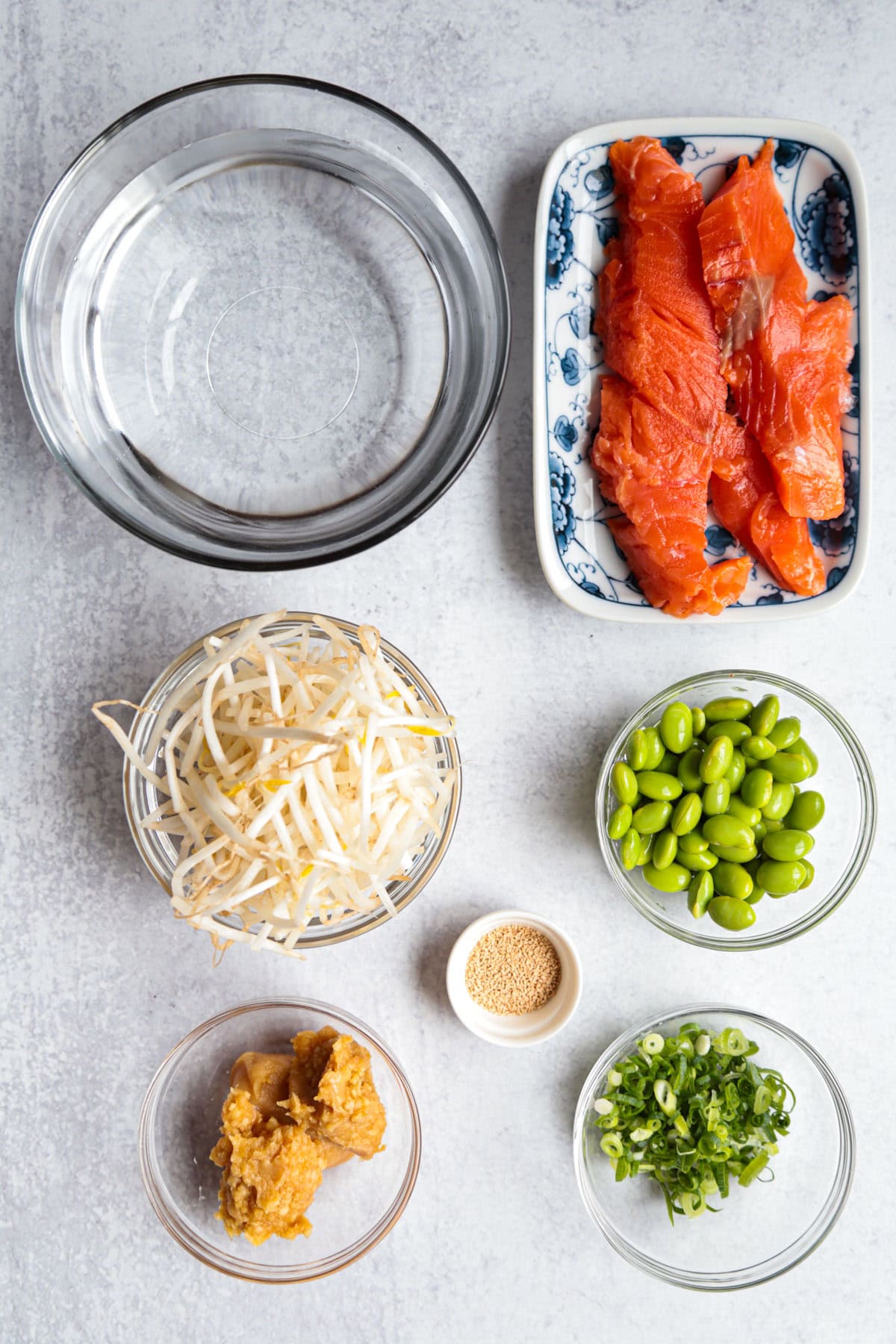
Ingredients
- Water and dashi powder: The dashi is what gives the broth its savory, slightly smoky taste. You can learn more about making it from scratch in my dashi guide.
- Salmon: Use boneless, skinless salmon fillets and cut them into bite-size pieces. If the salmon has skin, remove it and wipe the fish with a paper towel to remove any scales or small particles.
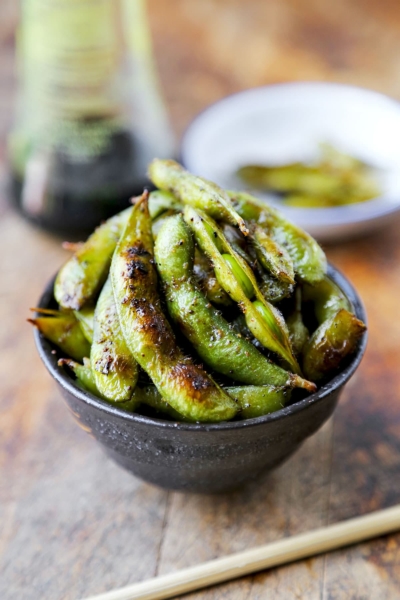
- Edamame: Shelled and thawed, not in the pod (pods are inedible). Edamame adds a mild sweetness, more protein, and a vibrant color.
- Bean sprouts: They are added near the end of cooking so they don’t become too soft.
- White miso paste: White miso paste is mild, slightly sweet, and less salty than darker varieties. Its delicate flavor works especially well with salmon. For more on the different types of miso and when to use them, check out my miso paste guide.
- Green onions: Finely chopped green onions add color and a refreshing crunch.
Substitutions
Fish: Cod and snapper are good choices if you prefer a milder flavor. Tuna can also be used, but keep a close eye on it since it can become dry when overcooked. The exact cooking time will depend on the type of fish and the size of the pieces.
Miso paste: Awase miso, a combination of white and red miso, will give the broth a stronger and slightly saltier flavor. Start with a little less than the amount listed in the recipe and add more after tasting.
Vegetables: Snow peas, chopped napa cabbage, baby spinach, or thinly sliced carrots can be used instead of bean sprouts. For carrots, let them cook for an additional 2-3 minutes.
How to Make High-Protein Miso Soup with Salmon
Scroll down to the recipe card for the full recipe.
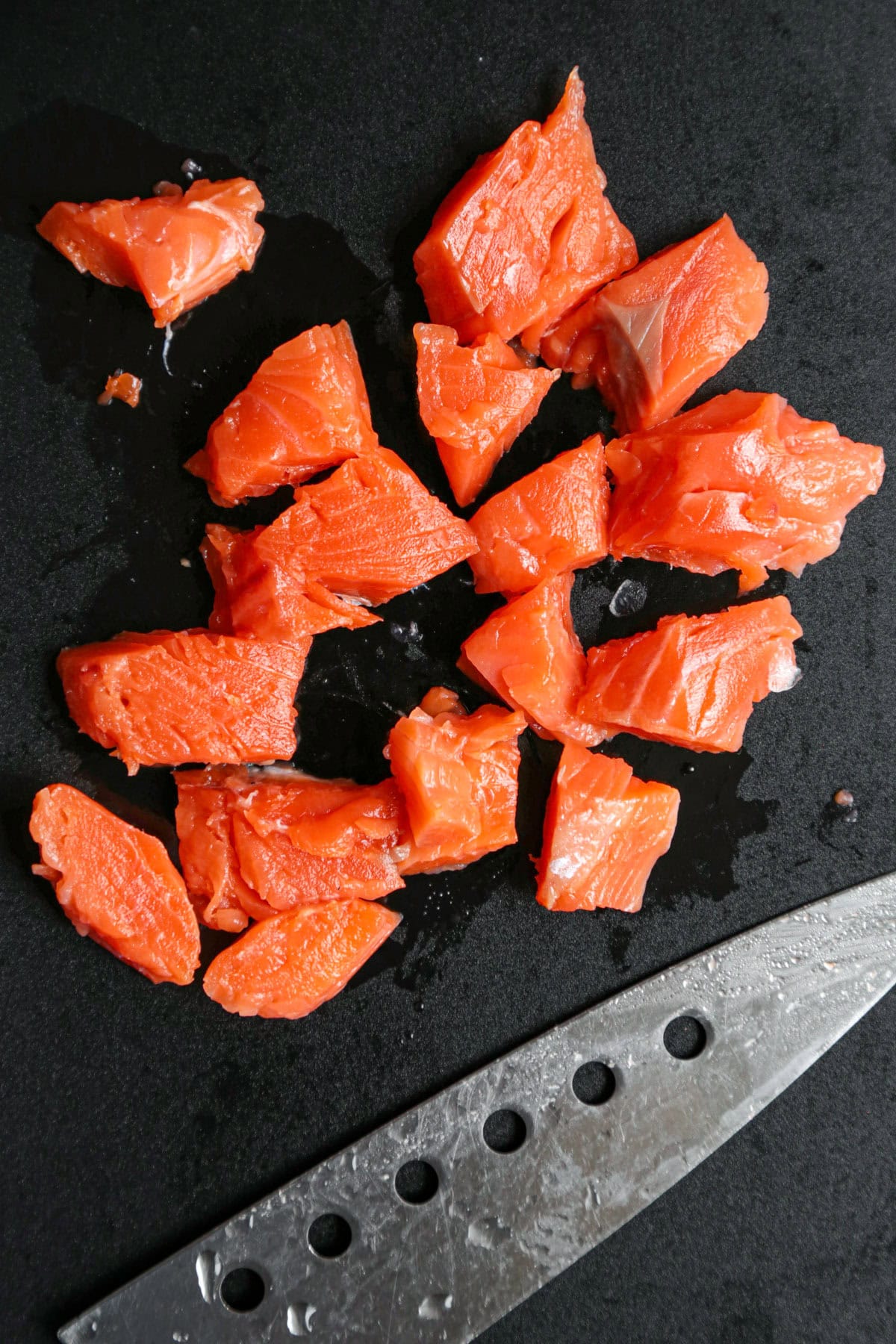
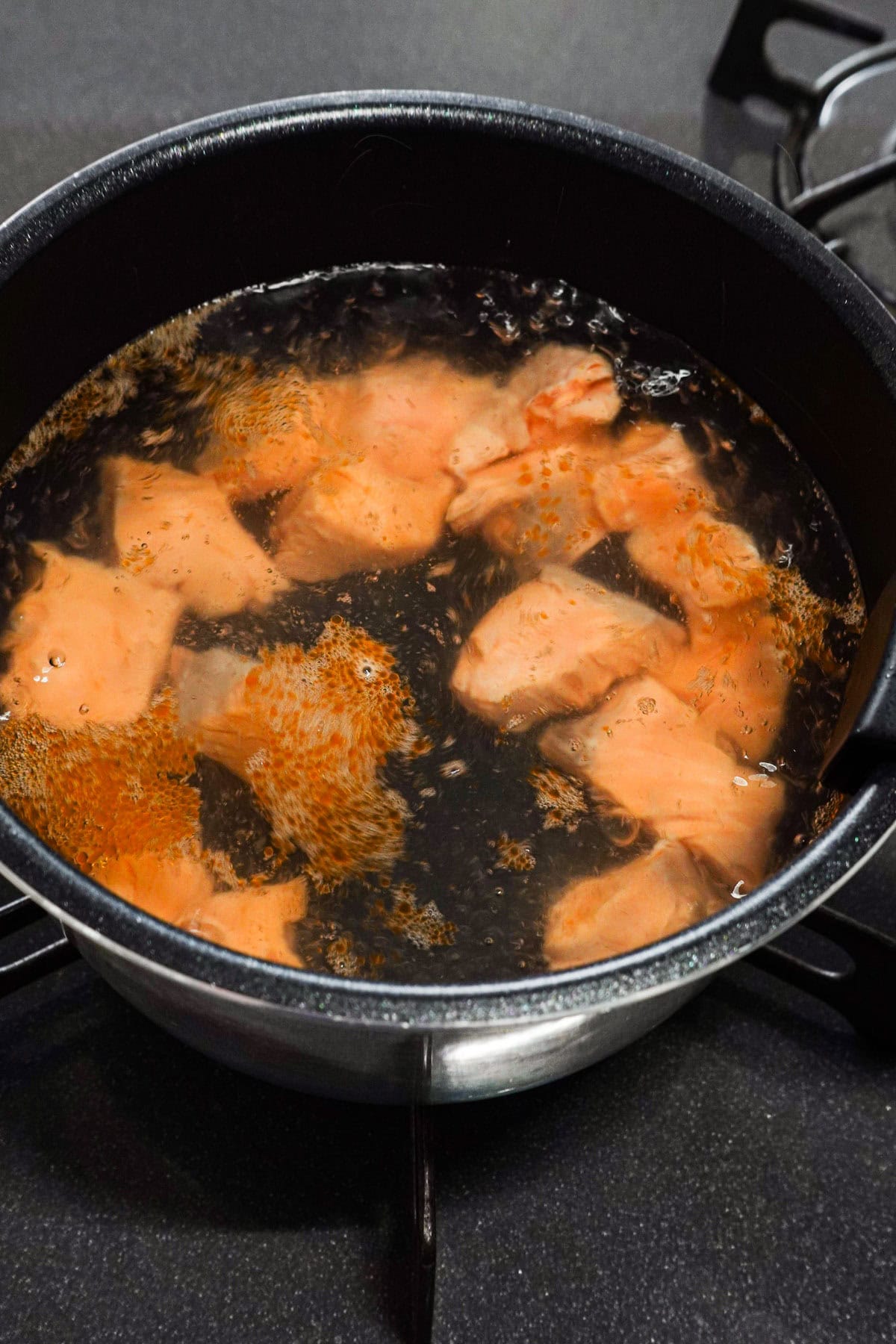
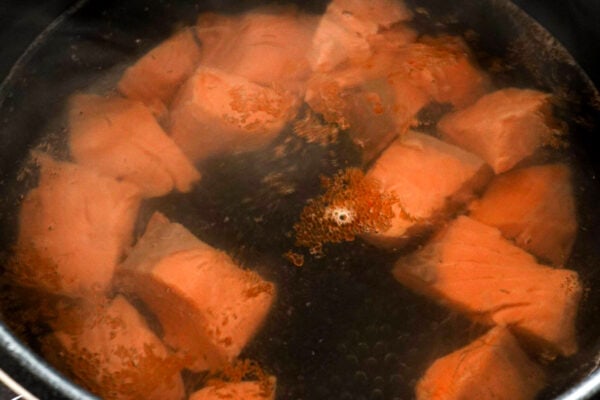
- Simmer the salmon with the dashi broth until it’s nearly cooked.
- Add the edamame and bean sprouts.
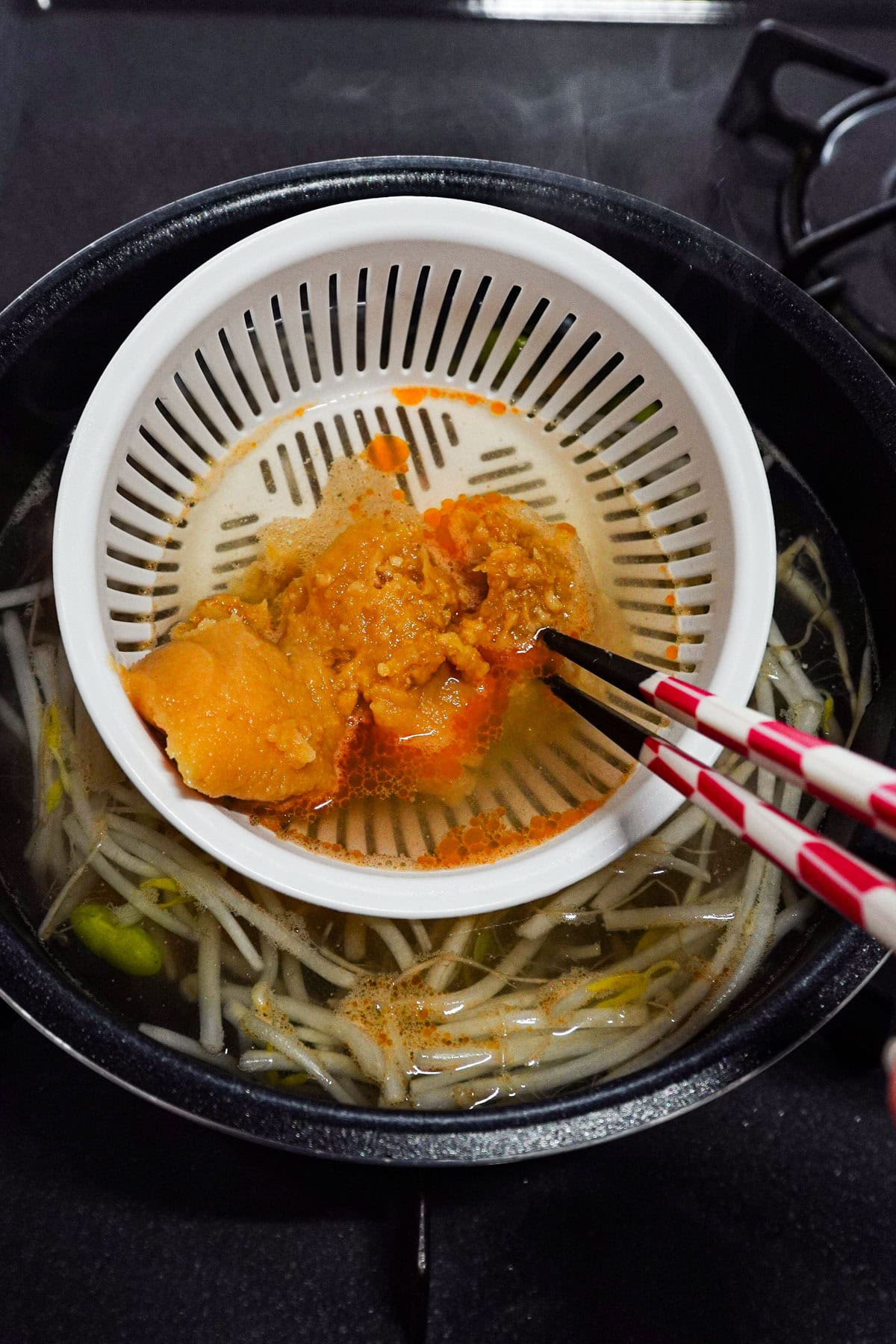
- Dissolve the miso paste into the broth and finish by topping with chopped green onions. Enjoy!
Recipe Tips
Keep the broth at a gentle simmer. A strong boil can cause the salmon to break apart.
Cut the salmon evenly. Pieces that are similar in size will finish cooking at the same time.
Don’t overcook the bean sprouts. One minute is enough to heat them while preserving their crunch.
Turn the heat off before adding the miso. Boiling miso can dull its delicate aroma and flavor.
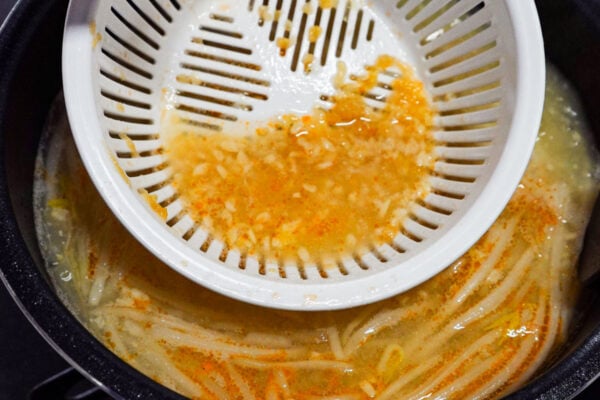
Use a strainer for the miso paste. This is an easy way to dissolve the paste evenly and catch any firm bits or clumps.
Taste before adding more miso. The saltiness of miso varies significantly from one brand and type to another.
Storage and Reheating
Store leftover salmon miso soup in an airtight container and refrigerate it for up to 2 days.
Reheat it gently in a pot over low to medium-low heat. Avoid bringing it to a boil since high heat can overcook the salmon and weaken the flavor of the miso.
I don’t recommend freezing this soup. The bean sprouts will lose their crunch, and the texture of the salmon may change once thawed.
What to Serve
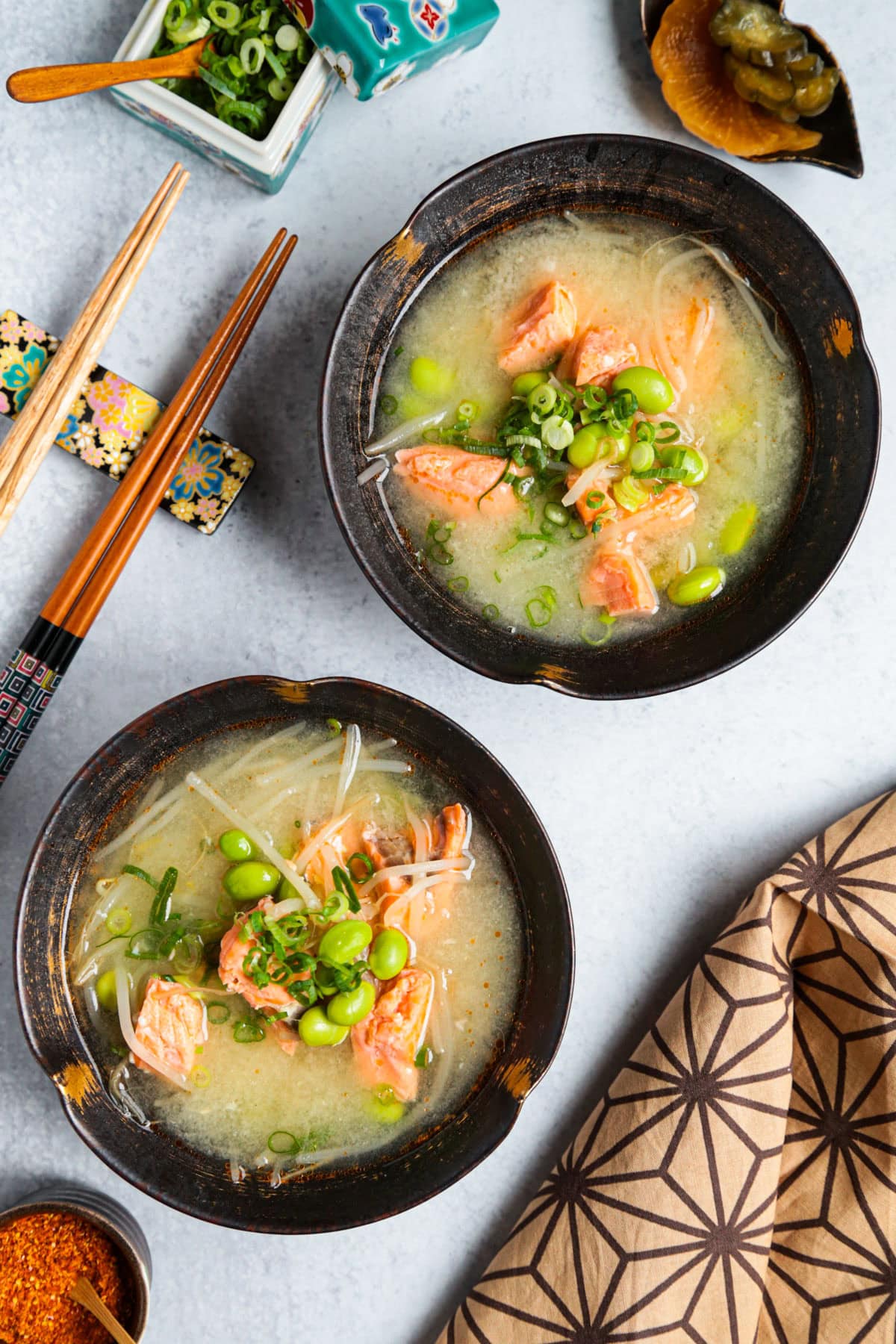
This soup was created to be filling enough to enjoy as a light meal on its own. However, it can also be served with a small bowl of Japanese rice or a couple of onigiri if you would like something more substantial.
For a fresh and tangy side, pair it with sunomono, a simple cabbage salad, or a plate of Japanese pickles (tsukemono). You can find more pairing ideas in my collection of Japanese side dishes.
More Miso Soup Recipes
Miso Soup with Tofu and Wakame: The classic combination of soft tofu, wakame seaweed, and delicate miso broth.
Potato and Onion Miso Soup: A slightly heartier miso soup with tender potatoes and sweet onions.
Daikon Miso Soup: A light and earthy soup with pieces of melt-in-your-mouth daikon.
Eggplant Miso Soup: A savory miso soup with tender eggplant, fried tofu, and wakame.
For even more miso based dishes, take a look at my collection of recipes using miso.
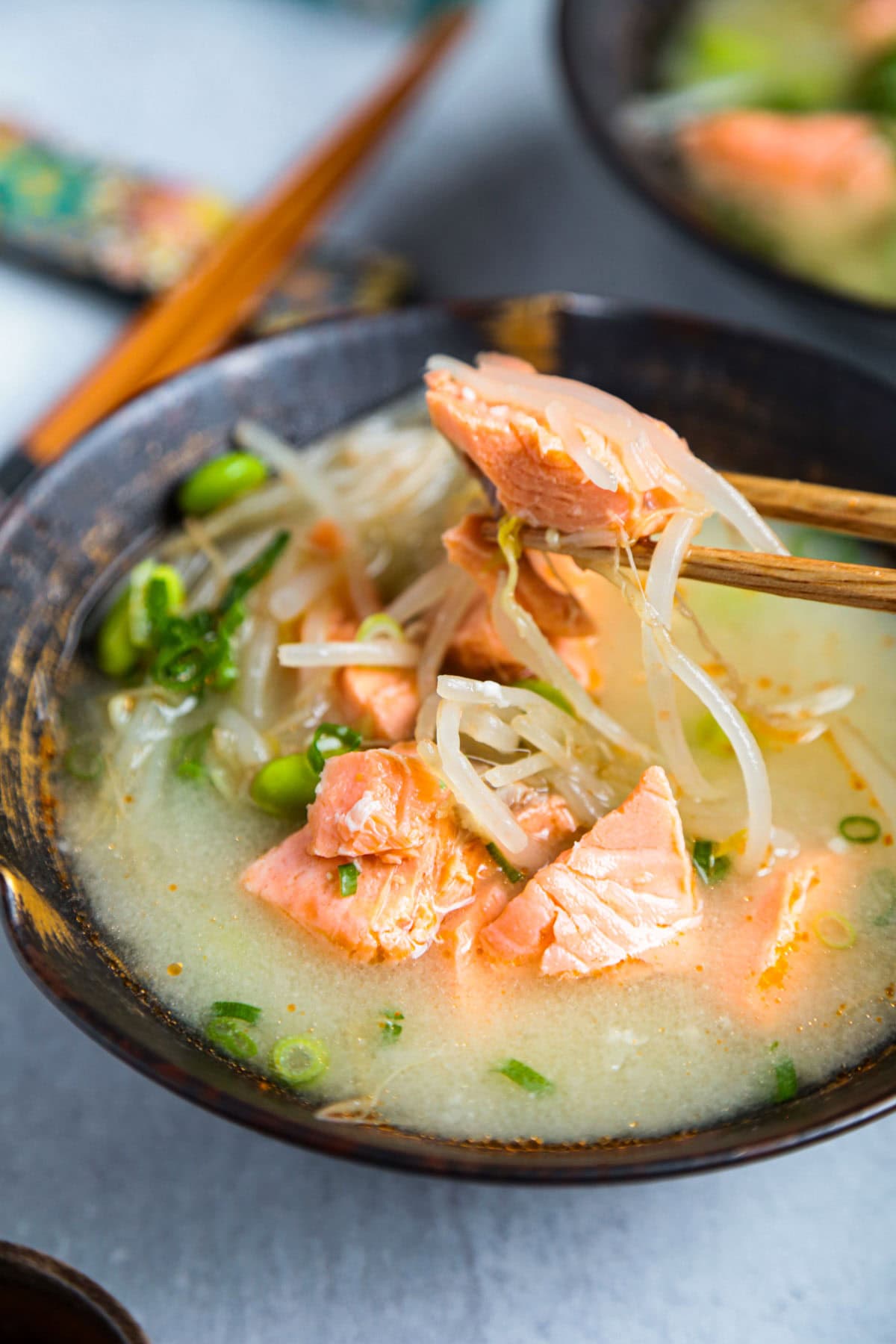
Did you like this high-protein salmon miso soup? Are there changes you made that you would like to share? Share your tips and recommendations in the comments section below!
PrintHigh-Protein Salmon Miso Soup

A quick, one-pot miso soup loaded with salmon, edamame, and bean sprouts for a light meal that’s high in protein.
- Prep Time: 10 minutes
- Cook Time: 10 minutes
- Total Time: 20 minutes
- Yield: 2 servings 1x
- Category: Soup
- Method: Stove Top
- Cuisine: Japanese
- Diet: Pescatarian
Ingredients
- 3 cups water
- 1/2 teaspoon dashi powder
- 8 ounces boneless, skinless, salmon fillet, cut into bite size pieces. Other fish you can use: tuna, cod, or snapper
- 1/2 cup shelled edamame, thawed
- 1 cup bean sprouts
- 3 tablespoons white miso paste
- 2 green onions, finely chopped
Instructions
- Slice the salmon. If the salmon has skin on it, remove it. Wipe the salmon with a paper towel to remove any scales or small particles. Cut the salmon into bite size pieces and set aside.
- Boil the water. Add the water and dashi powder to a medium size pot and bring to a boil.
- Cook the salmon. Add the salmon and lower the heat to a simmer. Cover and simmer for 3-4 minutes, until the salmon is almost cooked.
- Add the edamame and bean sprouts. Add them and let them cook for 1 minute.
- Flavor with miso paste. Turn the heat off. Add the miso paste to a small strainer and lower the strainer into the pot, until the liquid covers the miso paste. Stir the miso paste using chopsticks, and keep stirring until it has fully dissolved. Any leftover bits or clumps can be discarded.
- Serve. Ladle the soup into bowls and top with green onions.
Notes
This soup is best eaten fresh, but leftovers (without the green onions) will keep for up to 2 days in the fridge. Reheat gently on low heat — do not boil.
Nutrition
- Serving Size: 1 bowl
- Calories: 250
- Sugar: 3.1g
- Sodium: 108mg
- Fat: 8.4g
- Saturated Fat: 1g
- Unsaturated Fat: 1.3g
- Trans Fat: 0g
- Carbohydrates: 12.5
- Fiber: 3.8g
- Protein: 32g
- Cholesterol: 57mg
Frequently Asked Questions
Yes. Thaw the salmon completely in the refrigerator and wipe it well with a paper towel before cutting it. Removing the excess moisture will prevent it from diluting the broth.
Yes. Shelled frozen edamame can be added without thawing, but it may need an additional minute to heat through.
You can, but red miso paste is much stronger, and saltier than white miso paste. Begin with a smaller amount, taste the broth, and add more if needed.
It can be, but check the labels on both the miso paste and dashi powder. Some varieties of miso are made with barley, and certain powdered dashi products may contain ingredients that are not gluten-free.
Prolonged high heat can flatten miso’s aroma and delicate flavor. Add the miso after turning off the heat, then reheat leftovers gently without allowing the soup to boil.