Japanese sweet potatoes are a popular snack sold in supermarkets and by street vendors across Japan. Their sweet, nutty flavor makes them a satisfying snack, and they are very easy to bake at home.
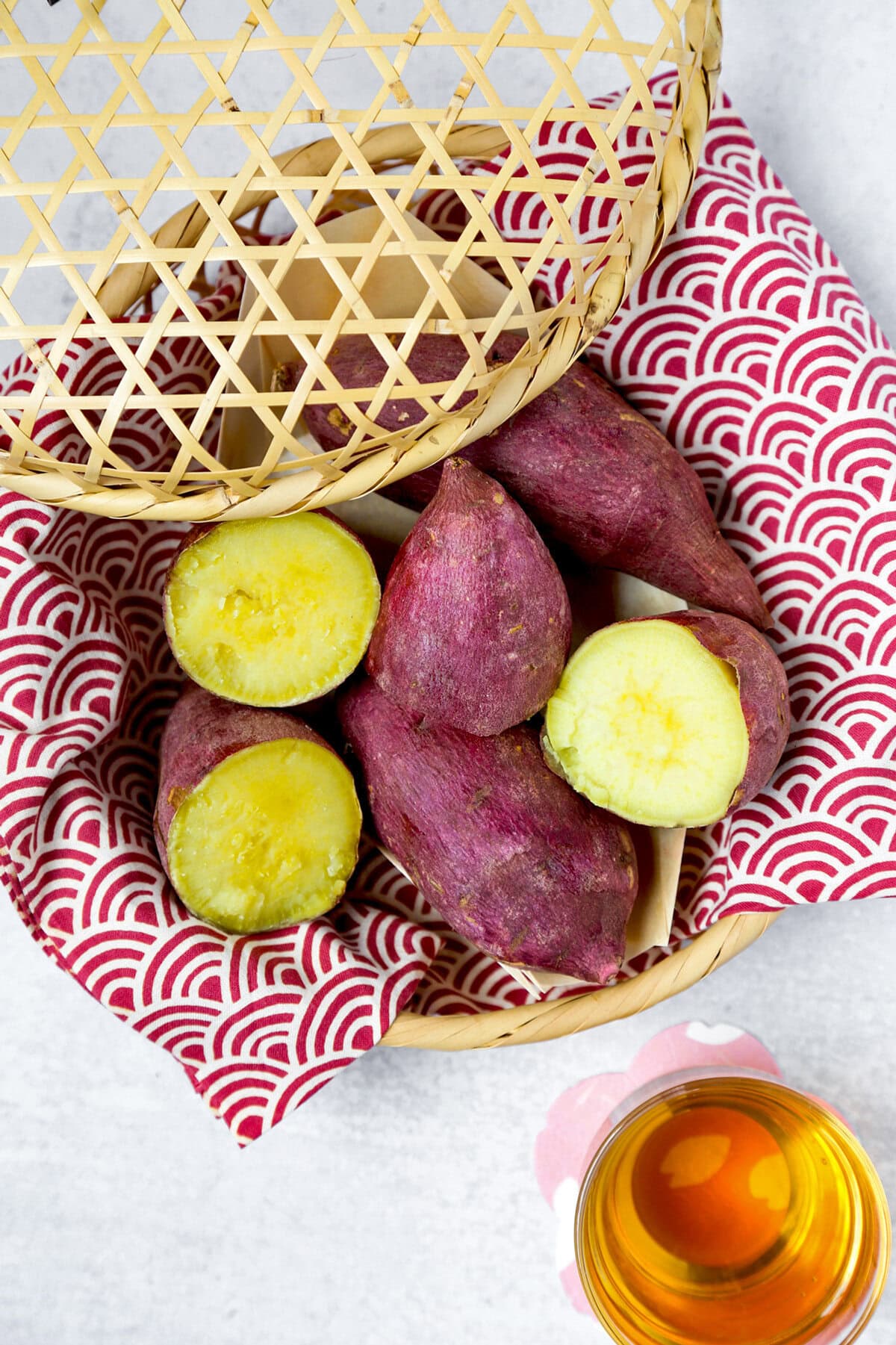
Here in Tokyo, yaki imo are available all year round, usually near the entrances of supermarkets. Their sweet, nutty aroma is unmistakable, and their reddish-purple skins make them easy to spot. They are typically served warm and eaten straight from the skin, without butter, sugar, or seasoning. They are so scrumptious!
Japanese sweet potatoes have a denser texture and a more chestnut-like flavor than orange sweet potatoes. Baking them whole at a moderate temperature gives the centers time to become tender and brings out their natural sweetness. This recipe is very easy to make and takes about 75 minutes in the oven.
If you would like to explore more everyday dishes from Japan, take a look at my collection of 90 easy Japanese recipes to make at home.
Table of contents
What are Japanese Sweet Potatoes?
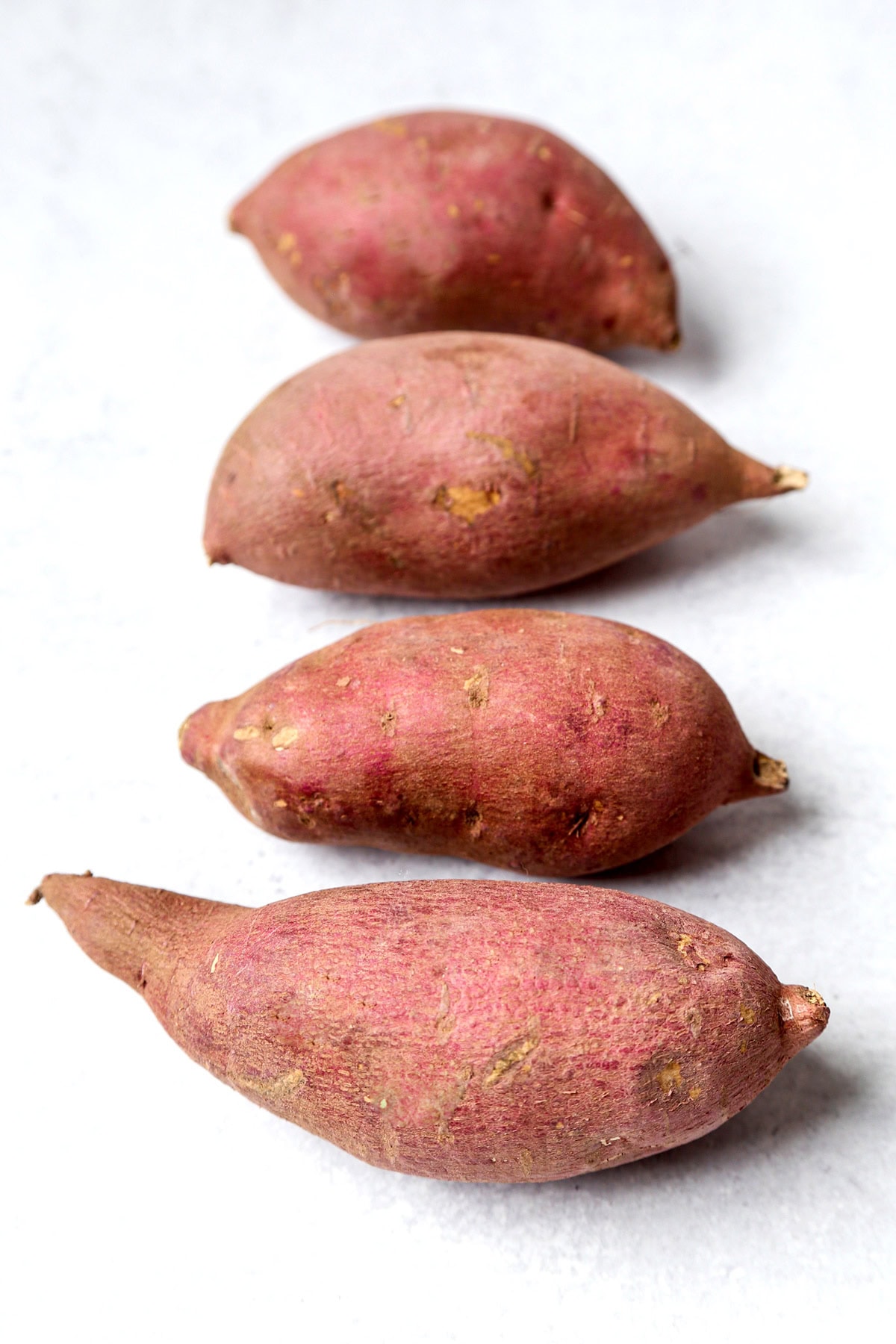
Japanese sweet potatoes, called satsumaimo (さつまいも), have reddish-purple skin and pale yellow flesh. They are sweet potatoes—not yams—even though they are sometimes labeled “Japanese yams” in grocery stores.
They are extremely popular in Japan and are most often eaten as a snack or as a side dish, bare, without any added seasoning. Their flavor is sweet, earthy, and slightly nutty. The skin is easy to peel once the potatoes are roasted, and the texture of the flesh can range from fluffy and starchy to smooth and almost custardy, depending on the variety.
They are also used in traditional Japanese sweets and modern desserts, either as a filling or as the main ingredient in pies and cakes.
Japanese Sweet Potato VS Orange Sweet Potato
Although they can be prepared in similar ways, Japanese and orange sweet potatoes do not have the same flavor or texture.
Japanese Sweet Potato
- Skin: Reddish purple
- Flesh: Pale cream, yellow when cooked
- Texture: Dense, starchy or creamy
- Flavor: Sweet, nutty, chestnut-like
- Best uses: Baked whole, tempura, snacks, desserts
Orange Sweet Potato
- Skin: Copper or brown
- Flesh: Bright orange
- Texture: Softer and higher in moisture content
- Flavor: Sweet and earthy
- Best uses: Mashing, roasting, casseroles
Okinawa Purple Sweet Potato
An Okinawan purple sweet potato is different from both. It generally has pale brown skin and vivid purple flesh, and is more earthy in flavor than sweet.
Where to Buy Japanese Sweet Potatoes
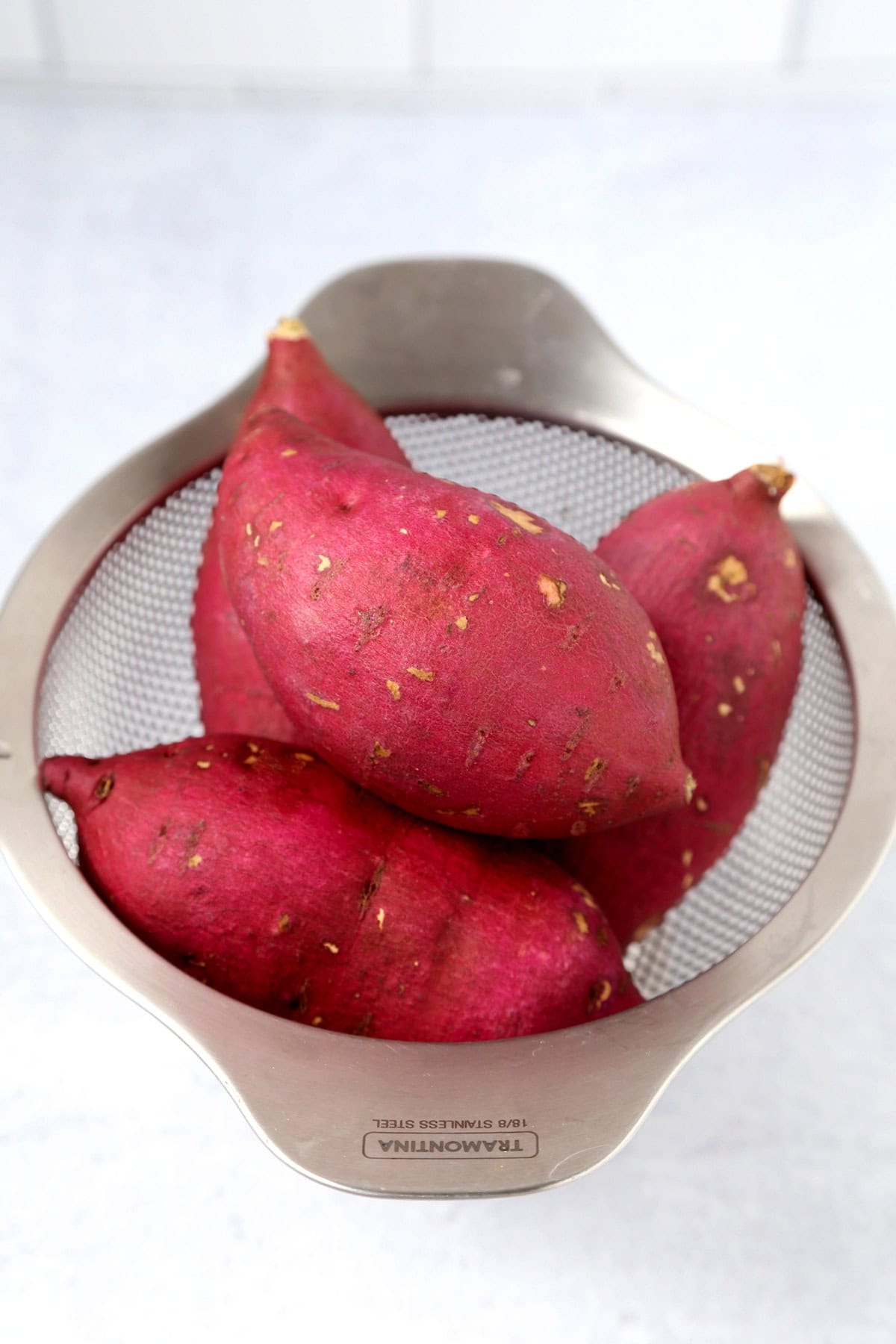
Look for Japanese sweet potatoes at Japanese and other Asian grocery stores. They are also sold at some larger supermarkets, natural food stores, and farmers’ markets.
Choose potatoes that:
- Feel firm and heavy for their size.
- Have smooth skin without soft spots or deep cuts.
- Are fairly even in thickness.
- Are similar in size if you plan to bake several at once.
Similar-sized potatoes will finish cooking at approximately the same time. Thickness matters more than length, so a very thick potato may require additional baking time.
Keep uncooked Japanese sweet potatoes in a cool, dark, dry, and well-ventilated place. Do not store them in the refrigerator, since cold temperatures can negatively affect their texture and flavor.
Gradual Baking for a Sweeter Taste
Japanese sweet potatoes contain starch and naturally occurring enzymes. As the potatoes gradually heat, those enzymes help convert some of the starch into maltose, a sugar that contributes to the sweet flavor of cooked sweet potatoes.
Research comparing slow roasting with rapid microwave cooking found that slowly heated sweet potatoes produced substantially more maltose. This is why a whole potato baked for more than an hour can taste sweeter than one cooked quickly in the microwave.
How to Bake Japanese Sweet Potatoes
- Prepare the potatoes. Scrub them well, pat them dry, and pierce the skin in a few places.
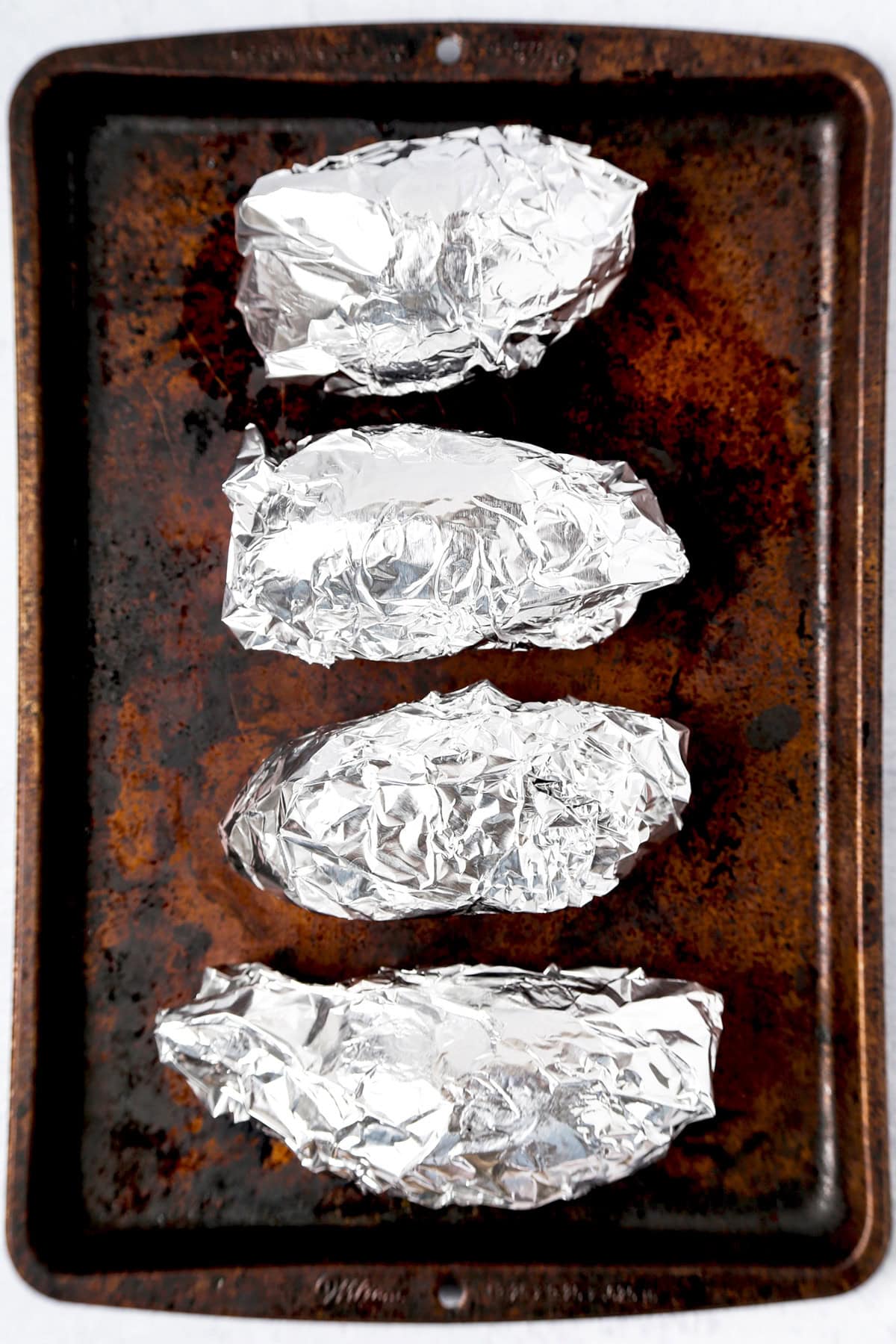
- Wrap and bake. Wrap each potato in foil and bake at 350ºF for approximately 70 minutes.
- Check the centers. Insert a skewer or thin knife into the thickest part. The potatoes are ready when it slides through easily.
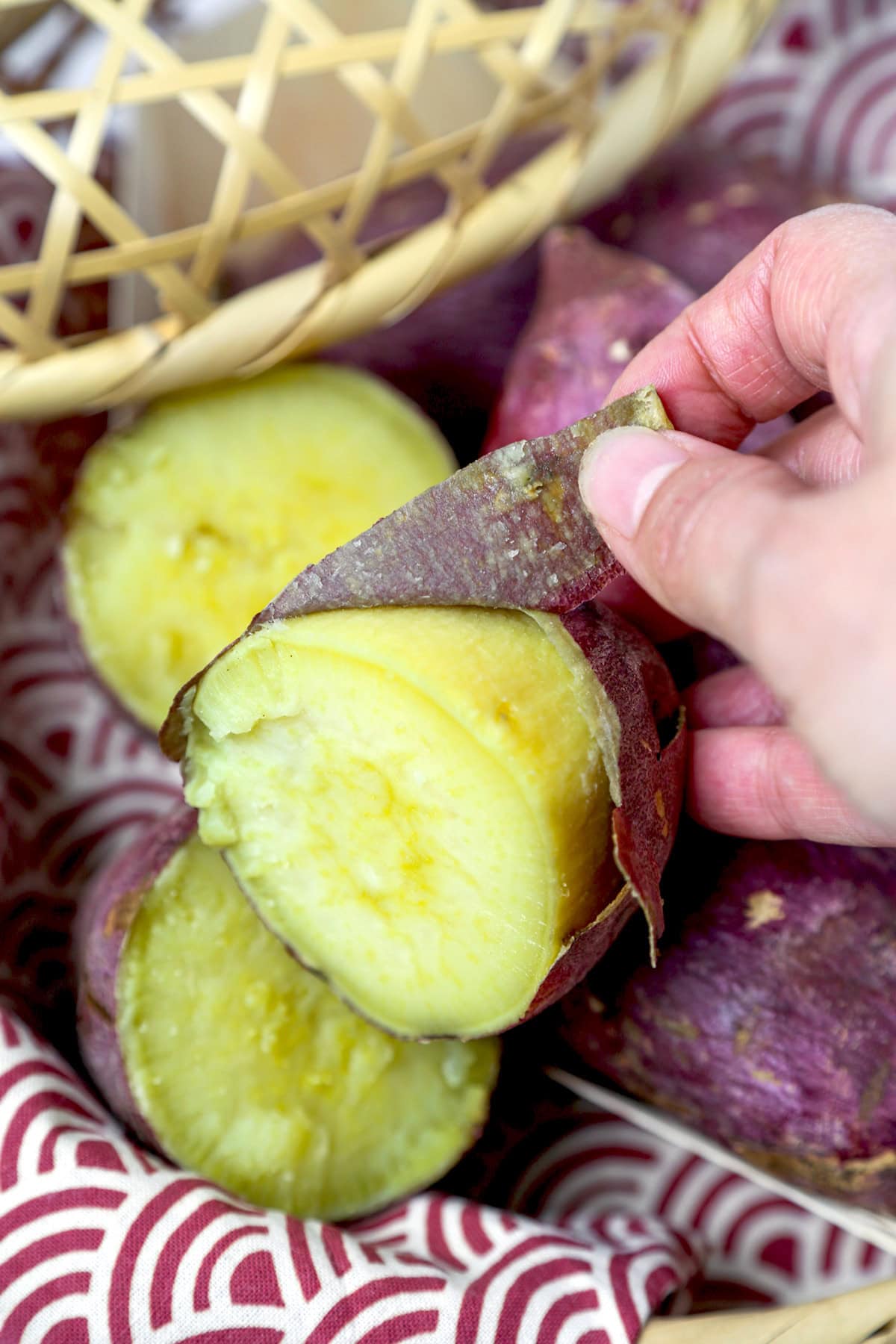
The exact baking time depends on the thickness of the potatoes. If the center is pale, chalky, or still feels firm, return them to the oven and check again after 10 minutes. A fully cooked Japanese sweet potato should feel soft when gently squeezed with an oven mitt. A skewer should slide through the thickest part with very little resistance.
How to Eat Yaki Imo
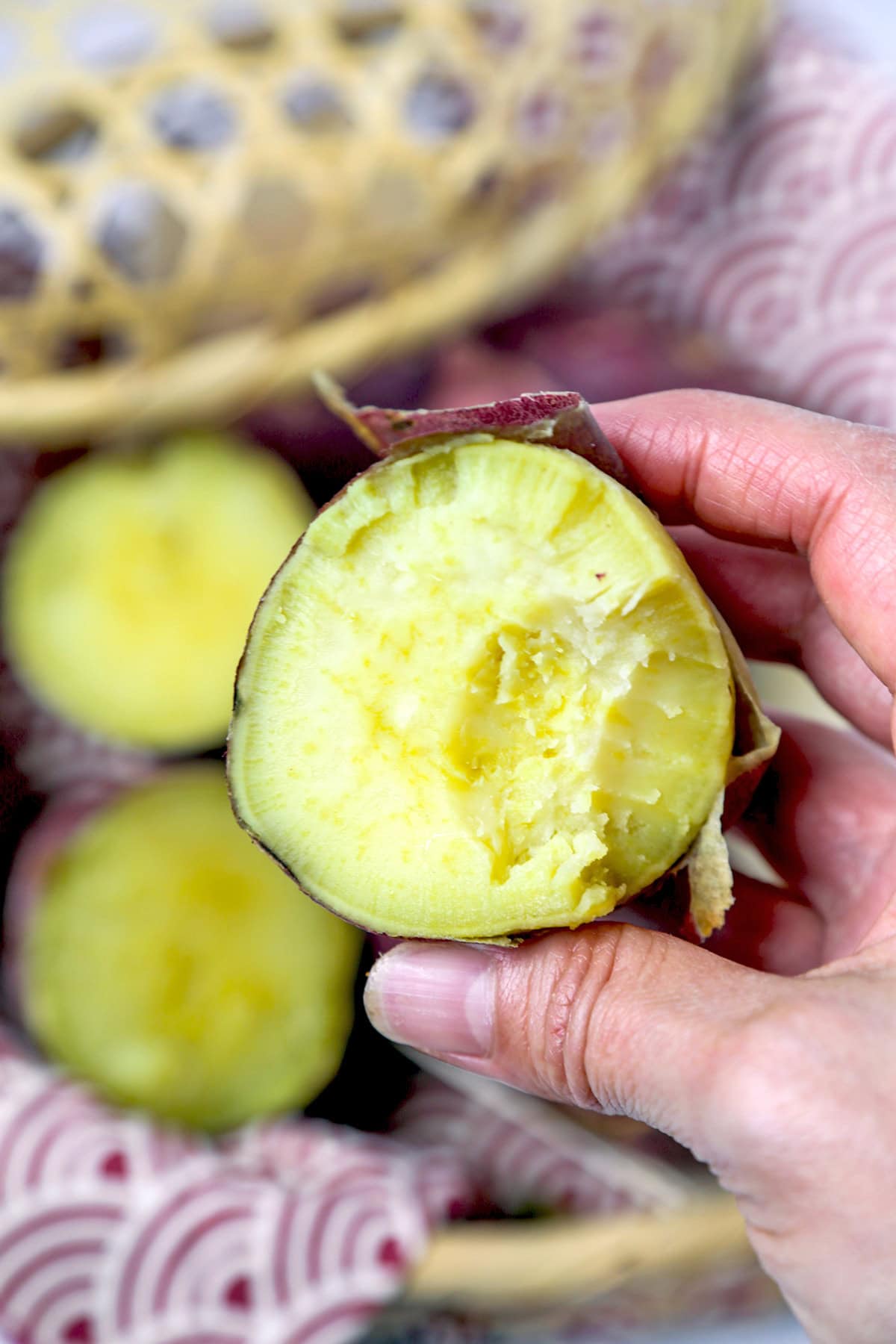
The traditional way to enjoy yaki imo is warm and plain. Break the potato in half and eat the flesh directly from the skin. The skin is also edible as long as it has been thoroughly scrubbed. That’s how Ben and I like to eat it, sometimes with a sprinkle of salt.
Japanese sweet potatoes are naturally flavorful, but you can also add:
- A little butter and sea salt
- Cinnamon
- Maple syrup
- Wafu dressing
- Ponzu sauce
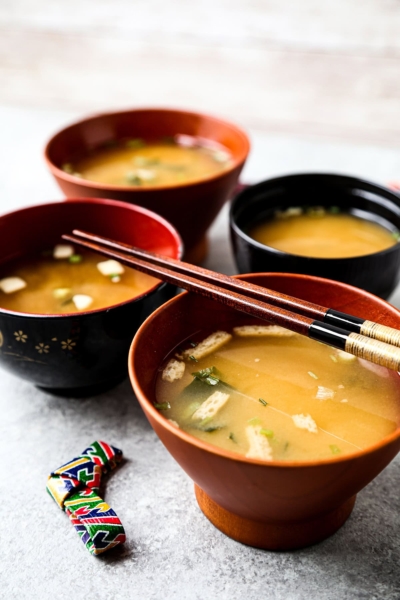
For a light Japanese lunch, pair a baked sweet potato with a bowl of miso soup, a serving of ohitashi, or miso salmon as a side.
They are also delicious chilled. The texture becomes firmer after refrigeration, making them an easy snack to prepare ahead of time.
How to Store, Freeze, and Reheat Baked Japanese Sweet Potatoes
Refrigerating: Let the cooked sweet potatoes cool, remove the foil, and transfer them to an airtight storage container. Refrigerate for 3 to 4 days.
Freezing: Let the potatoes cool completely and remove the foil used for baking. Wrap each potato individually and place them in a freezer-safe bag or container. Freeze for up to 3 months. Thaw them overnight in the refrigerator before reheating. They can also be sliced and enjoyed partially frozen for a firmer, almost ice cream-like texture.
Reheating: To reheat them in the microwave, place one potato on a microwave-safe plate and heat it in 30-second increments until warm. Covering it with a damp paper towel will help keep it from drying out. To use the oven or toaster oven, wrap the potato in foil and warm it at 350ºF for approximately 10 to 15 minutes.
TABLEWARE
Like some of the tableware in this post? They are available at Musubi Kiln.
Musubi Kiln is an online store specializing in high quality handmade Japanese tableware and dinnerware. Each product is made by Japanese craftsmen using traditional techniques that have been passed down from generation to generation.
Receive 10% off your purchase when using the code CAROLINE at checkout.
Did you like this recipe? Are there changes you made that you would like to share? Share your tips and recommendations in the comments section below!
PrintJapanese Sweet Potato (Yaki Imo)
Japanese sweet potatoes baked until the reddish-purple skins are soft and the golden centers are naturally sweet, moist, and creamy.
- Prep Time: 5 minutes
- Cook Time: 1 hour 10 minutes
- Total Time: 1 hour 15 minutes
- Yield: 4 sweet potatoes 1x
- Category: Side
- Method: Baking
- Cuisine: Japanese
- Diet: Vegan
Ingredients
- 4 Japanese sweet potatoes
- Aluminium foil, for wrapping
Instructions
- Preheat the oven. Preheat the oven to 350ºF (180ºCº).
- Clean the potatoes. Scrub the sweet potatoes under cold water to remove any dirt. Pat them dry.
- Pierce and wrap. Poke three or four holes in each potato and wrap each one in aluminum foil.
- Bake until tender. Place the potatoes on a baking sheet and bake for 1 hour and 10 minutes. Insert a skewer or thin knife into the thickest part. If it does not slide through easily, continue baking in 10-minute increments.
- Rest and serve. Carefully open the foil and let the potatoes rest for 5 minutes before serving.
Notes
- The cooking time depends on the thickness of the potatoes. Very thick potatoes may take 80 to 90 minutes.
- Refrigerate cooled potatoes without the original foil in an airtight container for 3 to 4 days.
- Freeze individually wrapped potatoes for up to 3 months.
Nutrition
- Serving Size: 1 sweet potato
- Calories: 112
- Sugar: 5g
- Sodium: 72mg
- Fat: 0.1g
- Saturated Fat: 0g
- Unsaturated Fat: 0g
- Trans Fat: 0g
- Carbohydrates: 26g
- Fiber: 3.9g
- Protein: 2g
- Cholesterol: 0mg
Frequently Asked Questions
No. This recipe uses foil because it traps moisture and gives the potatoes a softer, creamier texture. Baking them without foil produces a slightly drier, fluffier interior and a crisper skin.
Yes. The skin is edible and becomes soft when the potatoes are wrapped in foil. Scrub the potatoes thoroughly before baking to remove any dirt.
You can, but the flavor and texture will be different. A microwave heats the center quickly, so the potato has less time to develop the sweetness and texture associated with slowly baked yaki imo. The oven method is better when flavor is the priority.








Caroline,
Hi! Just bought a bag of Hawaiian Sweet Potato from my local Costco. Wanting to use to make frozen potato wedges. My husband loves these. I have been making these using normal sweet potatoes. I have noticed that this purple sweet potato seems to boil very much softer than than the normal yellow sweet potato. So rather than boil to soften for 2minutes then cool and freeze. Can I just cut and freeze them as wedges?
I take it they’ll be good for 3 months frozen if it lasts that long .
Karine
Hi Karine! I would still partially cook them otherwise before freezing them. Maybe for just 1 minute instead of two? 🙂
I love Yaki Imo and am old enough to remember the Yaki Imo truck that would cruise our neighborhood in the evening. I just made these in my fireplace after the fire died down and the embers were glowing. So delicious
This is such a lovely story, Debra! I feel relaxed just reading it 🙂