Learn all there is to know about Japanese Miso Paste – the fermented, savory, and umami loaded ingredient used in everything from pickles to stir-fries to miso soup!
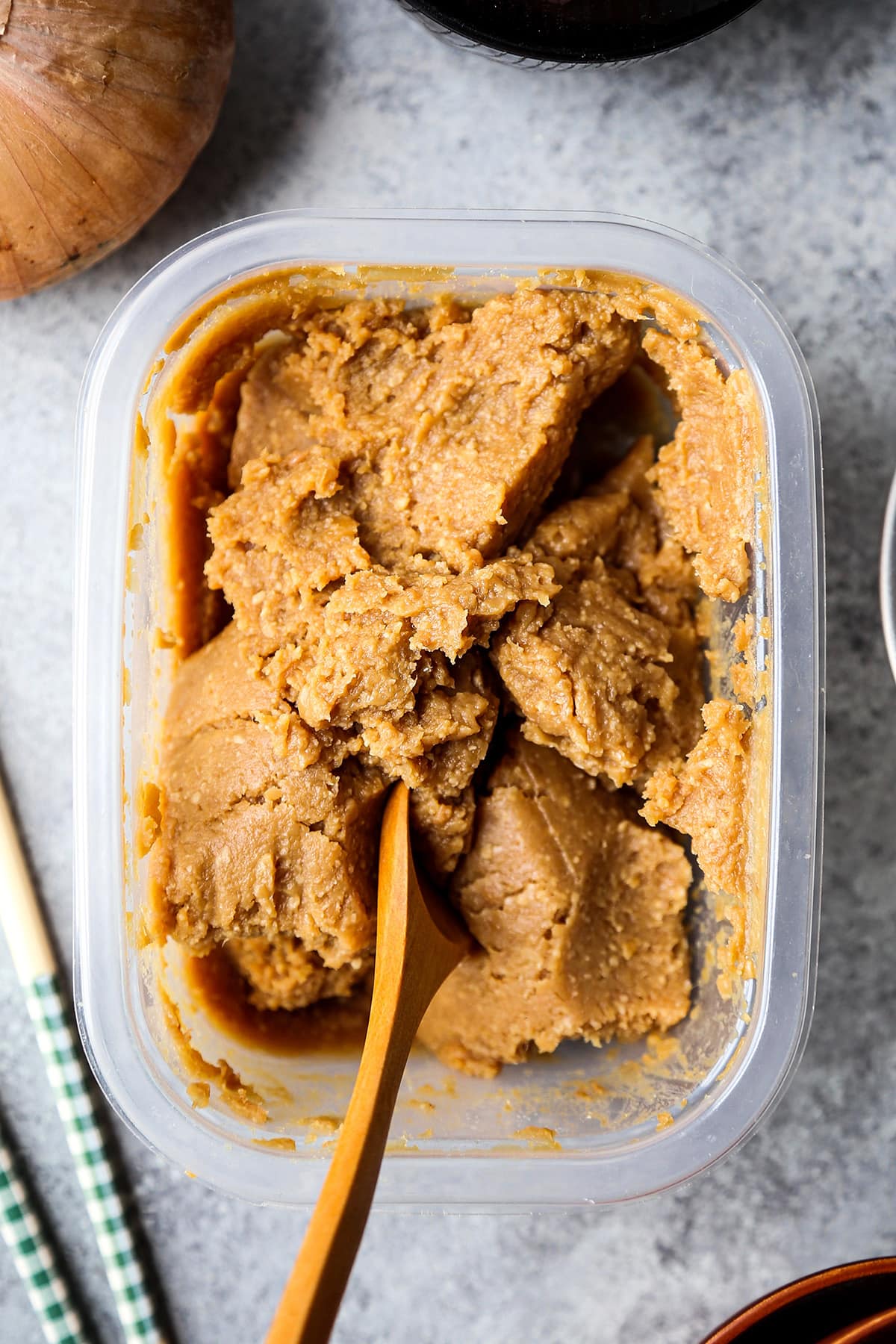
Miso is salty, earthy, and deeply savory. Depending on the type and fermentation time, it can be delicately nutty, almost sweet, with a light yellow color, or it can be quite salty and golden brown (almost red). That umami character comes from amino acids produced as the soybeans ferment, which is why a spoonful of miso can make even simple dishes feel complete.
Table of contents
What is Miso?
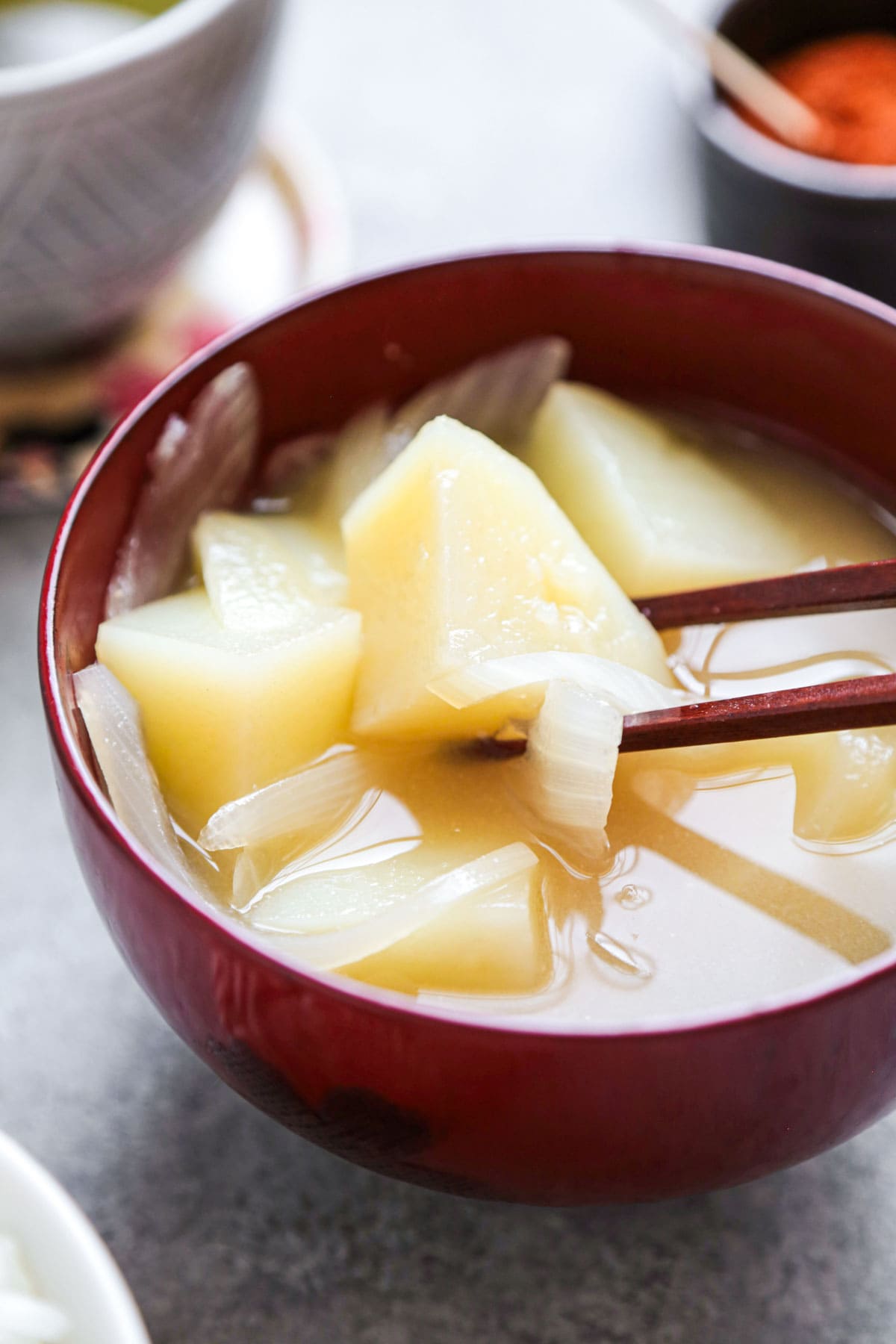
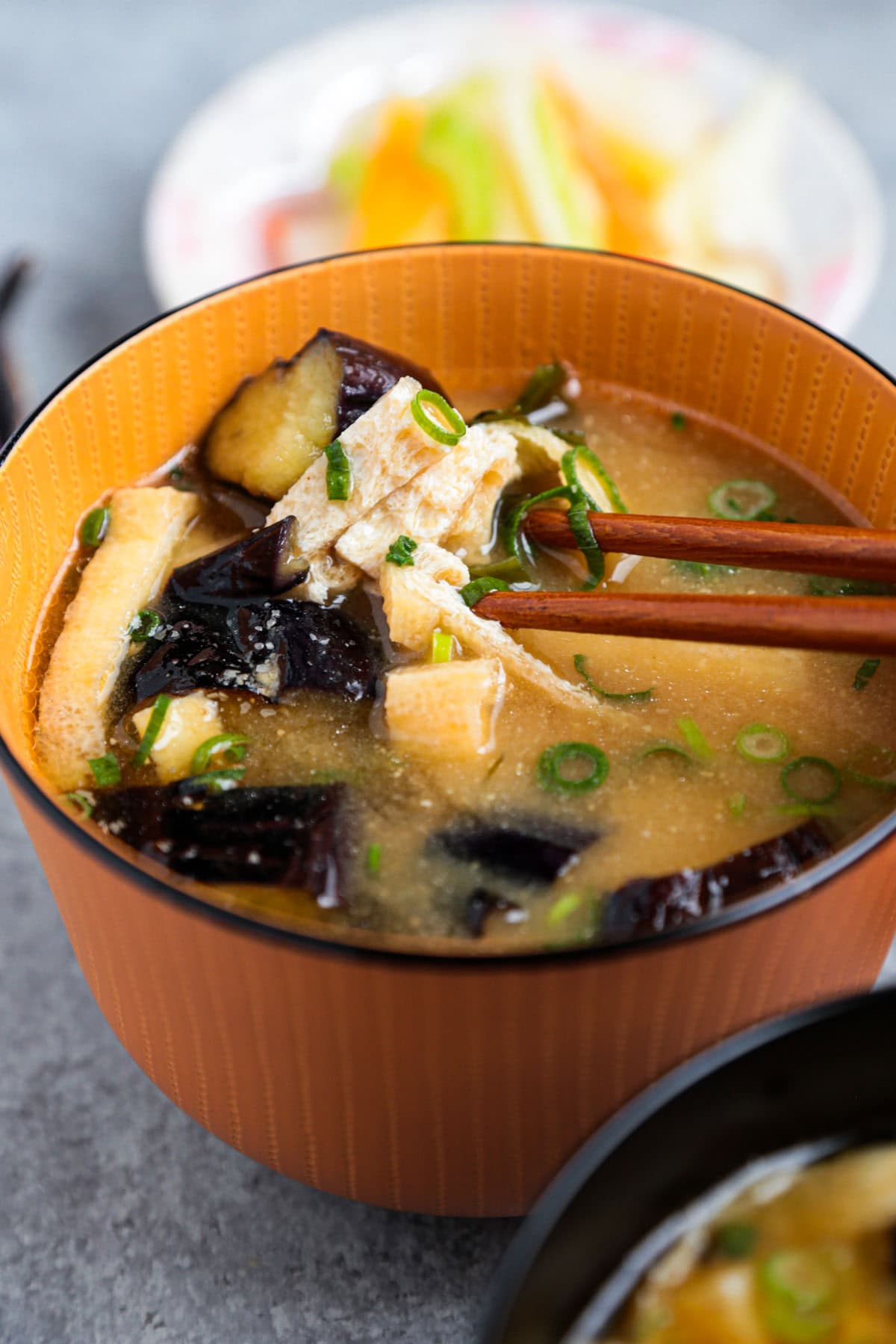
Miso paste (味噌 or みそ) is one of those pantry essentials that quietly elevates so many dishes. At its heart it’s a fermented soybean paste, made by combining soybeans with koji (a rice or barley starter culture) and salt. During fermentation, enzymes break down the beans and grains into savory, umami-rich goodness that brings depth and richness to soups such as miso soup, as a glaze for dishes like the much loved nasu dengaku, in marinades — and just about everything else in the kitchen.
Long Shelf Life
You might notice that your miso paste may get a bit darker over time when it’s stored in the fridge – but that in itself isn’t a bad thing. Amino acids in the soybeans tend to react with sugars and cause a general browning.
Because it’s fermented and is high in sodium, miso can last an unusually long time provided it’s refrigerated.
- Unopened, it can last for 1-2 years past its “best by” date.
- Opened, depending on the type of miso paste, it can last anywhere from weeks (white miso paste) up to a year (red miso paste).
The rule of thumb is that miso paste should be in good shape – and suffer no degradation of flavor – for about 3 weeks for white miso paste, up to 6 months for red miso paste. As long as it’s covered, it will likely last longer than that. And as always, use your best judgement. If it looks or smells off, bin it.

Common Types of Miso
- White Miso (白味噌 Shiro Miso) – With a relatively short fermentation period, white miso is the most even tasting of the three main classifications. It’s light in color and flavor, mildly salty, and slightly sweet. Great for lighter soups, dressings, and quick marinades. A great place to start if you’re new to cooking with miso paste.
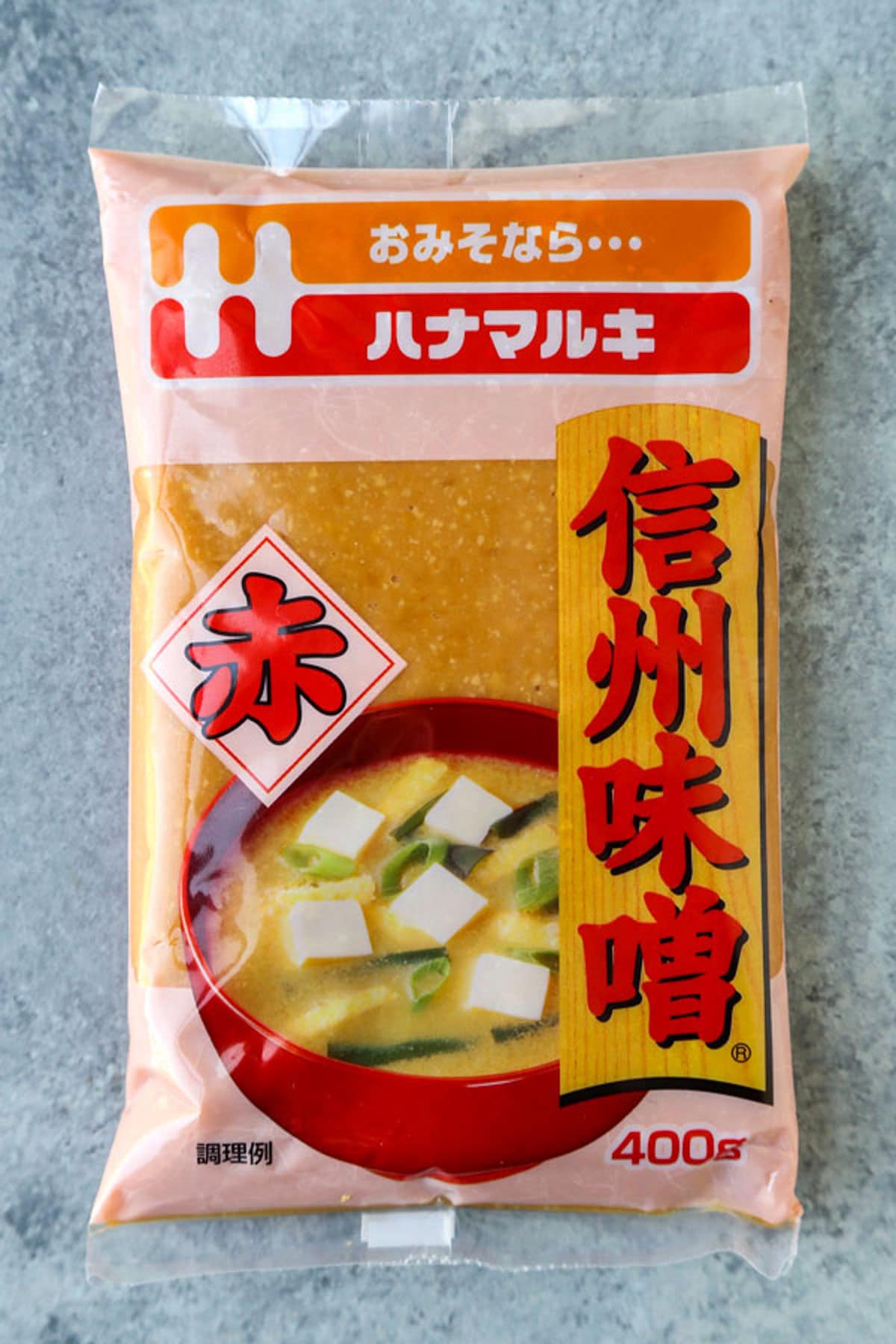
- Red Miso (赤味噌 Aka Miso) – Darker and more robust because it’s fermented longer. This is where deep umami lives — perfect for hearty soups, braises, and bold sauces, especially popular with winter dishes.
- Mixed Miso (合わせ味噌 Awase Miso) – A blend of white and red miso. Awase miso is balanced and versatile — our go-to for everyday cooking. I find myself reaching for it almost every time I cook with miso, unless I am making miso soup.
How to Use Miso
Think of miso paste as one of the star utility players in your Japanese pantry. In Japanese cooking miso paste is used heavily not only for miso soup but for stir fries, sauces, marinades, desserts, and as a pickling agent for vegetables.
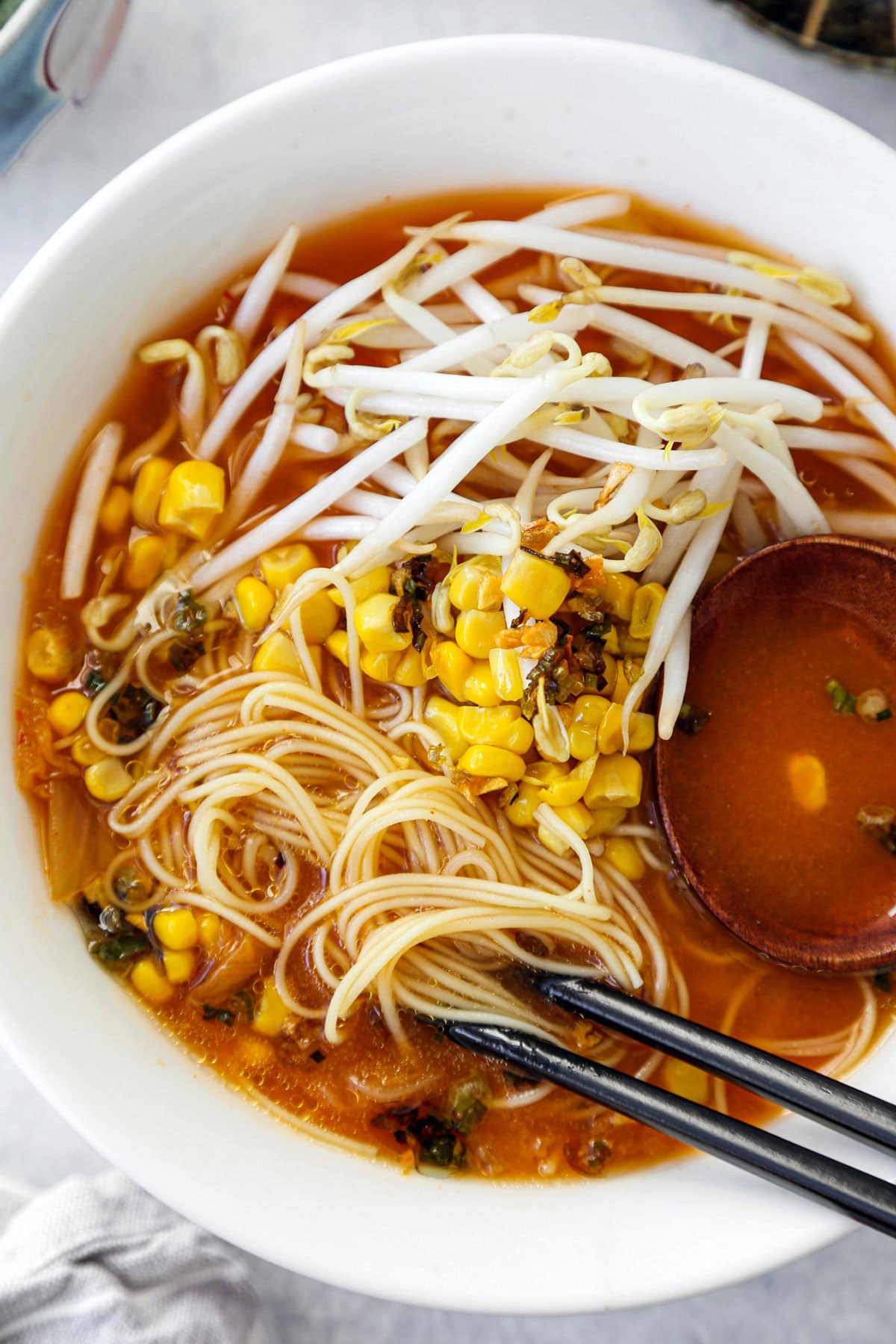
And let’s not forget ramen! Originally hailing from Hokkaido, the island furthest north of Japan, miso ramen became a favorite across the country for its hearty and comforting properties. It’s now become one of the 4th most popular ramen flavors, with variations of the dish ranging from vegan miso ramen, miso kimchi ramen, spicy miso ramen, tonkotsu miso ramen, shoyu miso ramen, and many more.
Think of miso as a flavor-builder:
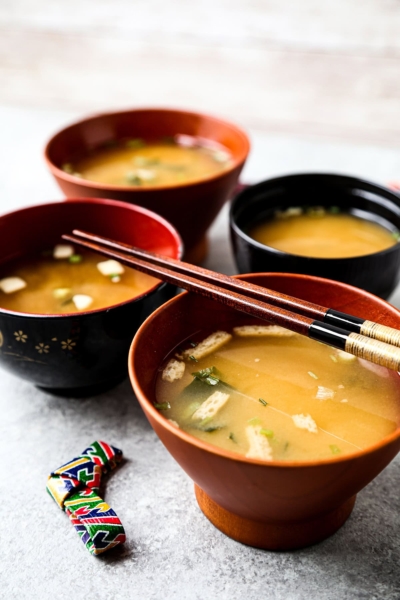
- Soups – The classic example is miso soup with dashi, tofu, and seaweed.
- Sauces & Dressings – Whisk into a dressing (try my yummy miso dressing recipe), drizzle miso sauce over roasted broccoli, or add it to a cheese sauce for a tasty gratin.
- Glazes & Marinades – Make a miso glaze for tofu, or vegetables, or make a delicate and savory marinade for miso salmon.
- Stir-fries & Grain Bowls – Add a spoonful at the end of cooking for richness.
Miso doesn’t need to be cooked for long — a quick stir at the end of a dish is often enough to keep its flavor bright.

Buying and Storing Miso
Look for miso with a short ingredient list (soybeans, salt, koji, sometimes water) — simple miso tastes fresher, cleaner, and is also vegan friendly.
In the US and Canada, miso can usually be found in the fresh refrigerated section next to the fresh noodles, tofu, kimchi, and meat substitutes. If you don’t find it there, try looking near the milk, eggs and yogurt section. In Japan, it’s usually close to the refrigerated tofu and pickles area.
To find the best miso paste, I recommend visiting a Japanese supermarket. There, you will find many different types of miso and some truly delectable ones. If you cannot find miso paste anywhere near your location, order it online. Even Amazon sells it these days!
To store miso, keep in the fridge. Once opened, store it in an airtight container. You don’t have to transfer the miso paste from its original tub into a container. Just place the tub in a container that keeps air out. My mother stores her tub in a plastic bag that she ties, and that works just fine too!
Frequently Asked Questions
Yes, miso paste is 100% vegan but some miso pastes also contain dashi. It’s best to check the label and the ingredients to make sure that the miso paste you are buying does not contain dashi.
Some miso paste is gluten-free, especially varieties made with rice or soybeans only. Barley-based miso contains gluten, so it’s important to read the label if gluten is a concern.
If your plan was to use miso to introduce a bit of saltiness to a recipe, substituting with soy sauce will give you a similar flavor profile. That’s because Japanese shoyu has some of the same umami properties that miso does. Other possible options are liquid aminos or soybean paste, like doenjang. The truth is that nothing will nail the nuance and depth of flavor of a good Japanese miso paste quite like, well… miso.
No, miso paste does not need to be cooked. In fact, prolonged high heat can dull its flavor. It’s best added gently or whisked into warm liquids rather than boiled.
Yes, miso paste can be frozen, but it’s usually unnecessary as it keeps well in the fridge for a long time, and in good condition.