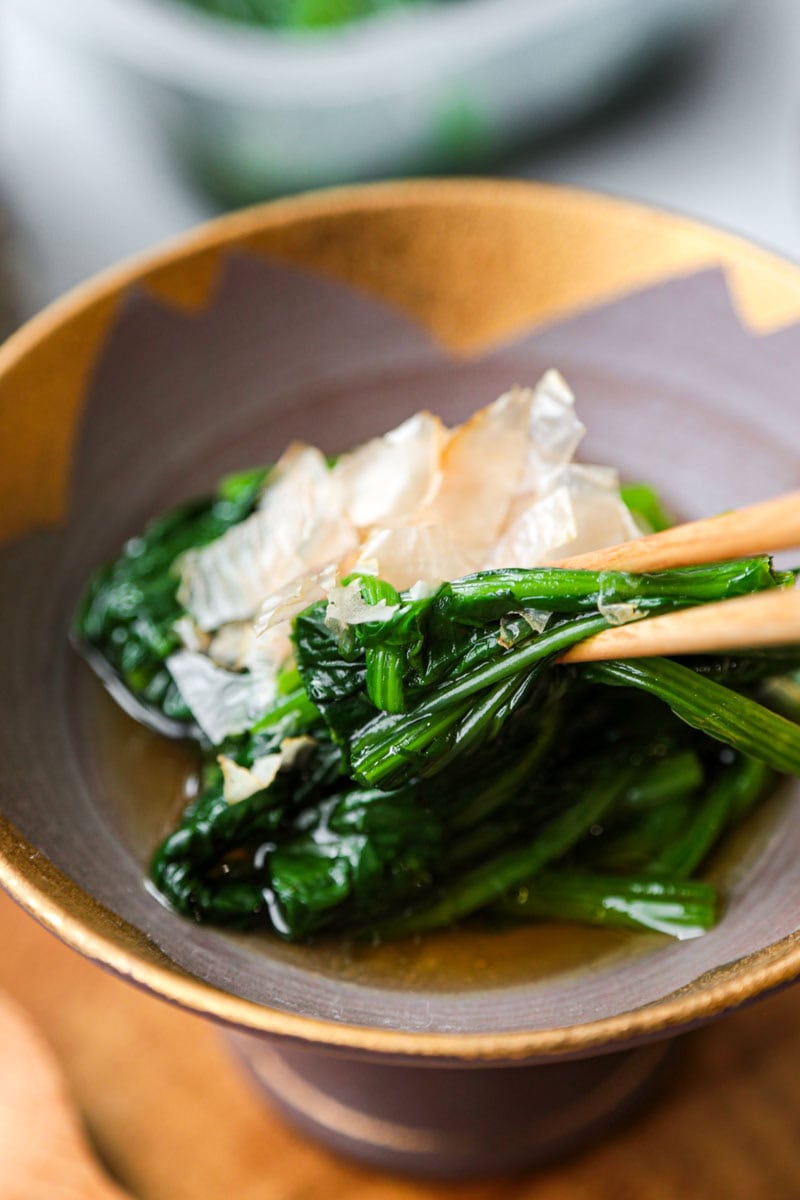
Spinach ohitashi is a classic Japanese side dish made with blanched spinach soaked in a light dashi broth. My version is finished with a touch of toasted sesame oil for extra nuttiness.
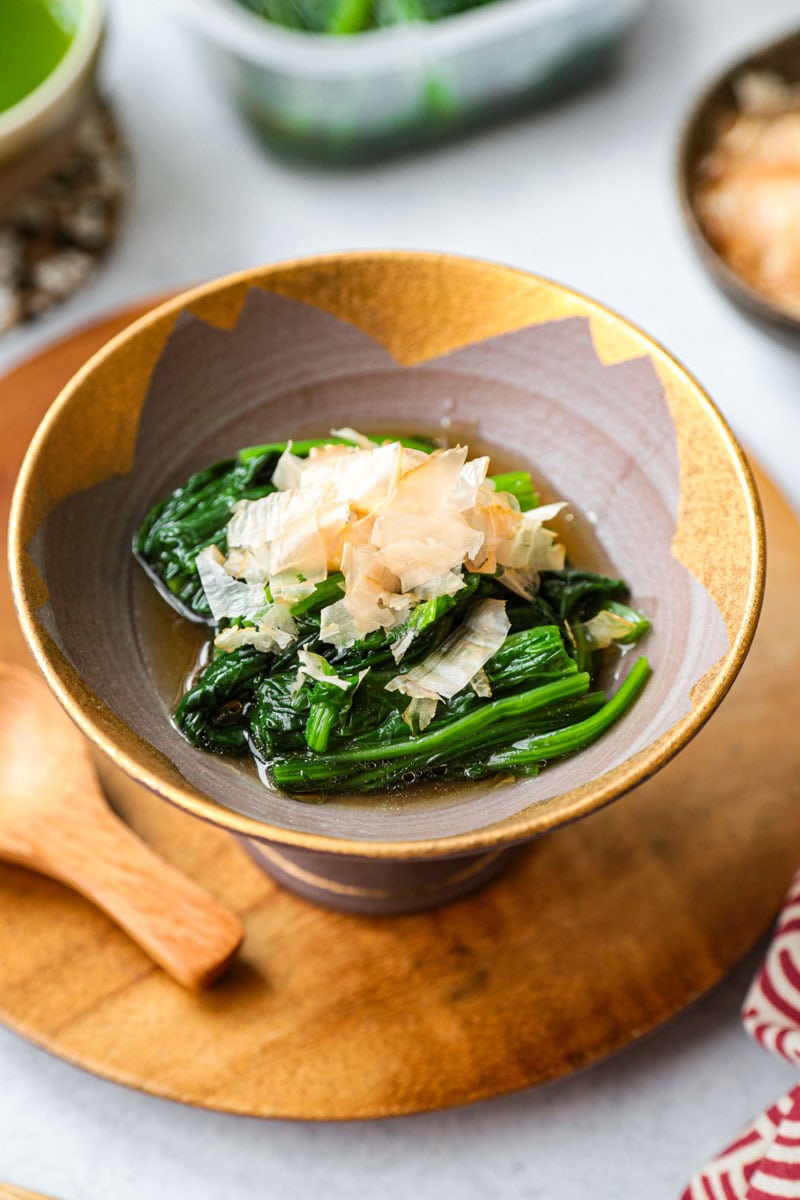
Here in Japan, ohitashi is the kind of quiet little side dish that often appears as part of a larger meal. It may be served in a small bowl alongside rice, miso soup, and grilled fish, or tucked into a bento with several other dishes.
The seasoning is intentionally light so the spinach remains the focus. I add a small amount of toasted sesame oil to the broth for a delicate nutty flavor, but the dish still tastes clean and dashi-forward.
Why This Recipe Works
- It’s light but flavorful. Dashi, soy sauce, and mirin add umami without overpowering the spinach.
- It’s easy to prepare. Most of the cooking takes place in just a few minutes.
- It can be made ahead. Ohitashi is served cold or at room temperature, and the spinach becomes more flavorful as it rests in the broth. Prepare it several hours before serving and keep it refrigerated until mealtime.
Table of contents
What is Ohitashi?
Ohitashi (お浸し) is a Japanese cooking method in which blanched vegetables are soaked in a seasoned dashi broth. The name comes from the Japanese verb hitasu, which means “to soak.”
Spinach is one of the most common vegetables used for ohitashi, but the same preparation can also be used with leafy greens, bok choy, asparagus, green beans, and okra.
You may occasionally see the name written as “oshitashi” in English, but ohitashi is the standard spelling.
Ohitashi vs Gomae
Ohitashi and gomae both commonly use blanched spinach, but the seasonings and finished textures are quite different.
Ohitashi is soaked in a light dashi-based broth and has a delicate, savory flavor. Gomae is tossed with a thicker dressing made from ground sesame seeds, soy sauce, and sugar. It tastes sweeter, richer, and considerably nuttier.
Another similar dish is Korean spinach side dish, or sigeumchi namul. Instead of soaking in dashi, the blanched spinach is tossed with doenjang, garlic, sesame oil, and sesame seeds.
Ingredients
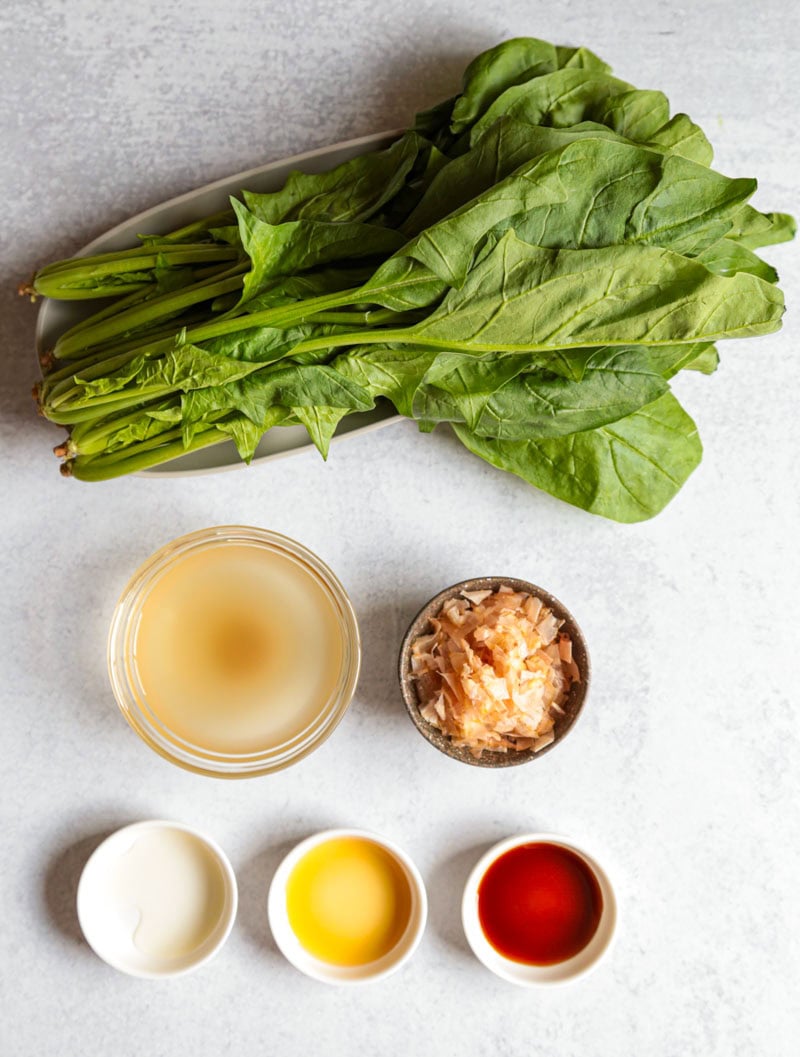
- Spinach: Use one full bunch of mature spinach. The leaves and stems should look fresh and firm. Wash it carefully since dirt tends to collect around the base of the stems.
- Dashi: Dashi gives ohitashi its clean and savory foundation. You can use prepared dashi or instant dashi powder mixed with water. You can also follow my tutorial for making dashi from scratch.
- Soy sauce: A small amount adds saltiness and umami without darkening the broth too much. Use regular Japanese soy sauce.
- Mirin: Mirin adds a touch of sweetness and rounds out the saltiness of the soy sauce.
- Toasted sesame oil: Traditional ohitashi generally doesn’t contain sesame oil, but I add a teaspoon for a subtle nutty flavor. Stirring it in after the broth has finished cooking preserves its aroma.
- Bonito flakes: Bonito flakes, or katsuobushi, add a smoky and savory finish. For a vegan version, use kombu dashi and replace the bonito flakes with toasted sesame seeds.
How to Make Spinach Ohitashi
Scroll down to the recipe card for the full recipe and measurements.
- Prepare the broth. Gently simmer the dashi, soy sauce, and mirin.
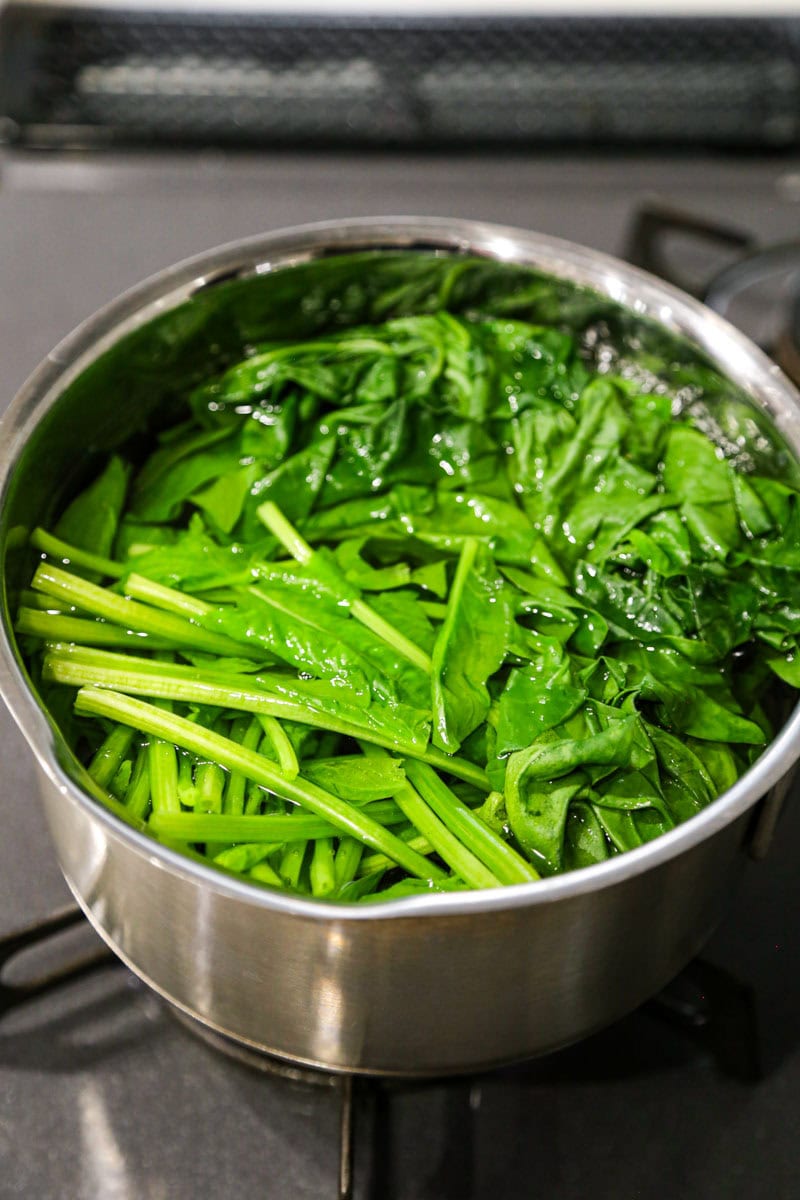
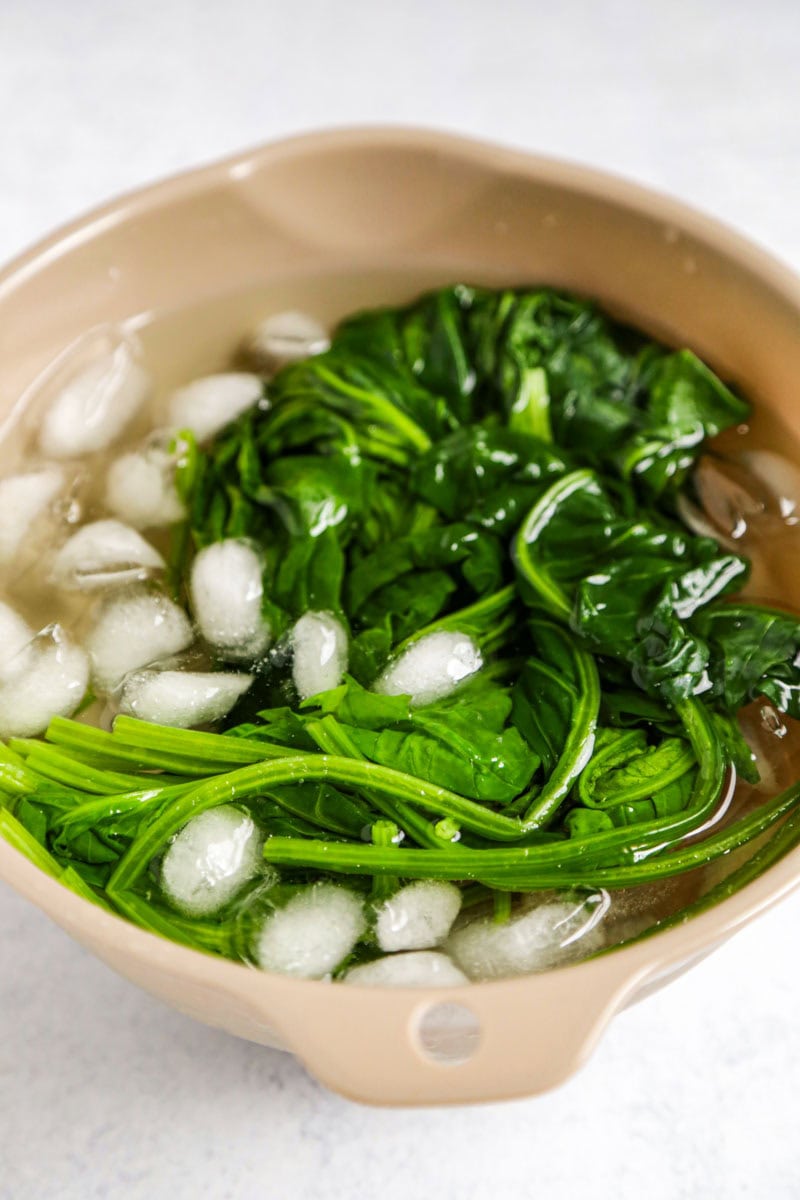
- Blanch the spinach. Cook the spinach in salted boiling water for 1 minute and immediately transfer it to an ice bath.
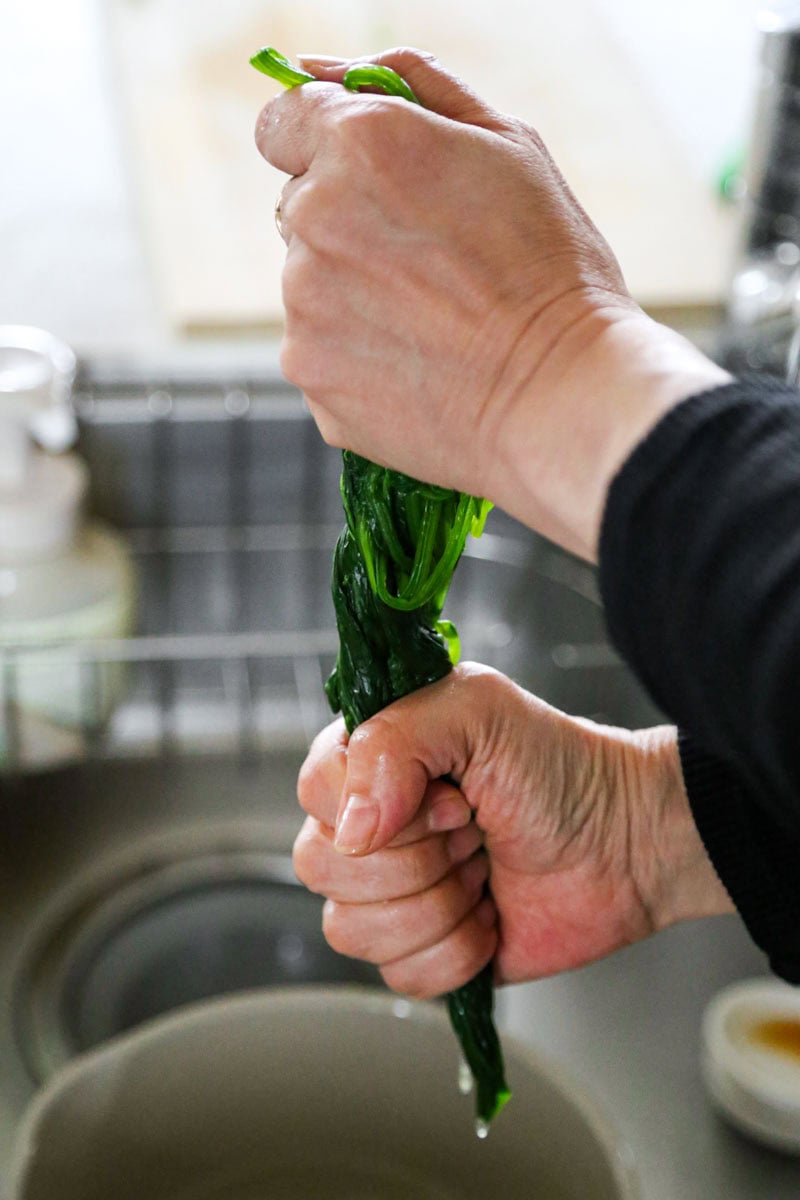
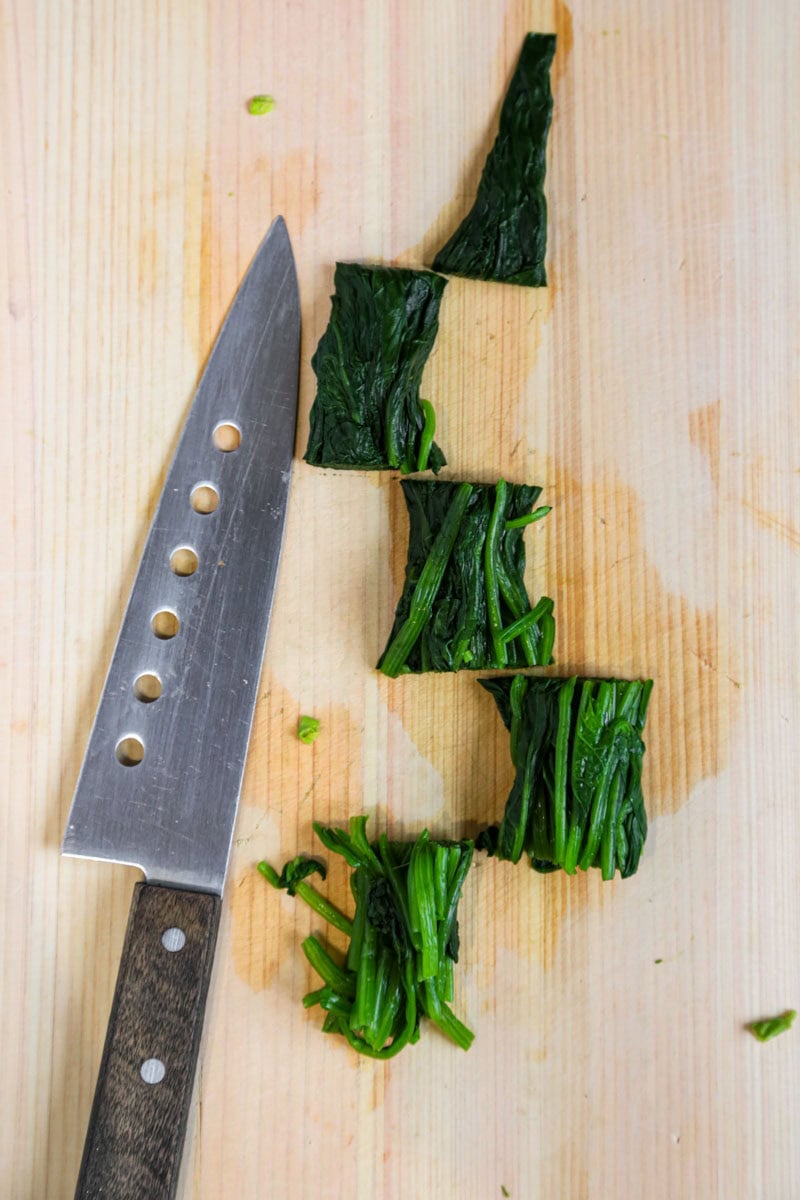
- Drain and cut. Squeeze out as much water as possible, arrange the spinach lengthwise, and cut it into 2-inch pieces.
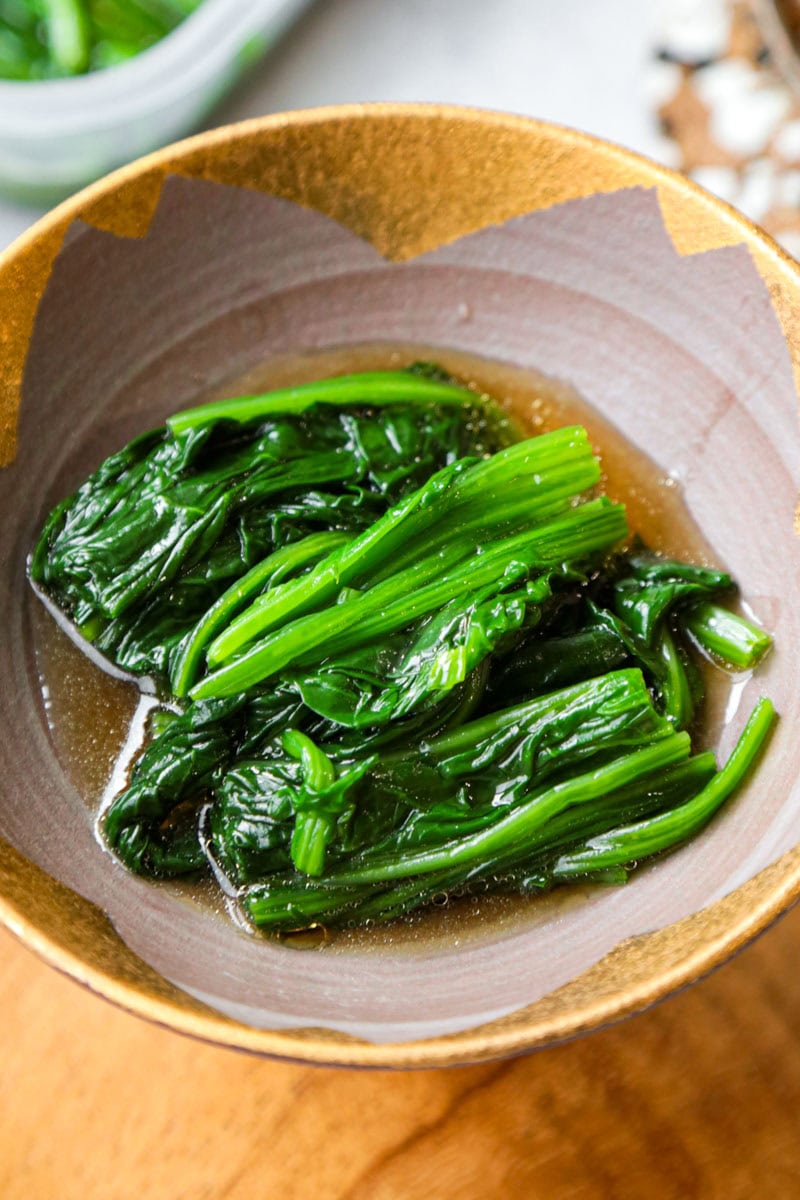
- Marinate and serve. Cover the spinach with the cooled broth and refrigerate it for at least 30 minutes. Serve with a little broth and bonito flakes.
Cooking Tips
- Wash around the stems carefully. This is where most of the dirt and grit tend to hide.
- Don’t overcook the spinach. One minute is enough to soften it while preserving its color and texture.
- Use an ice bath. This immediately stops the cooking process and helps the spinach remain bright green.
- Squeeze out the water thoroughly. Water trapped in the spinach will dilute the broth and make the finished dish taste bland.
- Let the broth cool before adding it to the spinach. A hot broth would continue cooking the leaves.
- Don’t skip the marinating time. The spinach needs at least 30 minutes to absorb the flavor of the broth.
Can I Use Frozen Spinach?
Yes, although fresh spinach has a firmer texture and looks better when plated. Thaw the frozen spinach completely, squeeze out as much water as possible, and add it directly to the cooled broth. There is no need to blanch it first.
What to Serve with Ohitashi
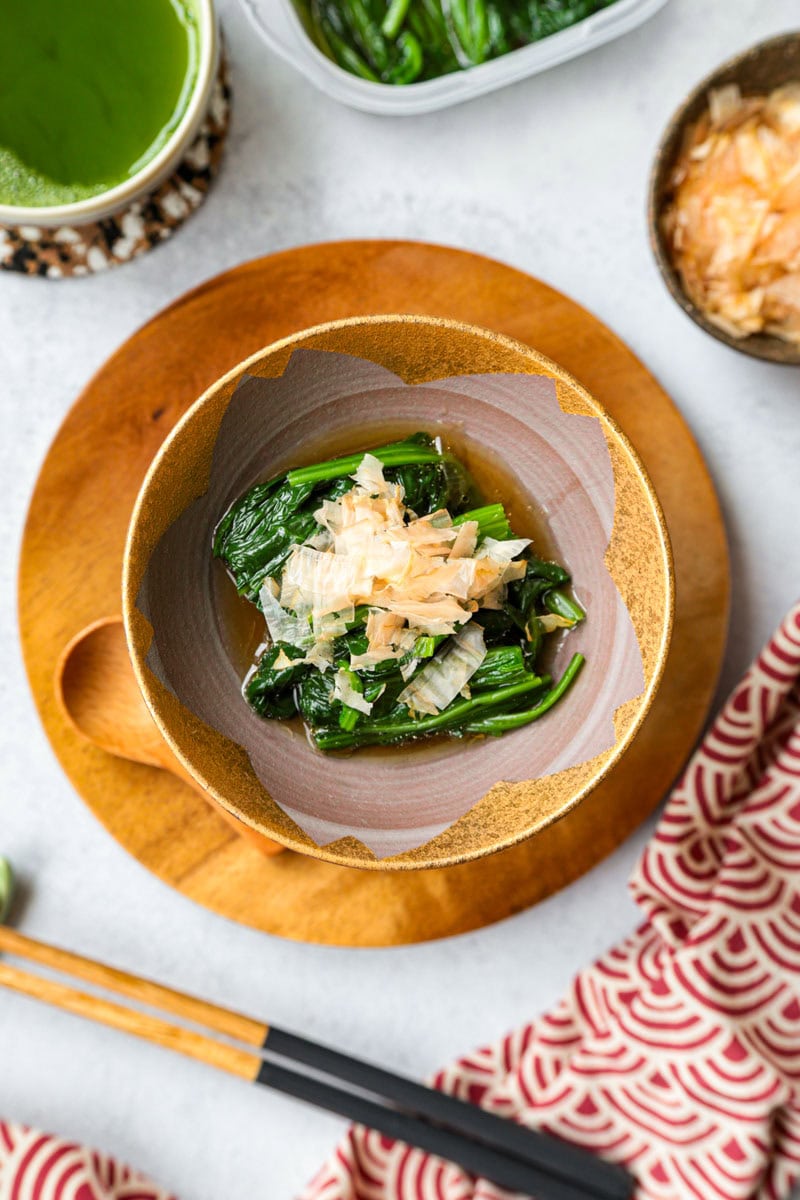
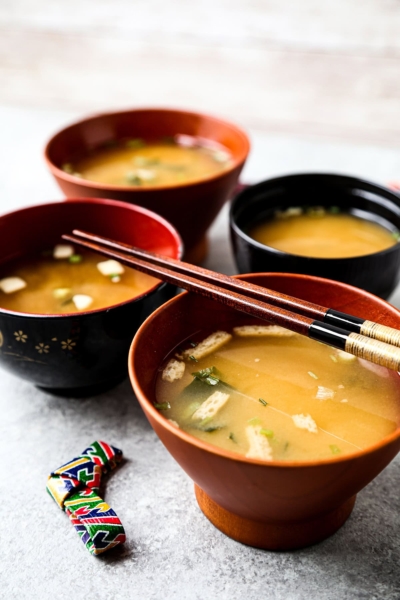
Serve spinach ohitashi as a small side dish with steamed Japanese rice, miso soup, and a simple main such as Japanese salted salmon.
It can also be served with hiyayakko (chilled tofu), tamagoyaki, noodle dishes, or added to a bento. For more ways to complete a Japanese meal, take a look at my collection of easy Japanese side dishes.
Storage
Keep the spinach submerged in the broth and store it in an airtight container in the refrigerator for up to 3 days. Serve it cold or let it sit at room temperature for a few minutes before eating.
Did you like this recipe? Are there changes you made that you would like to share? Share your tips and recommendations in the comments section below!
PrintSpinach Ohitashi
This is a simple Japanese spinach and sesame salad with delicate nutty and savory flavors.
- Prep Time: 10 minutes
- Cook Time: 6 minutes + 30 minutes marinating
- Total Time: 46 minutes
- Yield: 2 people 1x
- Category: Appetizer
- Method: Blanching
- Cuisine: Japanese
- Diet: Low-Carb
Ingredients
- 1 bunch spinach
- 1/2 cup dashi, or 1/2 teaspoon dashi powder mixed with 1/2 cup of water
- 1 teaspoon soy sauce
- 1/2 teaspoon mirin
- 1 teaspoon toasted sesame oil
- Bonito flakes, for topping
Instructions
- Wash the spinach. Wash the spinach under cold water, making sure to remove all the dirt. Set aside.
- Add salt to water and boil. Fill a medium size pot with water and add 1 teaspoon of salt. Bring to a boil.
- Prepare the broth. Meanwhile, add the dashi, soy sauce, and mirin, to a small pot and turn the heat to medium. You want the broth to simmer, not boil. Cook for 5 minutes and turn the heat off. Let the broth cool to room temperature.
- Blanch the spinach. Add the spinach to the boiling water and cook for 1 minute.
- Cool the spinach. Drain the spinach and add it to the ice bath. Leave until the spinach has fully cooled – about 2 minutes.
- Squeeze and cut. Grab the stems of the spinach so the spinach leaves are hanging upside down, and drain while gently squeezing with your hands. Take out as much water as possible from the stem all the way up to the leaves, and place the spinach, long and straight, on a cutting board. Slice it into 2-inch long pieces.
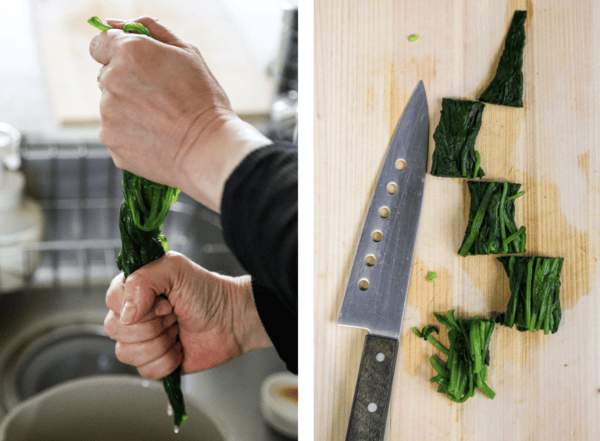
- Squeeze again. If the spinach is still full of water, gently squeeze the extra liquid.
- Let it marinate. Transfer the spinach to a storage container and pour the cooled broth over it. Add the toasted sesame oil and cover with a lid. Refrigerate for at least 30 minutes.
- Garnish and serve. Divide the ohitashi on small serving plates and drizzle a little broth over it. Top with bonito flakes and serve.
Notes
For a vegan version, use kombu dashi and replace the bonito flakes with toasted sesame seeds.
Keep the spinach submerged in the broth and refrigerate it in an airtight container for up to 3 days.
Nutrition
- Serving Size: 1 serving
- Calories: 70
- Sugar: 1.3g
- Sodium: 192mg
- Fat: 3.9g
- Saturated Fat: 0.4g
- Unsaturated Fat: 1.2g
- Trans Fat: 0g
- Carbohydrates: 7.1g
- Fiber: 3.7g
- Protein: 6.1g
- Cholesterol: 1mg










Hadn’t made Oshitashi in years. Liked the straightforward recipe page here and simplicity, and clarity in writing.
Perfect the first time!
Thank you Caroline!
Thanks for all the great ideas! I was wondering if it would work to substitute simple syrup for Mirin.
Hi Martin, mirin has a very specific flavor and cannot be replace with simple syrup unfortunately. It’s fairly easy to find these days or you can get it on Amazon as well 🙂
Have you any experience making Gomaee?
Hi Tamara! I have made gomaee a couple of times by following recipes. Have you made it at home?
Hi
Your spinach looks pretty. Actually I happened to post similar one on my blog. It is more gear toward Korean flavor though. Nice posting!
A gorgeous and simple dish! This side dish is a much-loved staple in our home, so quick to whip up 🙂