This is the perfect summer pasta with flavors that are both refreshing and cleansing! Only 9 ingredients and 20 minutes of your time are needed to make this tangy and sweet wafu style spaghetti. It’s one of my favorite summer dishes!
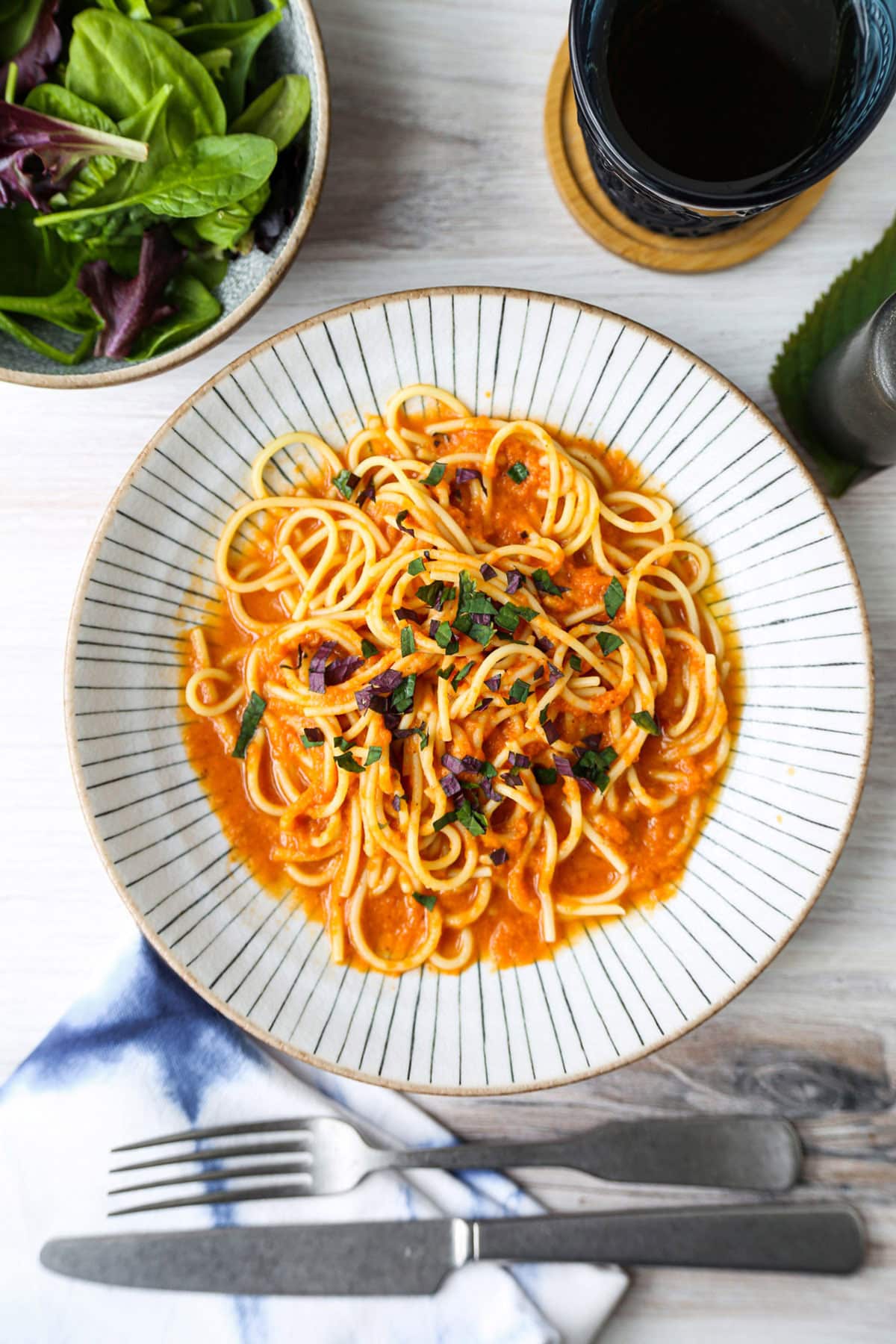
What is the one flavor profile that instantly makes you hungry just thinking about it?
For me, it is the classic Japanese combination of rice vinegar, soy sauce, and sesame oil. This trio instantly brightens any dish, creating that irresistible wafu (Japanese-style) taste I love so much.
Whenever I crave a Japanese-style pasta, I use these savory, tangy flavors as my foundation. That is exactly how this refreshing Hiyashi Tomato Shiso Spaghetti was born.
What is hiyashi?
Hiyashi (冷やし) is the Japanese word for “chilled” or “cooled.”In Japanese cuisine, it refers to dishes that are intentionally served cold, making them incredibly popular during hot summer months.
Here is what makes it unique:
- The Technique: Ingredients or noodles are cooked, then immediately plunged into ice water to stop the cooking process and lock in a firm texture.
- Famous Examples: You might recognize it from Hiyashi Chuka (cold ramen noodles with colorful toppings) or Hiyashi Tanuki Udon (chilled thick noodles with crunchy tempura bits).
- The Vibe: It implies a dish that is refreshing, crisp, and perfect for cooling down.
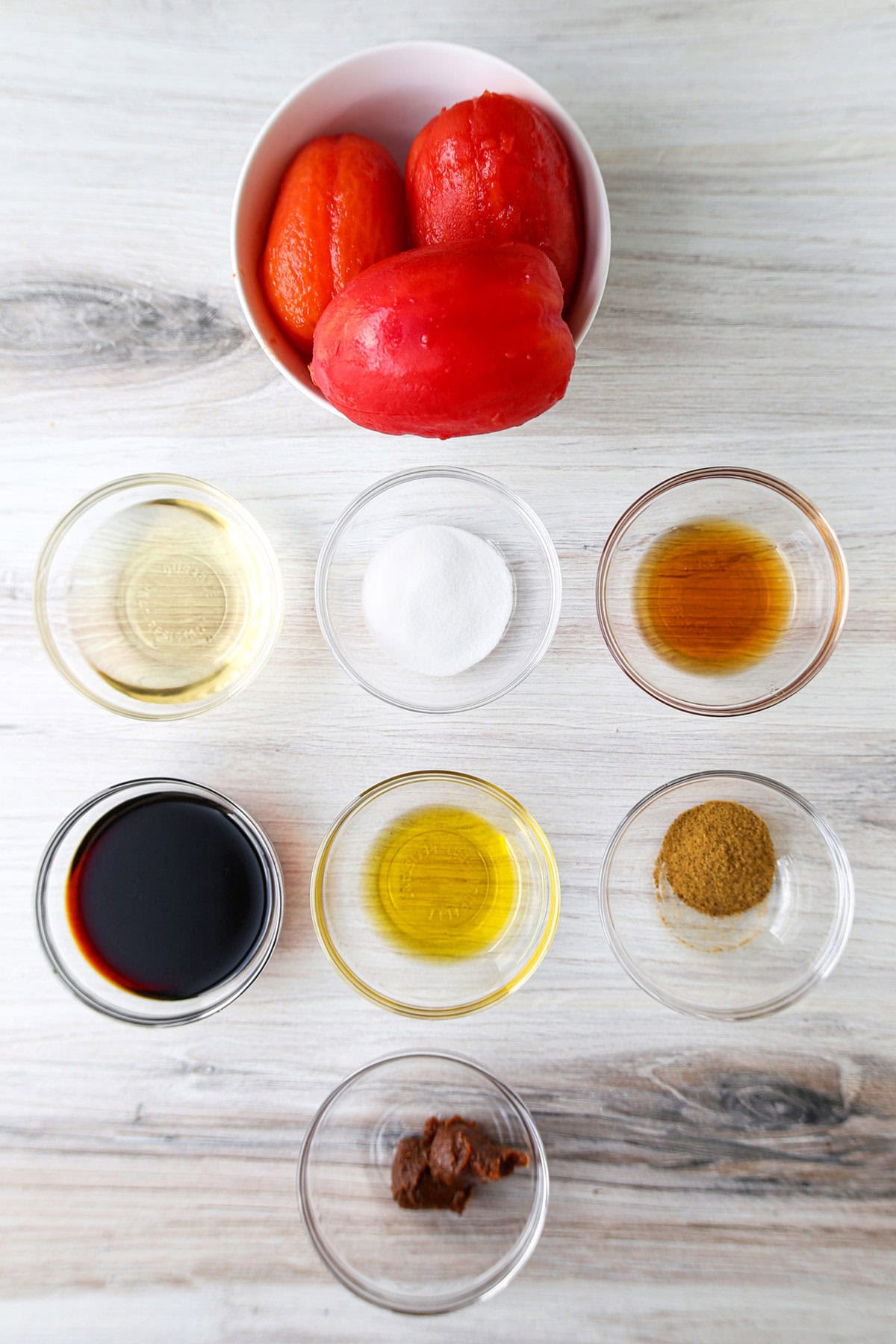
Ingredients for Chilled Japanese Tomato Pasta
- Tomatoes: You can use regular tomatoes or roma tomatoes. If you happen to have some delicious homegrown tomatoes, you will definitely want to use those! The flavor of the sauce will be heavily influenced by the quality of tomatoes you are using. I chose roma tomatoes this time because they looked and smelled the best.
- Soy sauce: Regular Japanaese soy sauce is one of the main ingredients for umami in Japanese cooking. Adding a little to this sauce will also add earthiness and a savory element.
- Rice vinegar: Plain rice vinegar is the magic ingredient that makes this dish so refreshing! The acidic taste has a strong presence and feels incredibly cleansing.
- Miso paste: I recommend using white miso paste or awase miso paste for this recipe. I often combine tomatoes and miso paste together because they go so well.
- Sugar: Since this sauce can be quite acidic and salty, a little sugar helps to balance out the sauce and tone it down.
- Dashi powder: Dashi powder impart such a lovely flavor to the sauce. Delicate yet very present, the smoky briny taste is unmistakable, making this dish truly Japanese.
- Sesame oil: Sesame oil adds nuttiness and also helps to tone down the acidity.
- Extra virgin olive oil: Use your best olive oil for this as it will be used as a flavor enhancer for the sauce.
- Shiso leaves: Shiso leaves add a lovely bright and herbaceous taste to the pasta, making it even more authentically Japanese.
- Pasta: You can technically use any type of pasta for this dish but I personally love thin spaghetti or vermicelli. The slurping action makes it so you fully enjoy the aroma of the sauce as it hits your tastebuds.
How to Make Japanese Tomato Pasta
- Gather all of your kitchen tools and ingredients.
- Fil a medium size pot with water and bring to a boil.
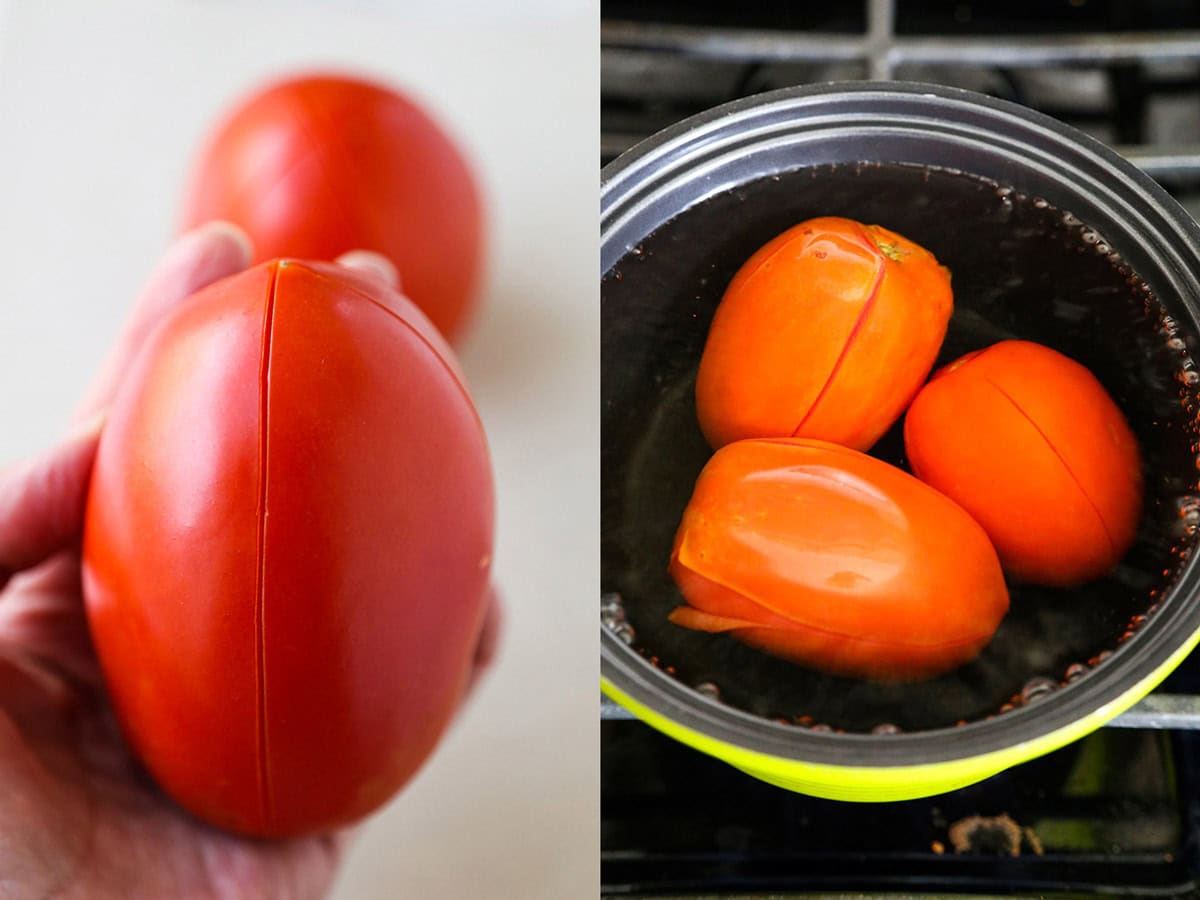
- Meanwhile, cut an X across the skin of each tomato, going from the bottom almost up to the stem.
- Add the tomatoes to the boiling water and boil for 10-20 seconds, until the skin starts to separate. Drain the tomatoes.
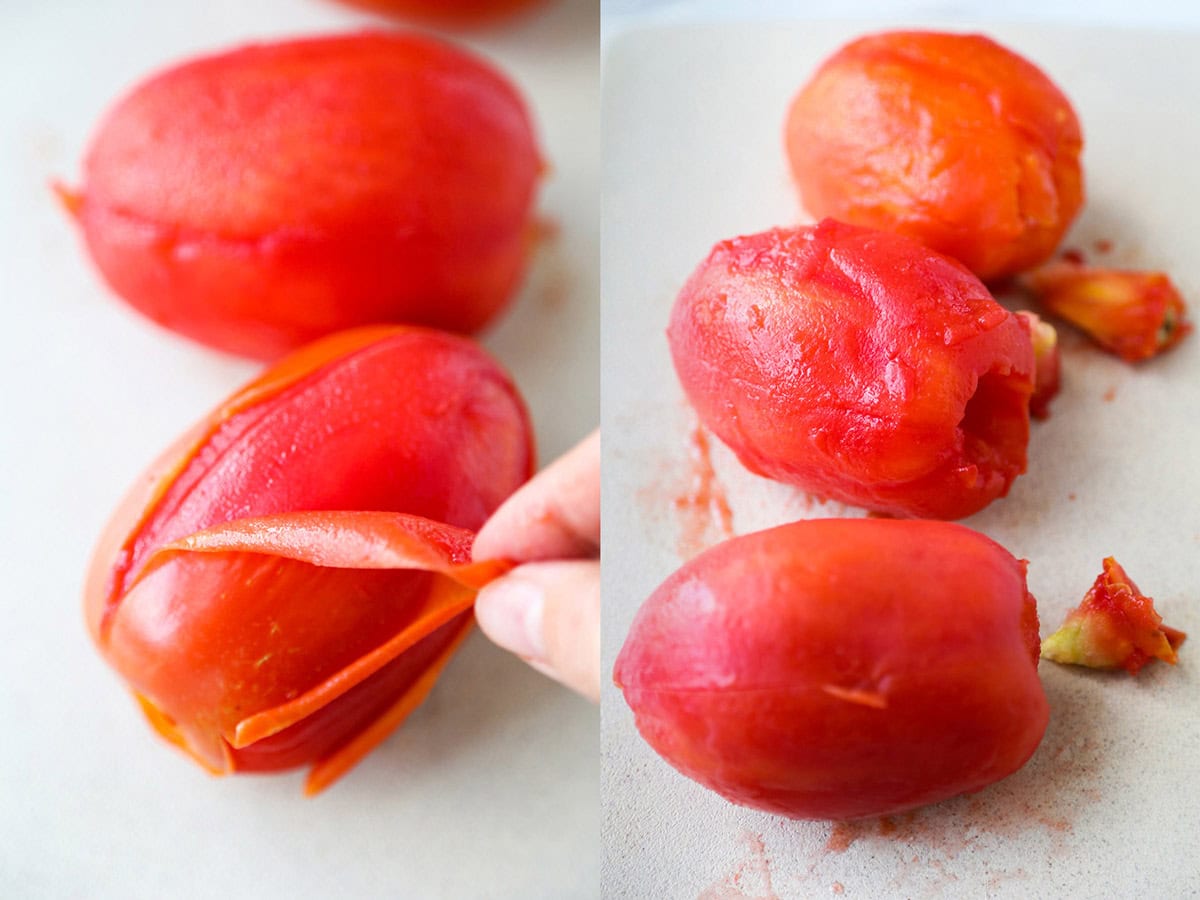
- Once cooled, peel the tomatoes using your finger and remove the stem.
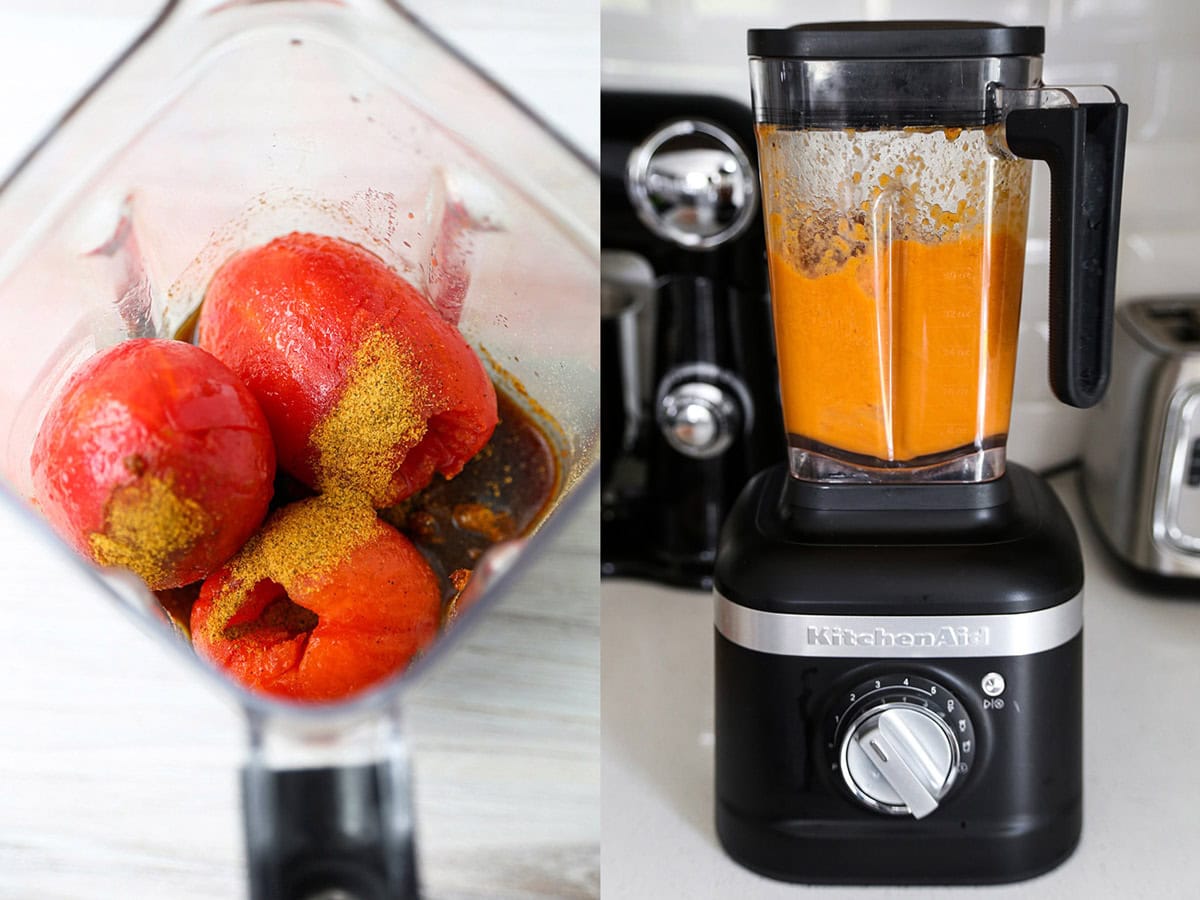
- Add the tomatoes, soy sauce, rice vinegar, miso paste, sugar, dashi powder, sesame oil, and olive oil to a blender, and blend until smooth.
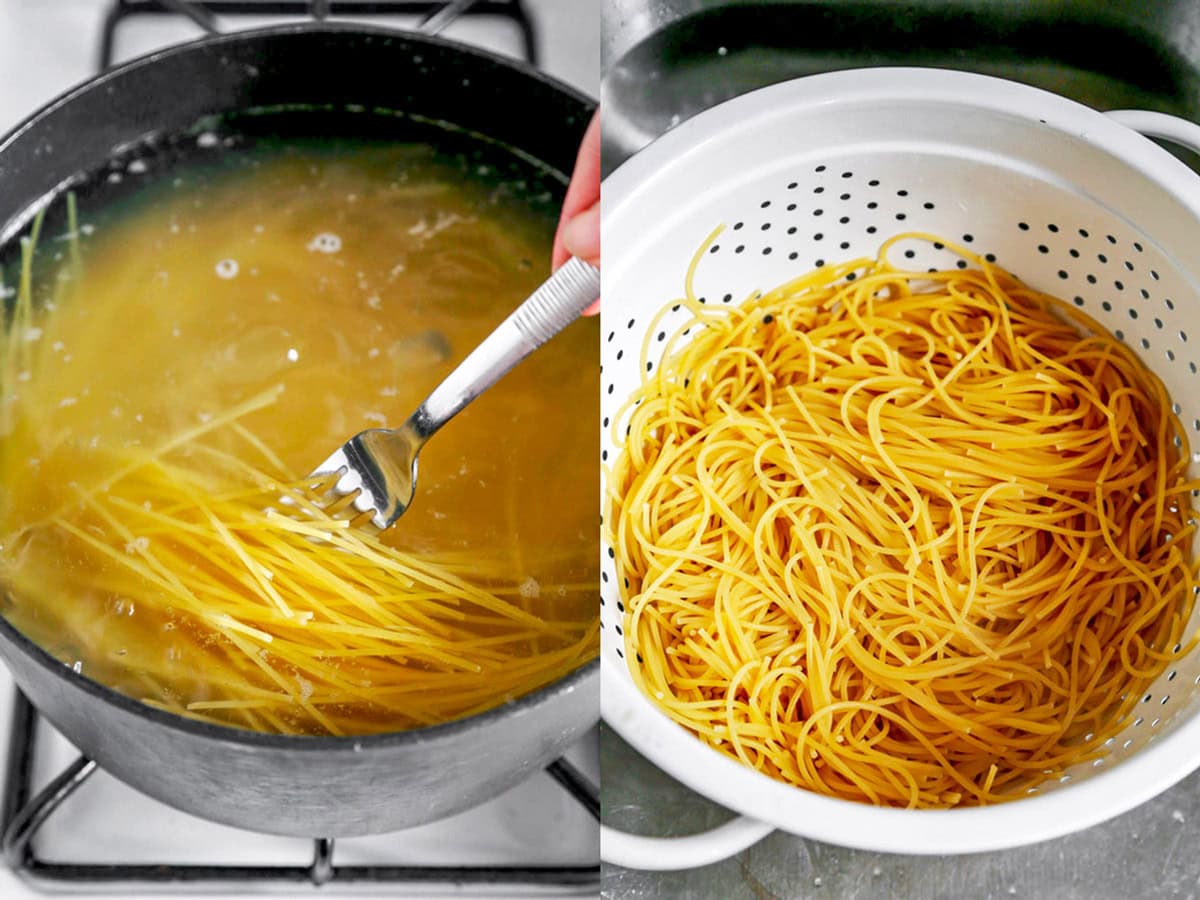
- Boil the pastas according to the directions on the box.
- Drain and rinse under the pasta under cold water. Drain again, well.
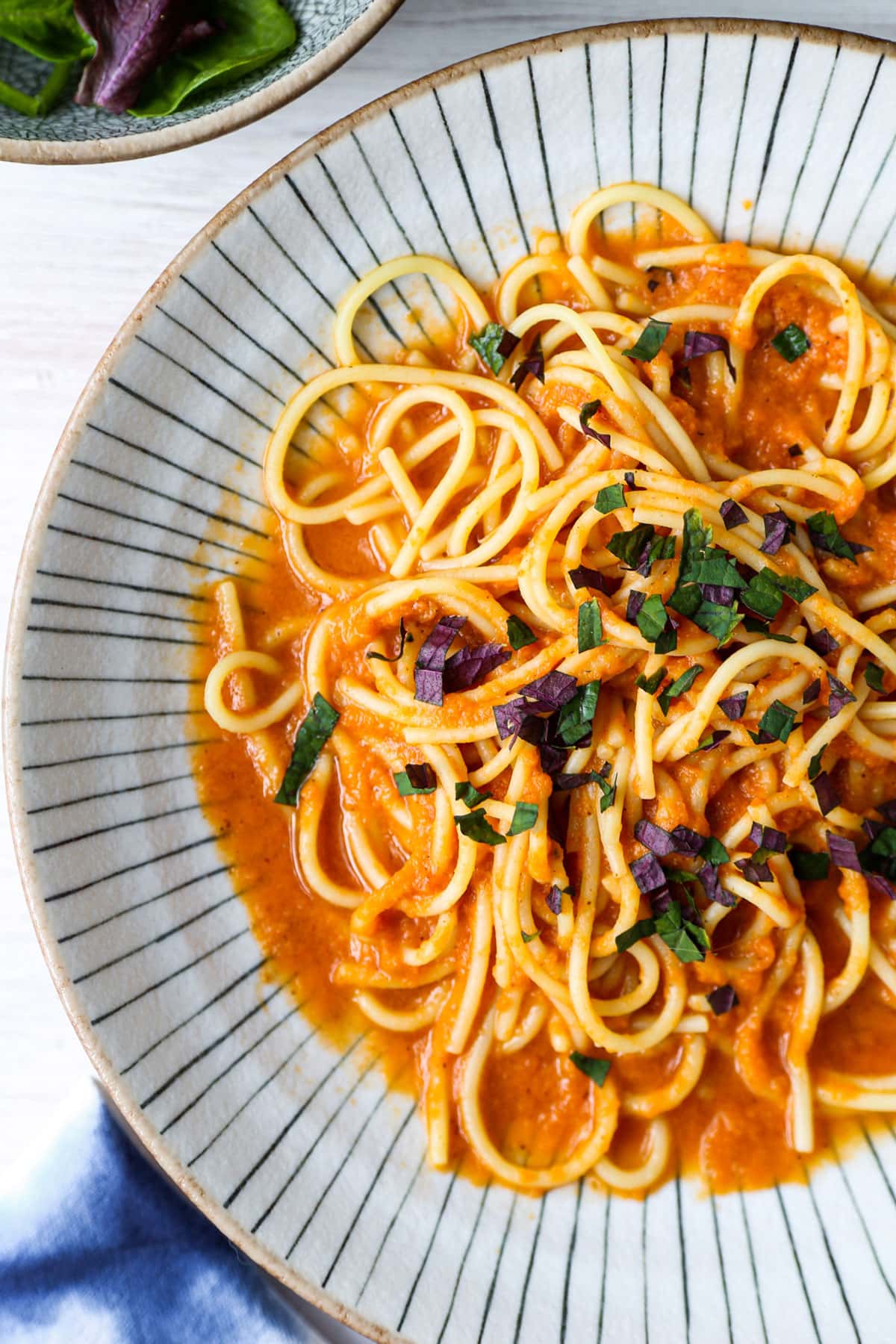
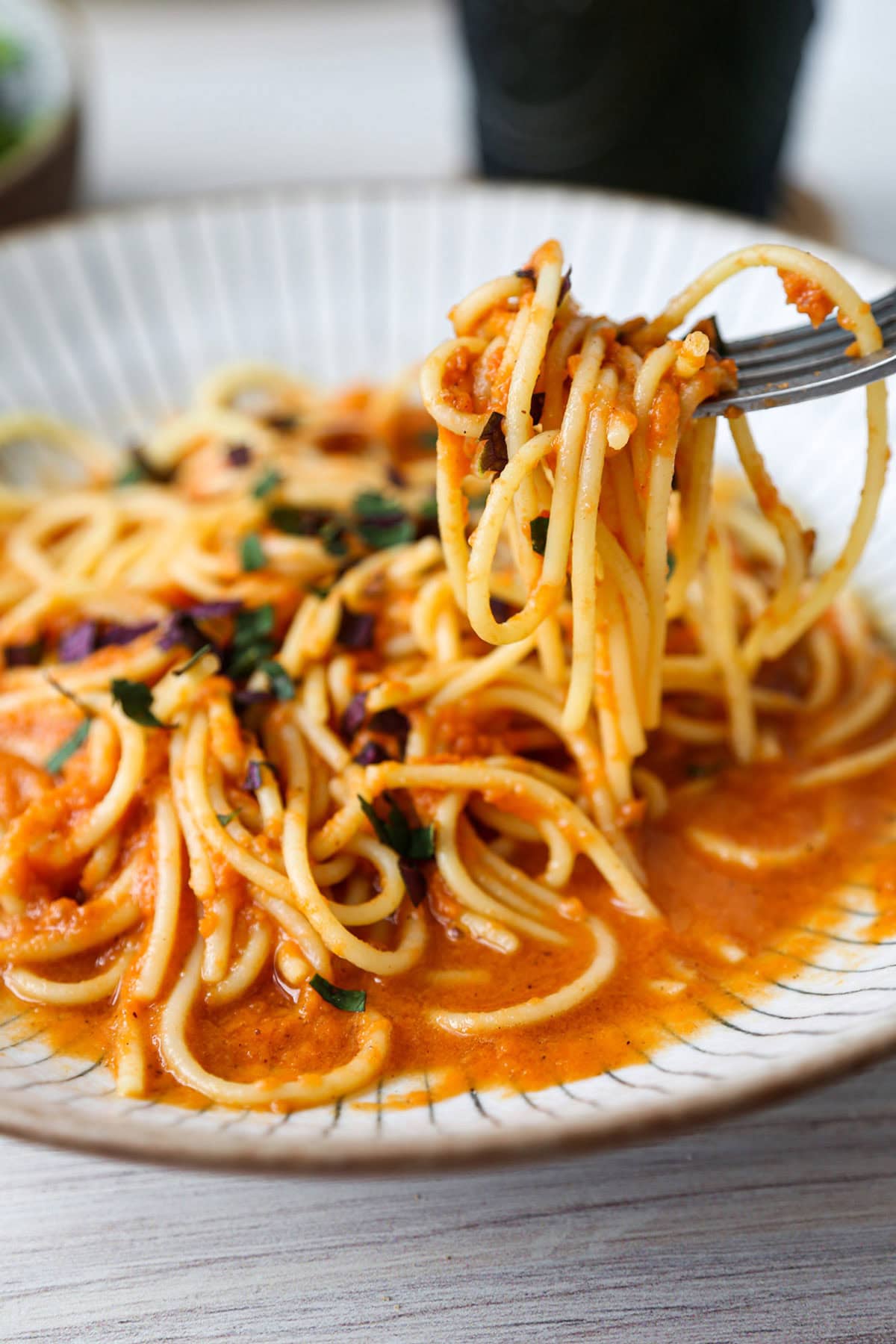
- Divide the pasta among bowls and pour the sauce over. Top with shiso leaves. Enjoy!
What to Serve with Japanese Tomato Pasta
The sauce is so full of flavor that it’s best to stick to side dishes that are on the milder side. And because this is more of a summer dish, I like to keep the entire meal on the lighter side.
While Italian pasta pairs beautifully with a basket of warm bread, wafu pasta is better with salads and dishes that have Japanese roots.
Some of my favorites are:
- Japanese egg drop soup (kakitamajiru) – This is a really easy and quick to make soup that’s similar to Chinese egg drop soup, but uses dashi instead of chicken broth. It’s a very light and delicate soup.
- Japanese watercress salad (cresson salada) – This is a traditional Japanese watercress salad with nutty and sweet flavors.
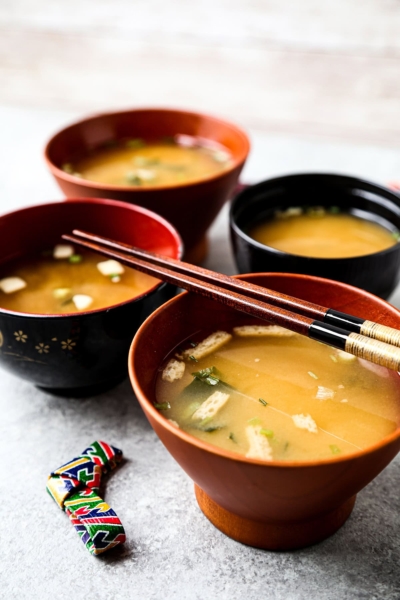
- Miso soup – My mother’s recipe for miso soup is my favorite. While most miso soups in the US contain tofu and seaweed, this one is made with onions that have absorbed all the good flavors of the broth.
- Green salad with carrot ginger dressing – This is the classic Japanese steakhouse salad dressing you find everywhere across the country. It’s also one of the most popular recipes on the blog.
- Wafu style grilled bell peppers – Slightly charred and tender grilled bell peppers served with a sweet and savory sauce, and topped with bonito flakes. So delicious!
Did you like this recipe? Are there changes you made that you would like to share? Share your tips and recommendations in the comments section below!
PrintHiyashi Tomato Shiso Spaghetti

This is the perfect summer pasta with flavors that are both refreshing and cleansing!
- Prep Time: 15
- Cook Time: 3 minutes
- Total Time: 18 minutes
- Yield: 8 1x
- Category: Noodles
- Method: Blender
- Cuisine: Japanese
- Diet: Low Fat
Ingredients
Tomato Sauce
- 1/4 cup soy sauce
- 3 1/2 tablespoons rice vinegar
- 2 teaspoons miso paste
- 2 tablespoons sugar
- 1 1/2 teaspoon dashi granules
- 1 1/2 tablespoon sesame oil
- 1 tablespoon extra virgin olive oil
- 550gr tomatoes (about 3 roma tomatoes)
- Pinch of salt (optional)
Other Ingredients
- 1 pound dry spaghetti or angel hair spaghetti
- 4–6 shiso leaves, shredded
Instructions
- Heat the water. Bring a small pot of water to boil.
- Slice their bottom. Cut an X across the skin of the tomatoes, starting from the top side opposite of the stem, all the way down to the stem.
- Boil the tomatoes. Add the tomatoes to the boiling water and leave for 20-30 seconds, until the skin begins to peel.
- Peel them. Remove the tomatoes and place them on a flat surface. Let cool for a few minutes. Peel the skin using your fingers and remove the stem with a paring knife or a stem corer.
- Make the sauce by blending. Add the tomatoes and all of the remaining ingredients for the sauce in a blender, and blend until smooth.
- Let the sauce chill. Transfer the sauce to a bowl and refrigerate.
- Boil the pasta. Bring a pot of salted water to boil and cook the spaghetti according to the directions on the package. Drain and rinse under cold water. Drain well.
- Put the dish together. Divide the pasta into serving sizes and pour the sauce on top.
- Garnish and serve. Top with shiso leaves and serve.
Notes
Store the sauce separate from the pasta, in an airtight storage container. It will keep refrigerated for up to 1 week.
Nutrition
- Serving Size: About 1 cup cooked spaghetti with 1/4 cup sauce
- Calories: 285
- Sugar: 6.9g
- Sodium: 216.8mg
- Fat: 5.4g
- Saturated Fat: 0.8g
- Unsaturated Fat: 1.6g
- Trans Fat: 0g
- Carbohydrates: 50.2g
- Fiber: 2.8g
- Protein: 8.9g
- Cholesterol: 0mg








This was really good. Any way to make the sauce less watery?
Hi Bobby! The best way to make it less watery, I find, is to remove the seeds and jelly part of the tomatoes. This way you are only left with the flesh which isn’t that watery 🙂
Can we have this hot ?
Hi Amy!
I don’t recommend eating this pasta hot as it has such a refreshing element. Great for hot summer days!
This was delicious. So different from the Italian-style gravy. I did make two changes. I added garlic because we love it in everything, and I left the skins on the tomatoes because I am lazy. I, also, thought the flavors were much more intense after it set for awhile.
The blog is very good! Good job
Hi Caroline! I found you though Pinterest. Wonderful site!
I love this fresh and light pasta idea too. I will definitely use shiso when I try…love shiso! Thank you!
AMAZING POST!
THANK YOU FOR SHARING…..