On hot days, I always reach for something light and easy—and this zaru soba never disappoints. Cold noodles, a bold dipping sauce, and just enough toppings to keep every bite interesting.
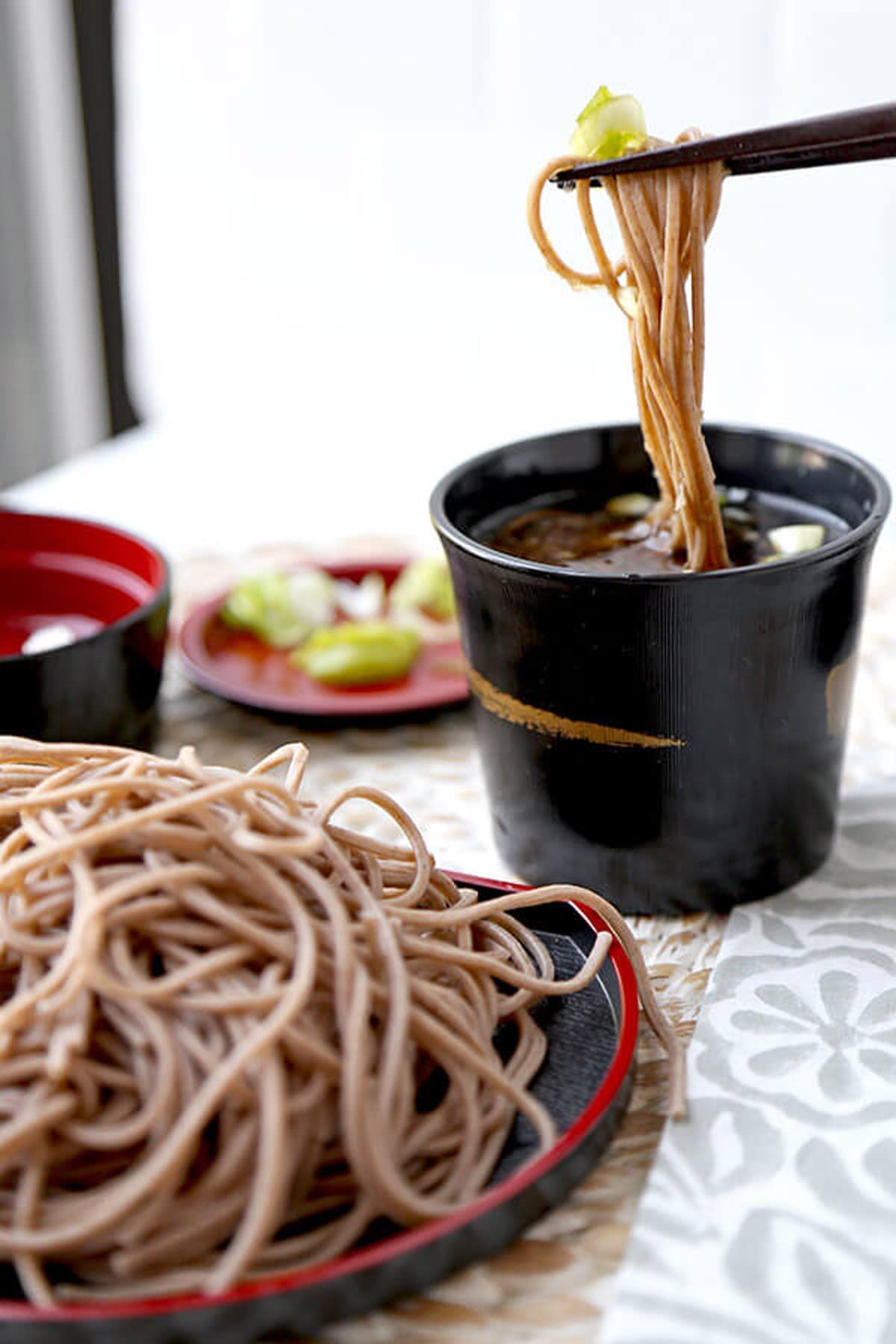
Why I waited so long to share this zaru soba recipe is a mystery. It’s a dish I make regularly and have loved ever since the first time I had as a kid, in Japan. Chilled buckwheat noodles are dipped in a umami-rich mentsuyu sauce and topped with shredded nori. It’s quick, satisfying, and one of the easiest ways to bring Japanese summer flavors to your table.
It’s exactly what I want when I’m craving something light and refreshing. The best part is that once the dipping sauce is made, the rest comes together in about 10 minutes. Boil the noodles, rinse them well, chill the sauce, and your delicious meal awaits.
Why I Love This Recipe
This is the kind of meal I never get tired of. The noodles are earthy and nutty, the dipping sauce is packed with umami, and the toppings add just enough sharpness and freshness to keep every bite interesting.
It’s also a great make-ahead recipe because the mentsuyu can be kept in the fridge for a few weeks. Once that’s ready, all you need to do is cook and rinse the noodles and chop the toppings.
Table of contents
What is Zaru Soba?
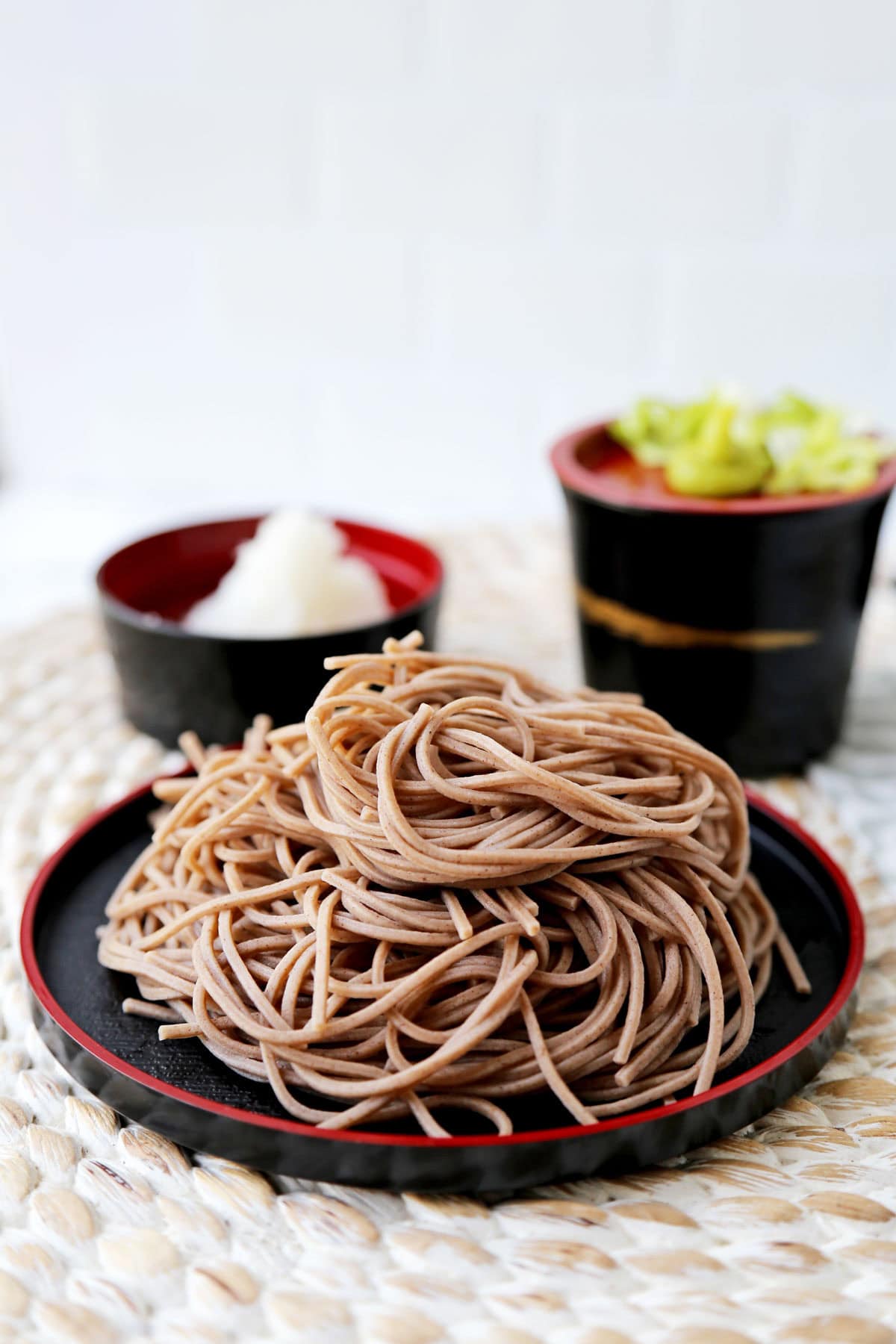
Zaru soba is a classic Japanese cold noodle dish made with soba noodles, which are buckwheat noodles. The word zaru refers to the bamboo tray or draining basket the noodles are traditionally served on.
The noodles are served cold, usually topped with shredded nori, and a small bowl of chilled mentsuyu for dipping. The sauce is usually a mixture of dashi, kombu, soy sauce, mirin, and sugar. Instead of pouring the sauce over the noodles, you pick up a small amount of soba with chopsticks, dip it into the sauce, and slurp. While zaru soba is served cold, soba can also be enjoyed in a warm broth like the popular year-end toshikoshi soba.
If you enjoy cold noodle dishes, you might also like my soba noodle salad with ginger miso dressing.
Zaru Soba Ingredients
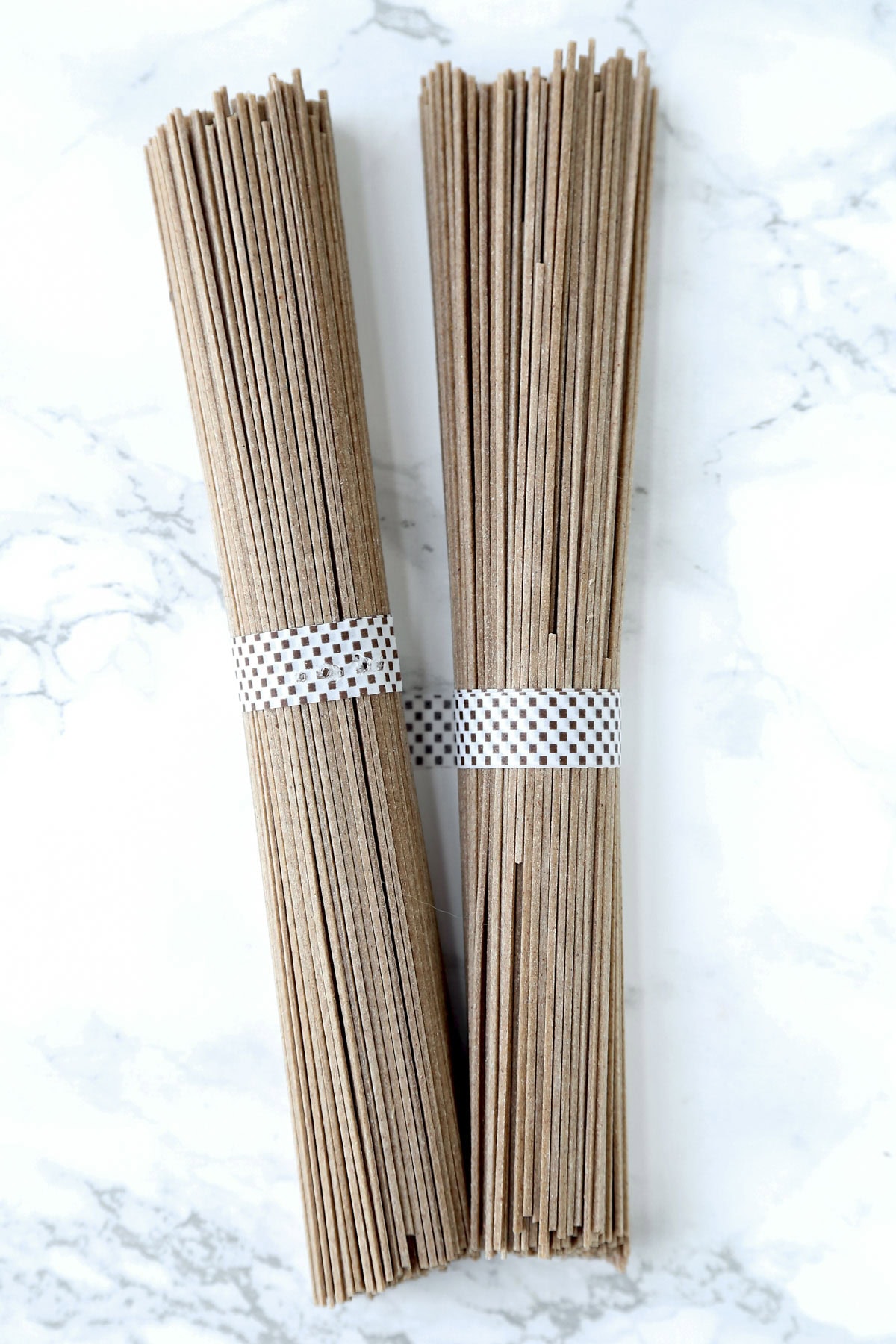
- Soba noodles: For this recipe I’m using dried soba noodles. But feel free to use fresh ones if you can find them in the refrigerated section. Some brands contain more buckwheat than others, so the flavor and texture can vary.
- Daikon: Grated daikon adds a refreshing, slightly peppery bite to the dipping sauce. If there is too much liquid from the daikon, get rid of about half so it doesn’t dilute the taste of the tsuyu too much.
- Scallions: Finely chopped scallions add freshness and a little sharpness.
- Wasabi: Optional, but I love adding a small amount to the dipping sauce for a little heat.
- Shredded nori: Nori is the classic topping for zaru soba and adds a toasted element with some brininess.
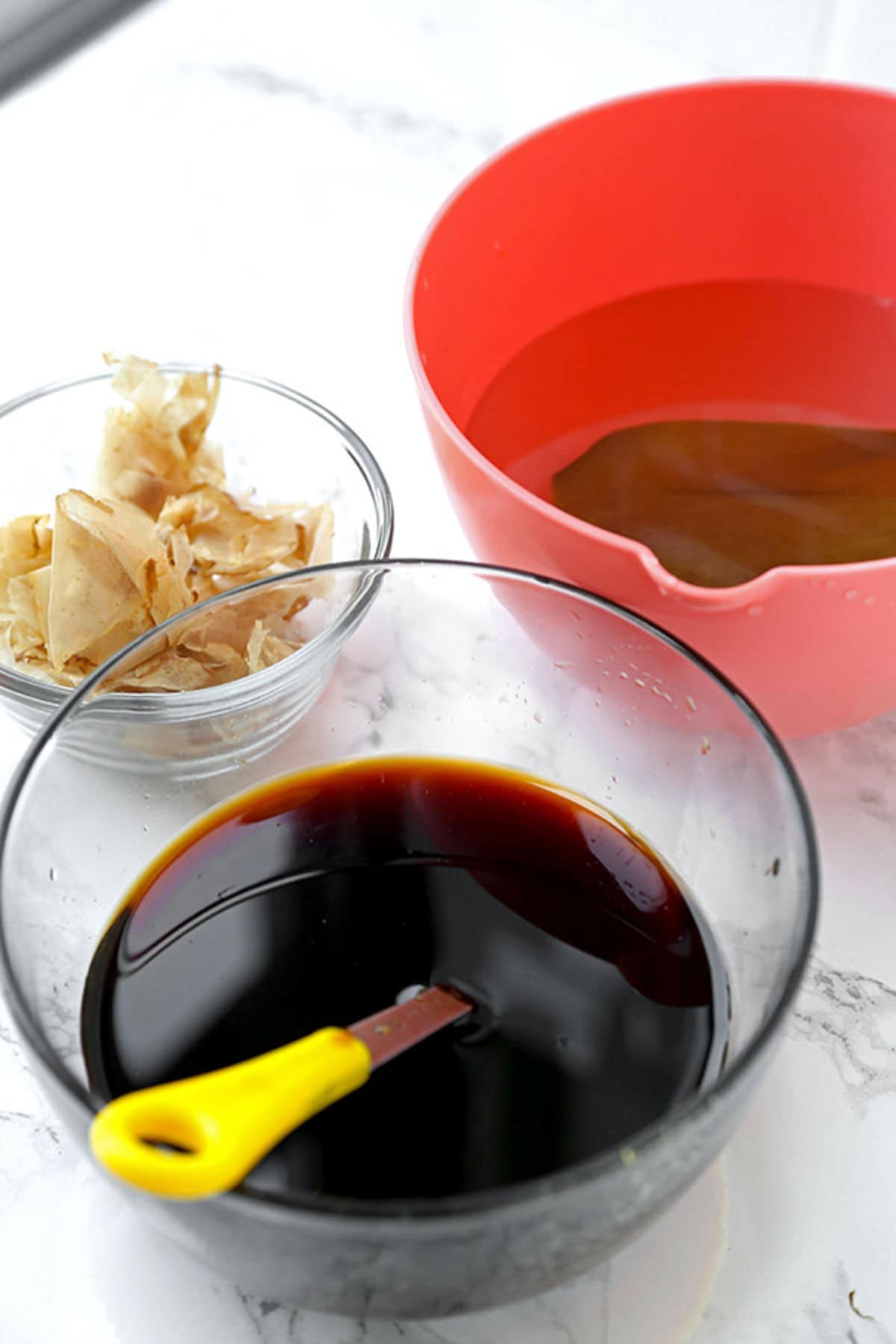
- Tsuyu: The dipping sauce is a mix of Japanese soy sauce, mirin, sugar, bonito flakes (katsuobushi), and seaweed (kombu).
Vegan Zaru Soba
To make this recipe vegan, skip the bonito flakes and use an extra piece of kombu instead. Let the kombu steep gently so the sauce has time to develop flavor. You can also add dried shiitake mushrooms to the soaking water for more umami.
How to Make Zaru Soba
- Start by soaking the kombu in water for 30 minutes. This helps draw out its flavor before the sauce is heated.
- Add the soy sauce, mirin, and sugar to a pot and bring the mixture to a boil. As soon as it boils, remove the kombu. Add the bonito flakes or dashi powder and boil for 3 minutes. Turn the heat off and let the mixture sit for a couple of minutes, until the bonito flakes sink to the bottom.
- Strain the mentsuyu. Strain it into a container, let it cool, cover, and refrigerate until cold. You can keep the bonito flakes and repurpose them. If you don’t know how to, read this post on what to do with used bonito flakes.
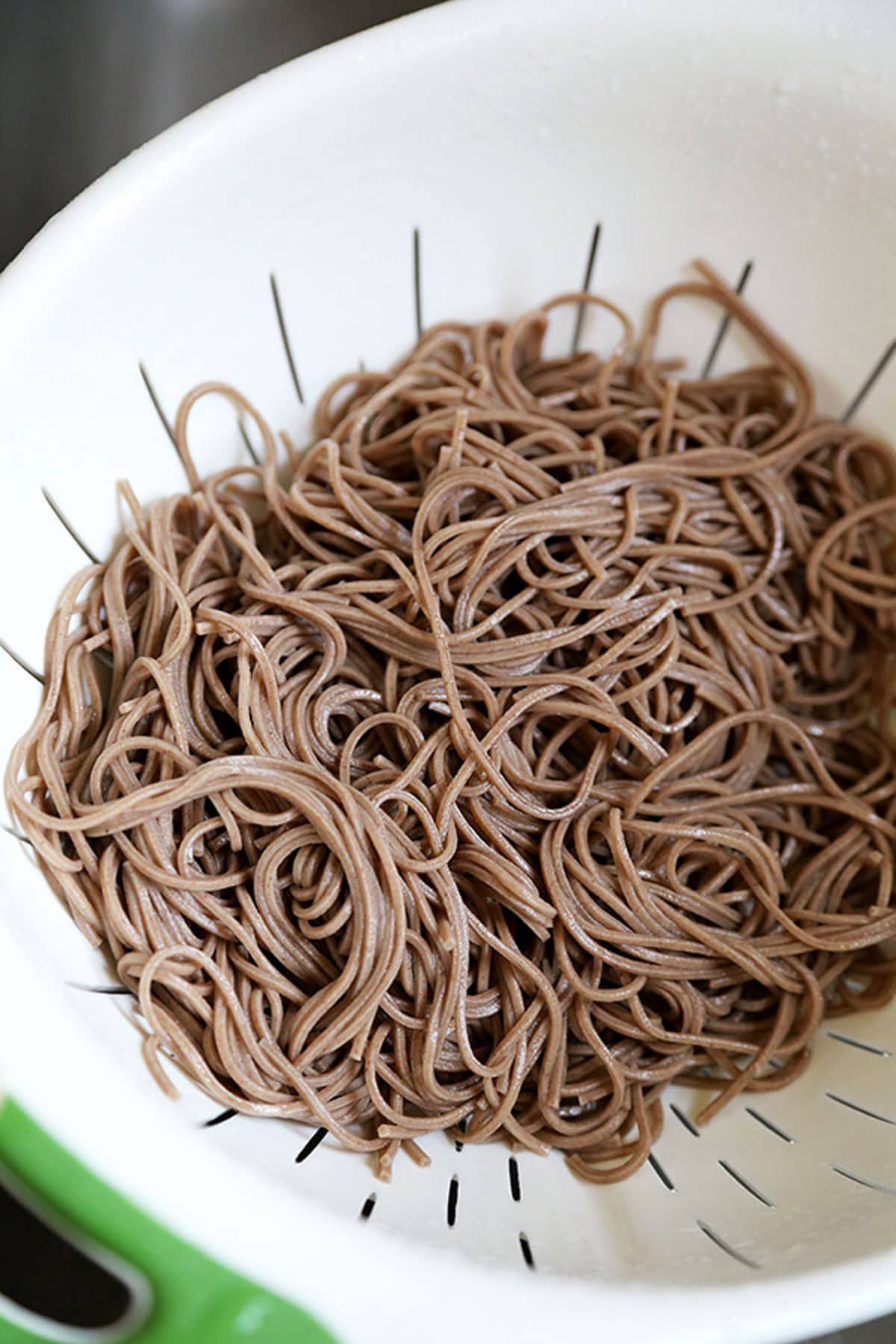
- Cook the soba noodles according to the package directions. Drain them and rinse them well under cold running water.
- Drain the noodles and divide them between serving plates or bowls. Serve with chilled mentsuyu, grated daikon, scallions, wasabi, and shredded nori.
Recipe Tip
Rinse soba noodles well. These noodles can get sticky, almost gummy, if the starch isn’t washed off properly.
After draining the noodles, rinse them under cold running water for a few seconds, and gently rub them with your hands until they feel cold and no longer slimy. This gives the noodles a cleaner taste and better texture.
How to Eat Zaru Soba
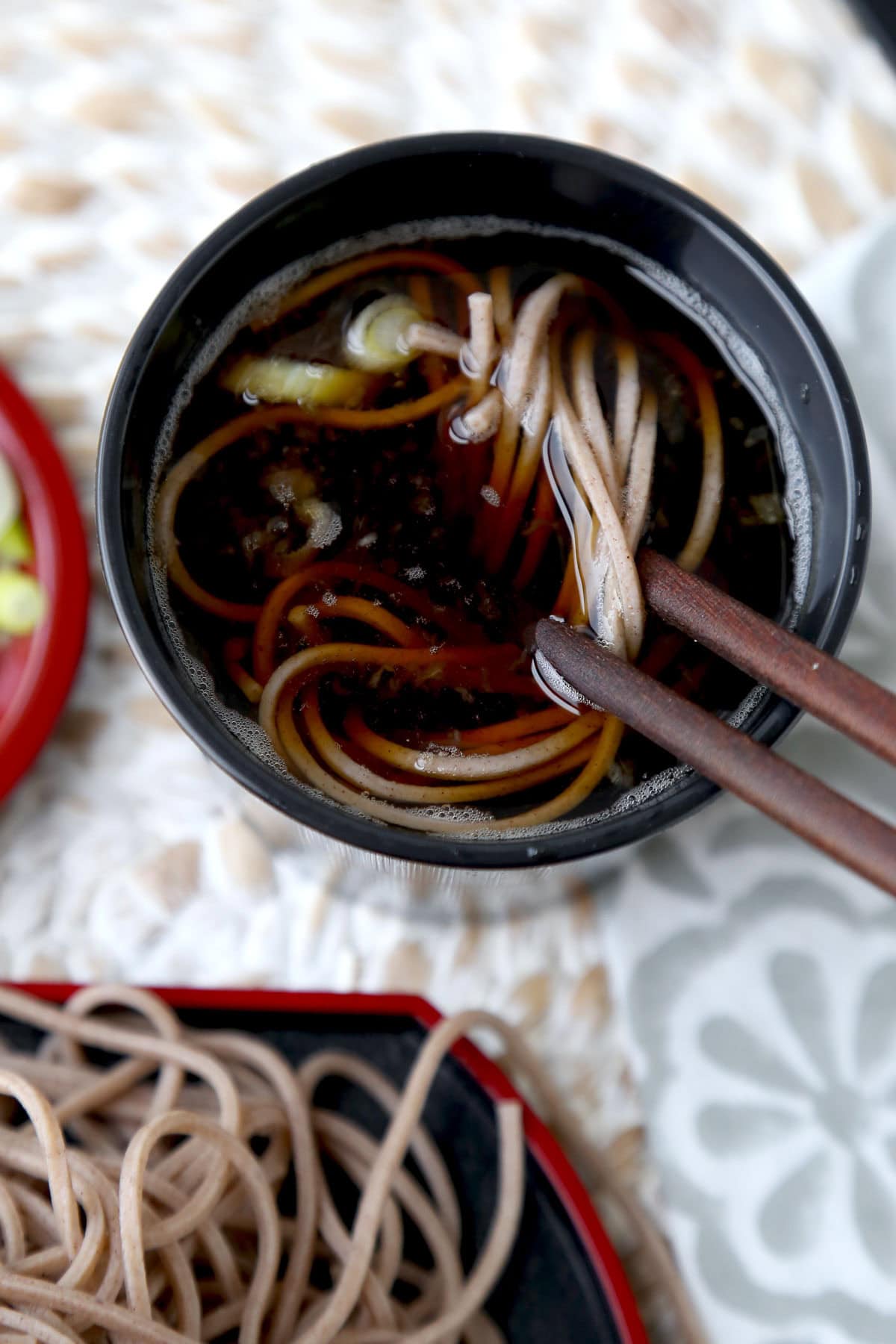
Pour some cold mentsuyu into a small bowl. Add a little grated daikon, scallions, wasabi, and shredded nori if you like.
Pick up a small amount of soba with chopsticks, dip it into the sauce, and eat. Don’t soak the noodles for too long—the sauce is concentrated and meant for dipping, not drinking straight.
Various Toppings to Try
There are many different ways to serve zaru soba, some of most common toppings are:
- Chopped scallions
- Shredded nori
- Wasabi
- Grated daikon
- Sesame seeds
- Grated ginger
- Shiso leaves
- Tororo (grated mountain yam)
- Tempura (shrimp tempura is the most popular option)
- Raw or poached egg
What to Serve With
Zaru soba can be served on its own for a light lunch, or with a few small sides for a more filling meal. It pairs especially well with:
- Salads: Japanese cabbage salad, kani salad, Japanese potato salad, shiraae, or hijiki salad.
- Pickles: Tsukemono, salted pickled cabbage, kimchi, pickled watermelon rinds, umeboshi (pickled plum).
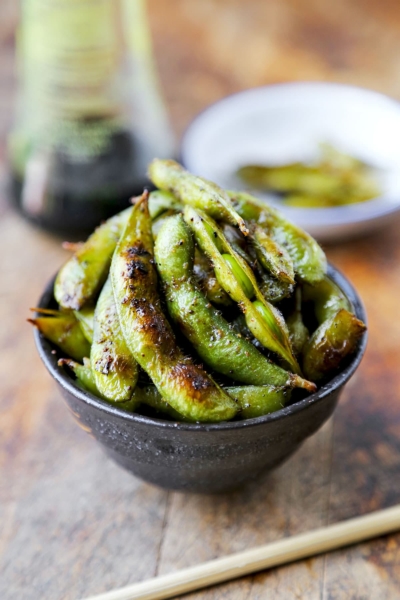
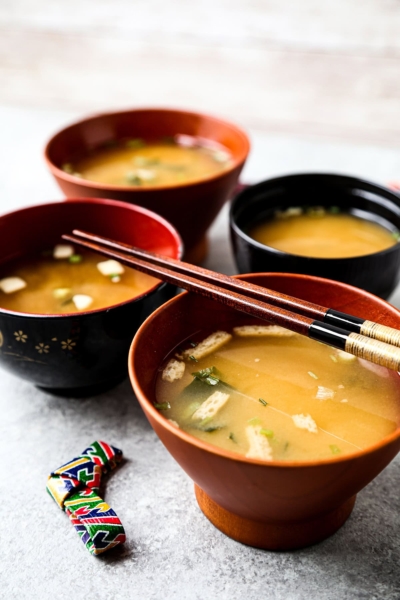
- Others: Edamame, agedashi tofu, miso soup.
- Tempura: Shrimp tempura and vegetable tempura.
This recipe is also included in my cold Japanese noodles guide.
Storage
The mentsuyu can be made ahead and kept in the refrigerator for up to 1 month in a sealed jar or container.
Cooked soba noodles are best eaten right away but they can keep in the fridge for 2-3 days. They will be stuck together when you take them out of the container so give them a quick rinse under cold water and that should do it.
Did you like this recipe? Are there changes you made that you would like to share?
PrintZaru Soba
A traditional and delicious Japanese lunch, zaru soba is buckwheat noodles served with a simple umami packed dipping sauce.
- Prep Time: 5 minutes
- Cook Time: 5 minutes
- Total Time: 10 minutes
- Yield: 2 people 1x
- Category: Noodles
- Method: Boiling
- Cuisine: Japanese
- Diet: Vegetarian
Ingredients
- 7 ounces dry soba noodles
- 1/4 cup grated daikon
- 2 scallions, finely chopped
- Wasabi paste
- Shredded nori
Mentsuyu Dipping Sauce
- 1 6-inch kombu (dried kelp)
- 1/2 cup Japanese soy sauce
- 1/2 cup mirin
- 1 tablespoon granulated sugar
- 1 ounce bonito flakes or 3/4 teaspoon dashi powder (for vegan: use an additional 1 6-inch piece kombu)
Instructions
- Strain some of the daikon water. Squeeze out half of the water from the grated daikon. you want to keep some of the water so it stays moist but remove enough so you can shape it into a little mound. Set aside.
- Let the kombu soak. Add the kombu to a pot along with 2 cups of water, and set aside for 30 minutes.
- Add some ingredients to the kombu water. Add the soy sauce, mirin, and sugar and bring to a boil.
- Remove the kombu. As soon as the water comes to a boil, remove the kombu and discard it. Or, you can slice the kombu into to sticks and pan fry with a little soy sauce. Serve as a side dish.
- Add bonito flakes (or dashi powder) and boil for 3 minutes. Turn the heat off and let sit for a couple of minutes, until all the flakes have sunken to the bottom of the pot. For vegan: add the kombu but do not boil. Instead, let the kombu steep for 10 minutes.
- Strain. Strain the tsuyu into a container with a lid, let cool to room temperature, seal and refrigerate until cold.
- Bring a medium pot of water to a boil. Add the soba noodles and cook according to the instructions on the package (dry noodles usually take between 5-8 minutes to cook). Drain and rinse under cold water until the noodle are cold. Drain well and divide the noodles among two plates or shallow bowls.
- Pour about 1/2 – 3/4 cup of tsuyu into a bowl for dipping the noodles and serve with a side of grated daikon, scallions, wasabi and nori. Add them to the dipping sauce before eating.
Notes
Save the sauce in a jar and refrigerate for up to 1 month. Save the leftover noodles in a storage container and refrigerate for up to 2 days. Before eating the noodles, rinse them under cold water to separate them.
Nutrition
- Serving Size: 1 serving
- Calories: 564
- Sugar: 35.7g
- Sodium: 457mg
- Fat: 0.9g
- Saturated Fat: 0.2g
- Unsaturated Fat: 0.3g
- Trans Fat: 0g
- Carbohydrates: 117g
- Fiber: 0.5g
- Protein: 21g
- Cholesterol: 5mg
Frequently Asked Questions
Pre-made mentsuyu (dipping sauce) is available but I find the flavors a little too aggressive. Homemade is milder, sweeter, all around better! It’s not hard to make either, you just need time to let the ingredients simmer and the flavors develop.
Make a big container of mentsuyu and store it in the fridge for up to a month. This way, next time you crave a bowl of zaru soba you will only need to boil the noodles and chop a few scallions (grated daikon is optional).
Soba refers to buckwheat noodles in general. Zaru soba is a specific dish made with cold soba noodles served with a dipping sauce.
Only if you use 100% buckwheat soba noodles and gluten-free soy sauce or tamari. Many soba noodles contain wheat, so check the package carefully.








Hello! After you put kombu aside for 30 mins in 2 cups of water, do you add that into the same pot of the other ingredients ? Including the water you’ve been soaking in? Or take out the kombu? I’m excited to make it 🙂
Hi Diana, thank you for pointing out the missing step in the recipe! You actually take the kombu out as soon as the mixture comes to a boil. You can discard it or do as my mother does, cut it up in sticks and pan fry it with a little soy sauce to eat as a side. I hope you enjoy the recipe! 🙂